DC-based data center power architecture

a data center and power architecture technology, applied in the field of power distribution systems, can solve the problems of significant waste of energy resources, drive up the cost of operating data centers, and culprits of power consumption, so as to achieve the effect of reducing monthly power costs, ensuring server reliability, and ensuring reliability

a data center and power architecture technology, applied in the field of power distribution systems, can solve the problems of significant waste of energy resources, drive up the cost of operating data centers, and culprits of power consumption, so as to achieve the effect of reducing monthly power costs, ensuring server reliability, and ensuring reliability

US20060284489A1Active Publication Date: 2006-12-21EYP MISSION CRITICAL +1

Image

Smart Image Click on the blue labels to locate them in the text.
Viewing Examples
Smart Image
  • DC-based data center power architecture
  • DC-based data center power architecture
  • DC-based data center power architecture

Examples

Experimental program
Comparison scheme
Effect test

Embodiment Construction

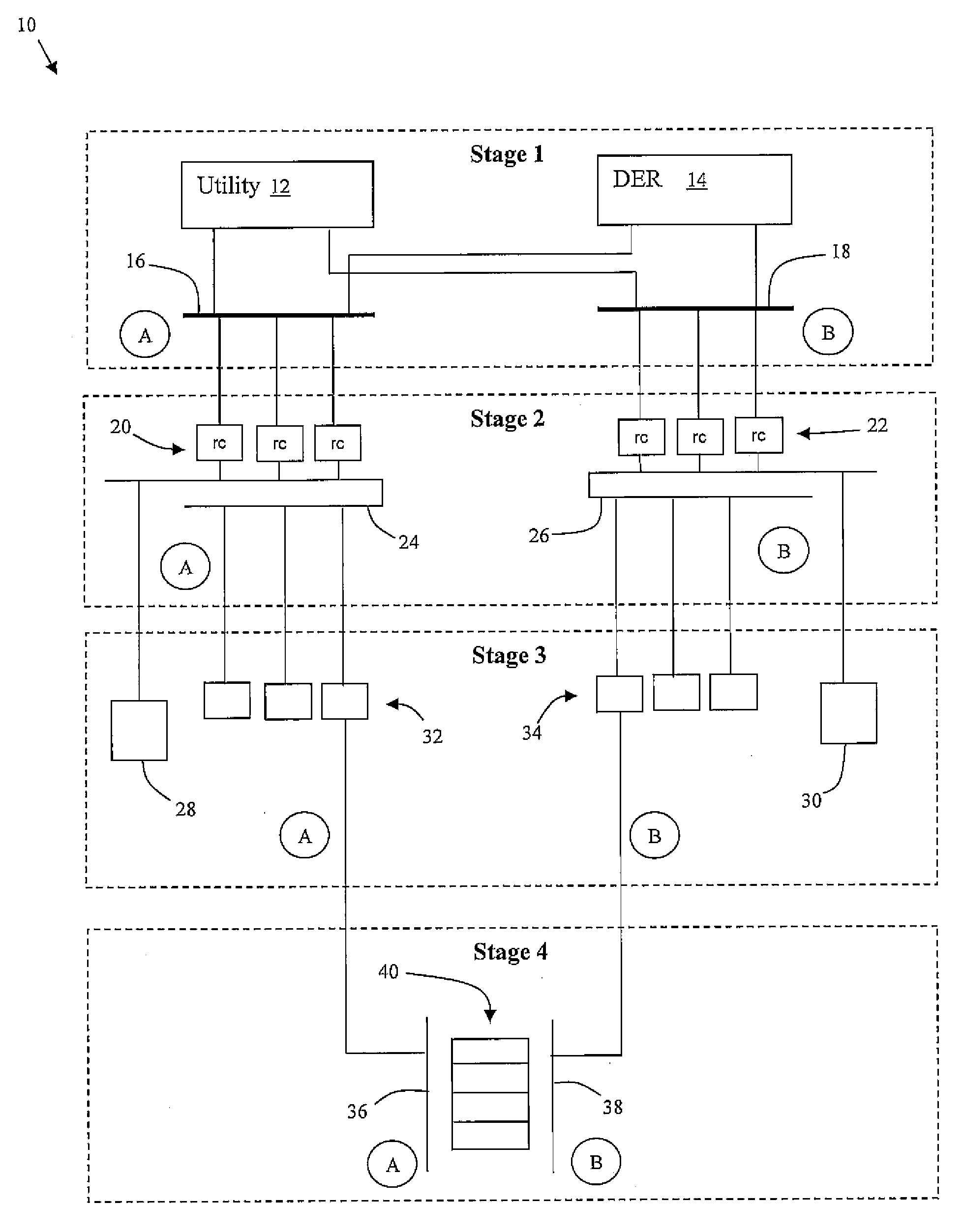
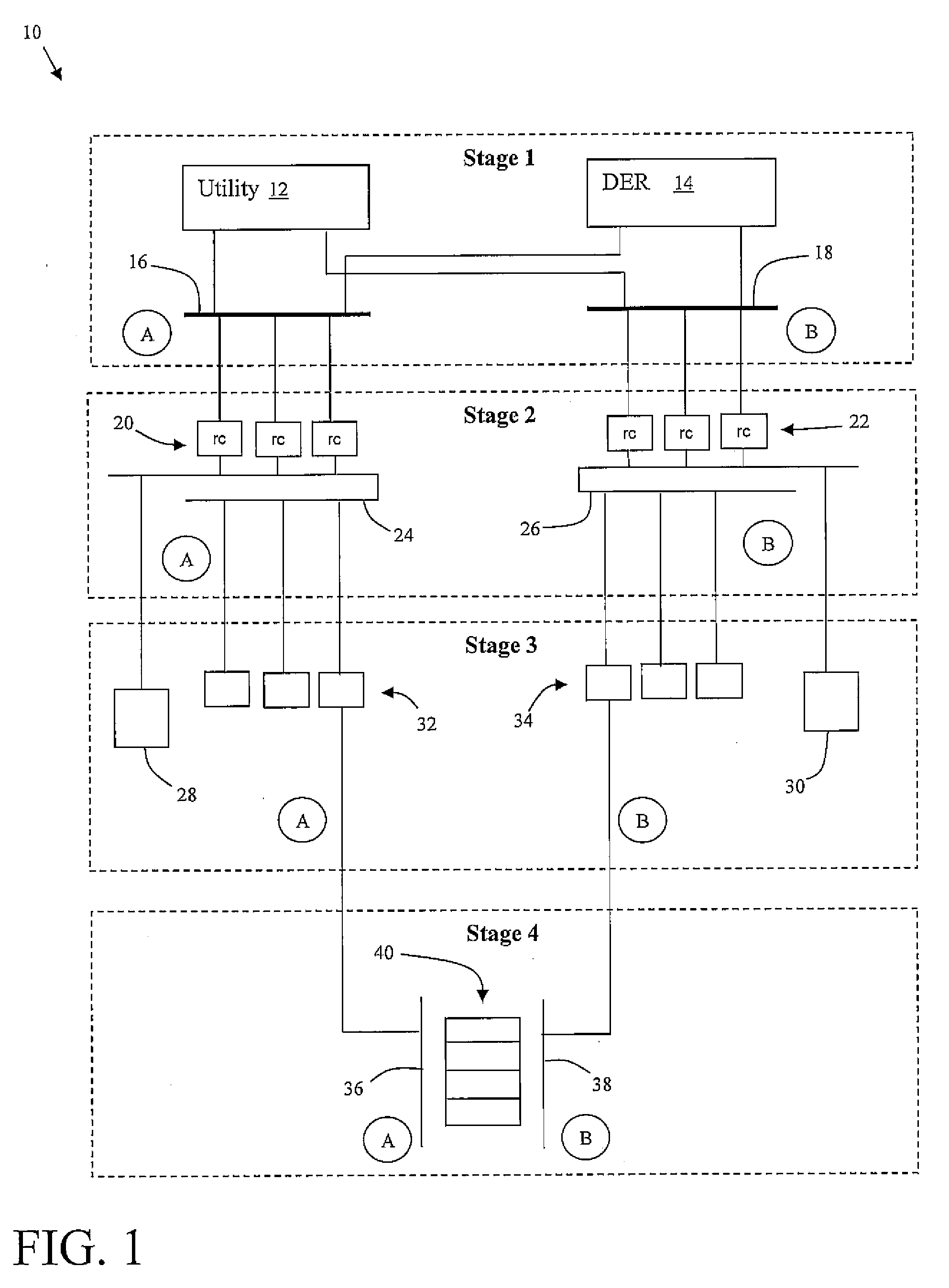
[0020] Referring now to drawings, FIG. 1 depicts an overview of an illustrative DC-based power distribution architecture 10 for powering critical loads 40 in a data center. Critical loads 40 are the main loads of a data center and include, for instance, equipment installed in cabinets (e.g., servers, computing components, etc.), on racks (e.g., telecom equipment such as routers and switches) or directly on the floor (e.g., heavy storage devices, etc.). Mechanical loads (not shown in FIG. 1) are related to HVAC systems, plumbing systems and various other essential loads supporting the critical loads 40. Note that for the purpose of this disclosure the term “data center” may refer to any facility that includes high density devices and / or other systems that run on DC, such as computer systems, servers, telecom equipment, medical equipment, etc.

[0021] Power distribution architecture 10 is shown broken down into four stages. In general, stage 1 provides an AC power distribution system t...

the structure of the environmentally friendly knitted fabric provided by the present invention; figure 2 Flow chart of the yarn wrapping machine for environmentally friendly knitted fabrics and storage devices; image 3 Is the parameter map of the yarn covering machine
Login to View More

PUM

No PUM Login to View More

Abstract

A DC-based power system including: an AC power distribution system for providing AC power to a first node and a second node; a first converting system coupled to the first node that converts AC power to DC power and outputs the DC power to a first distributed bus bar; a second converting system coupled to the second node that converts AC power to DC power and outputs the DC power to a second distributed bus bar; a first set of DC/DC converters that steps down the DC power from the first distributed bus bar to a first stepped down DC voltage; a second set of DC/DC converters that steps down the DC power from the second distributed bus bar to a second stepped down DC voltage; and a critical load distribution system that is powered by both the first stepped down DC voltage and the second stepped down DC voltage.

Description

the structure of the environmentally friendly knitted fabric provided by the present invention; figure 2 Flow chart of the yarn wrapping machine for environmentally friendly knitted fabrics and storage devices; image 3 Is the parameter map of the yarn covering machine
Login to View More

Claims

the structure of the environmentally friendly knitted fabric provided by the present invention; figure 2 Flow chart of the yarn wrapping machine for environmentally friendly knitted fabrics and storage devices; image 3 Is the parameter map of the yarn covering machine
Login to View More

Application Information

Patent Timeline
21 Dec 2006
Publication
US20060284489A1