

Technique for dynamically splitting MPLS TE-LSPs
a dynamic splitting and switching path technology, applied in the field of computer networks, can solve the problems of large te-lsps that may need to be split, and achieve the effects of optimal load balance, short paths, and increased bandwidth reserv
- Summary
- Abstract
- Description
- Claims
- Application Information
AI Technical Summary
Benefits of technology
Problems solved by technology
Method used
Image

Examples
Embodiment Construction
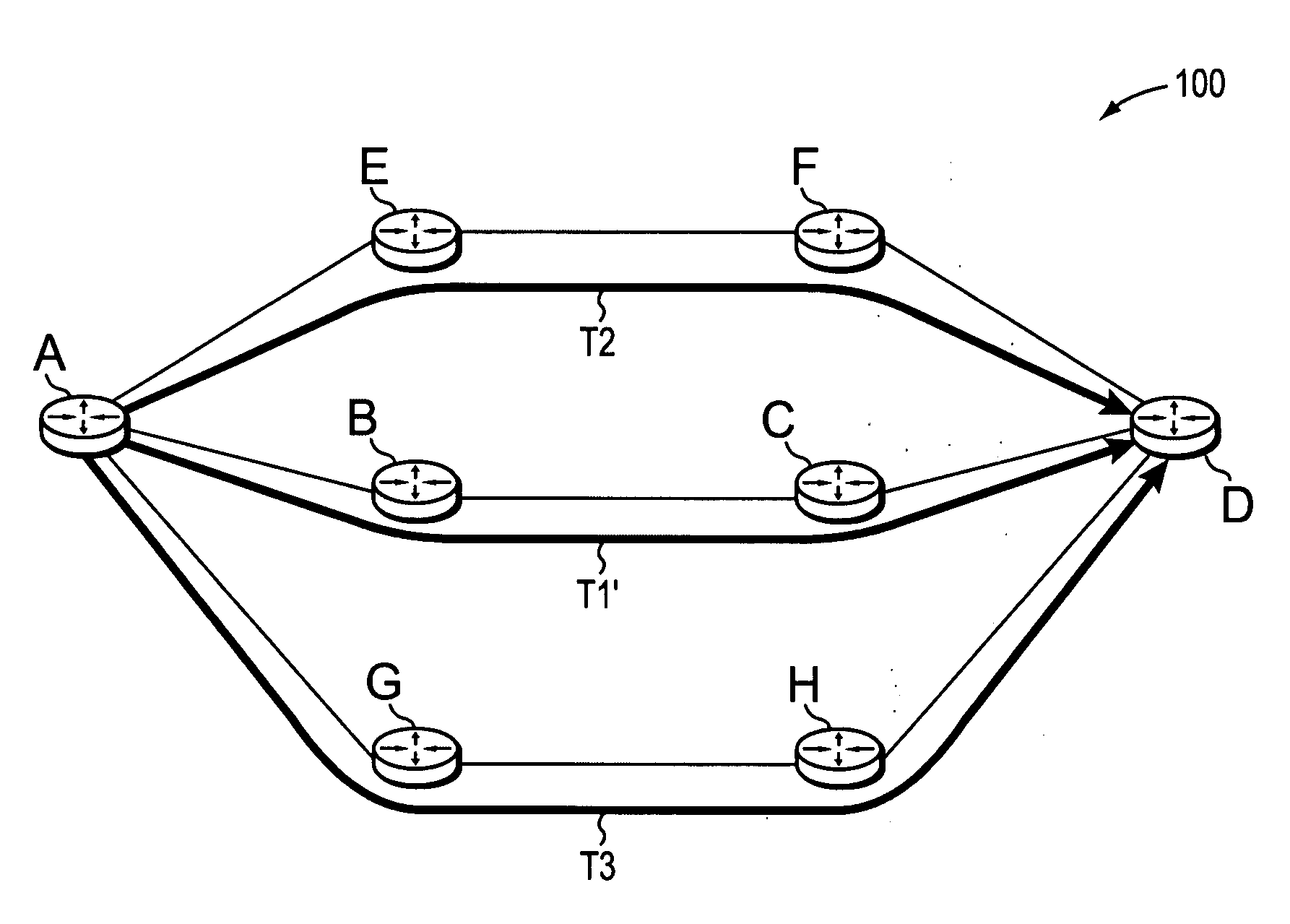
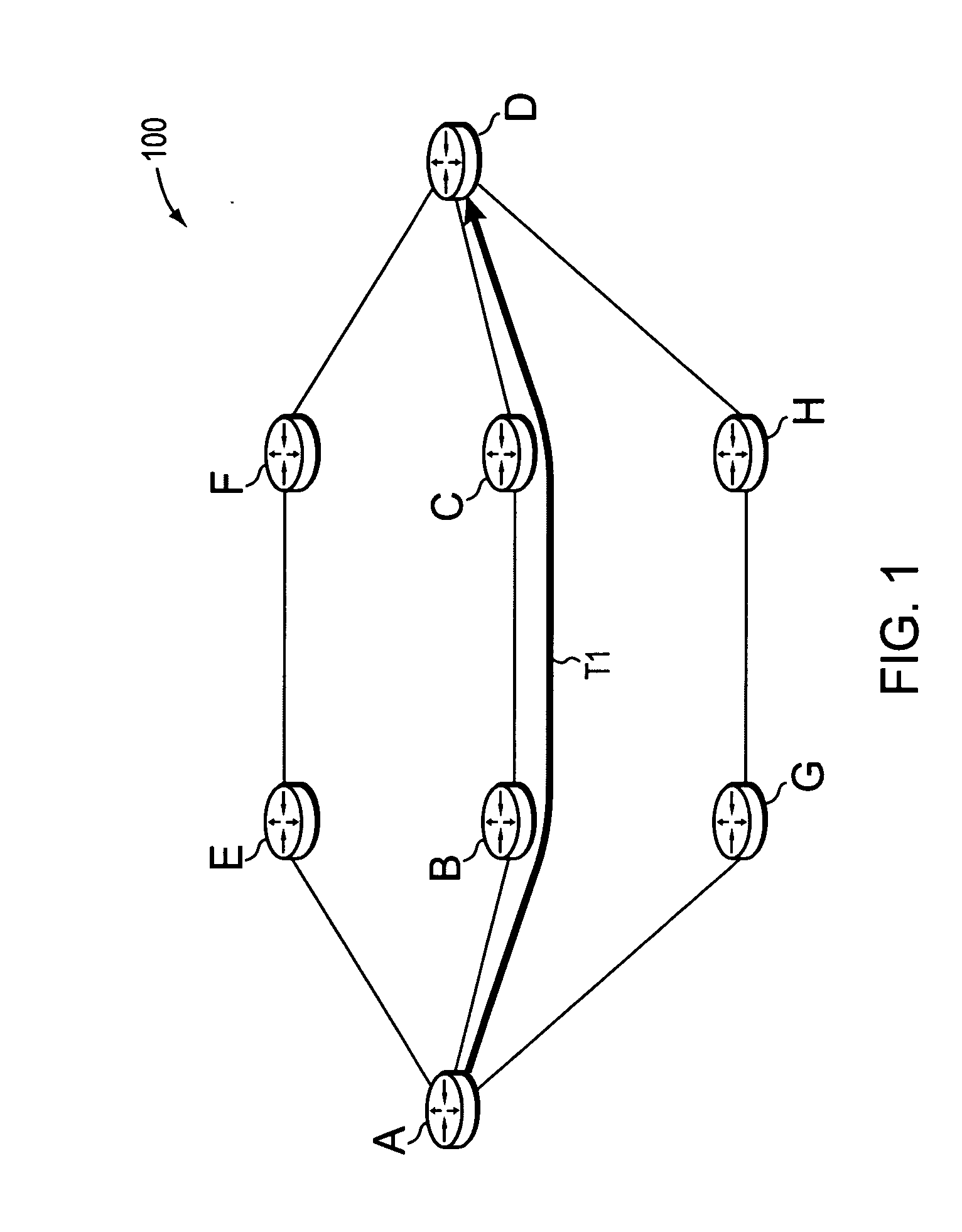
[0034]FIG. 1 is a schematic block diagram of an exemplary computer network 100 comprising routers A-H (e.g., intra-domain routers) interconnected through links as shown. The links between the routers may have an associated metric value (e.g., cost), and available bandwidth value, as described below. Network 100 may be contained within a single autonomous system (AS) or area, or may span multiple areas under certain circumstances as will be understood by those skilled in the art. An AS is herein defined to be a group of intermediate nodes, such as inter-domain and / or intradomain routers, within a network that are subject to a common authority and execute one or more inter-domain and / or intradomain routing protocols. Although the network 100 is illustratively shown within a single AS, those skilled in the art will appreciate that the network may alternatively be configured as routing domains or other networks or subnetworks. Notably, any number of nodes or routers may be used in the n...
PUM
 Login to View More
 Abstract
Description
Claims
Application Information
 Login to View More