

Poly aryl ether ketone polymer blends
a technology of aryl ether and polymer blends, applied in the field of poly aryl ether ketone polymer blends, can solve the problems of limiting the use of reins at high temperatures under load, adversely affecting other properties, and increasing weigh
- Summary
- Abstract
- Description
- Claims
- Application Information
AI Technical Summary
Problems solved by technology
Method used
Image

Examples
examples
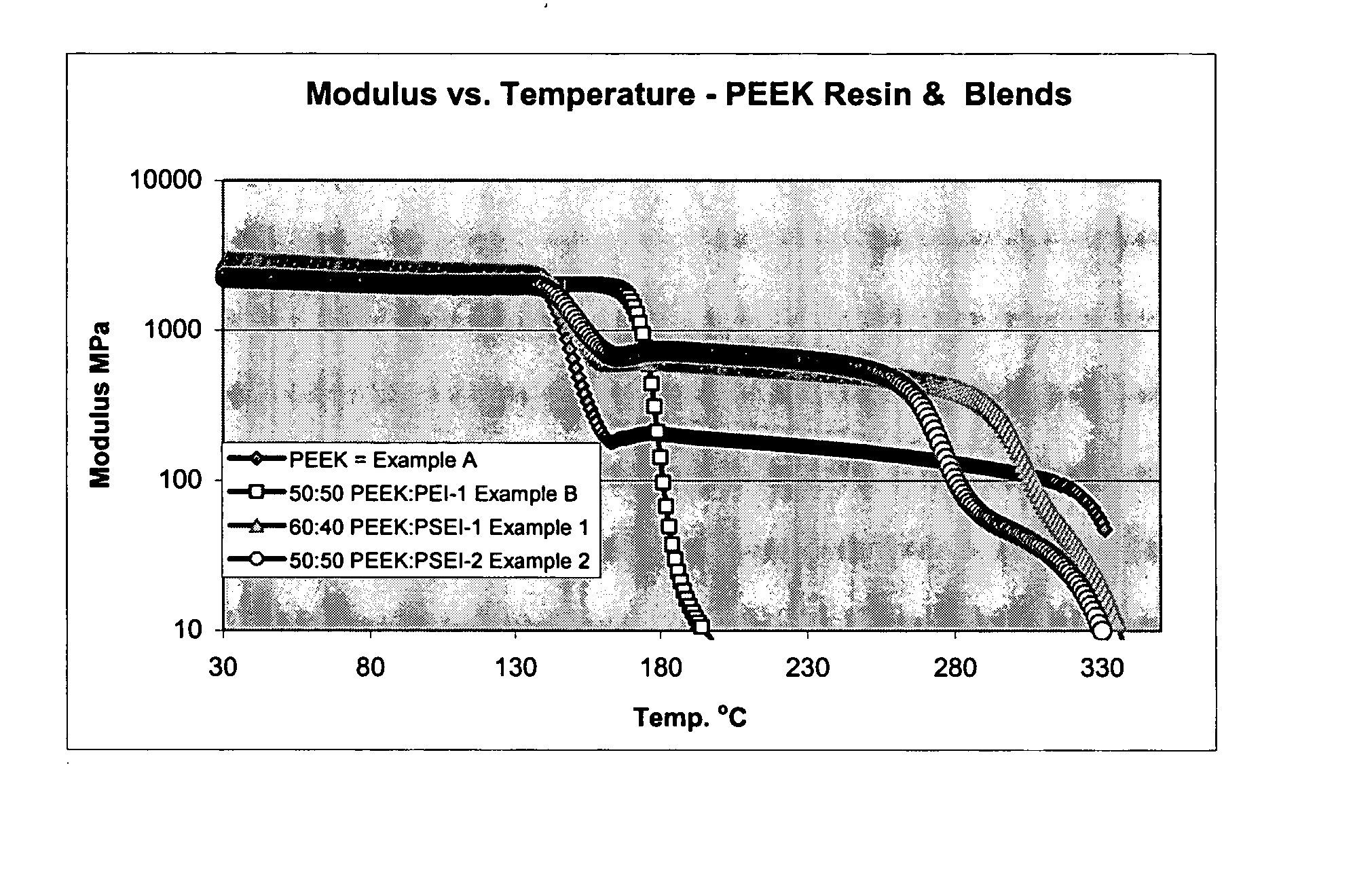
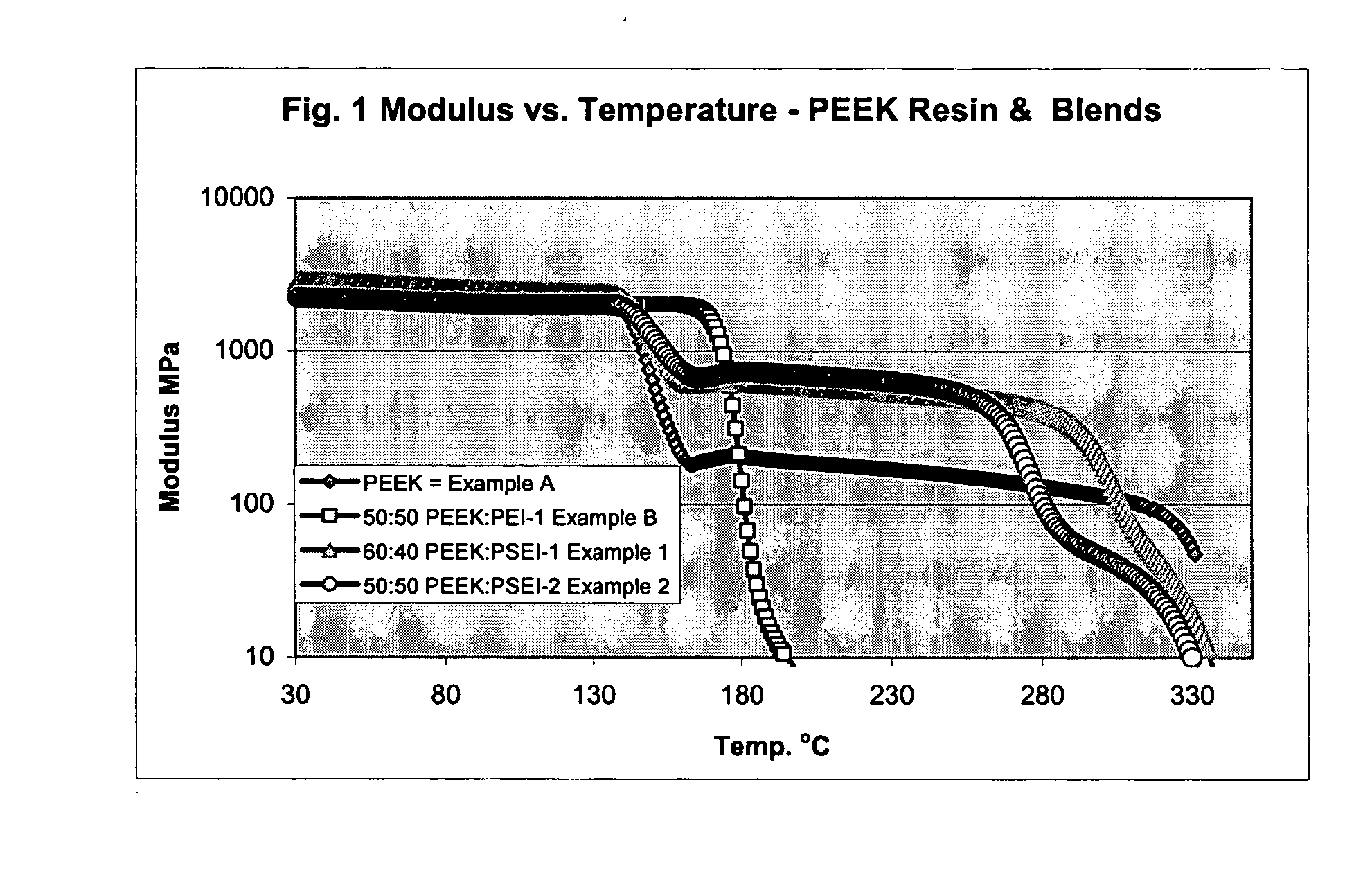
[0066] Blends are prepared by extrusion of mixtures of the polyaryl ether ketone, PEEK with polysulfone etherimides in a 30 mm twin-screw extruder. Compositions are listed in wt % of the total composition. The extruder was set at about 380 to 425° C. The blends are run at about 200 rpm under vacuum using mild mixing screws. The extrudate is cooled, pelletized and dried at 150° C. Test samples are injection molded at a set temperature of 370-410° C. and mold temperature of 120° C. using a 30 sec. cycle time.
[0067] Some properties are measured using ASTM test methods. All molded samples are conditioned for at least 48 h at 50% relative humidity prior to testing. Reverse notched Izod impact values are measured at room temperature on 3.2 mm thick bars as per ASTM D256. Heat distortion temperature (HDT) is measured at 0.46 MPa (66 psi) on 3.2 mm thick bars as per ASTM D648. Tensile properties are measured on 3.2 mm type I bars as per ASTM method D638. Flexural properties are measured on...
PUM
| Property | Measurement | Unit |
|---|---|---|
| heat distortion temperature | aaaaa | aaaaa |
| wt % | aaaaa | aaaaa |
| crystalline melting point | aaaaa | aaaaa |
Abstract
Description
Claims
Application Information
 Login to View More