
Vacuum relief unit and method for a pool
- Summary
- Abstract
- Description
- Claims
- Application Information
AI Technical Summary
Benefits of technology
Problems solved by technology
Method used
Image

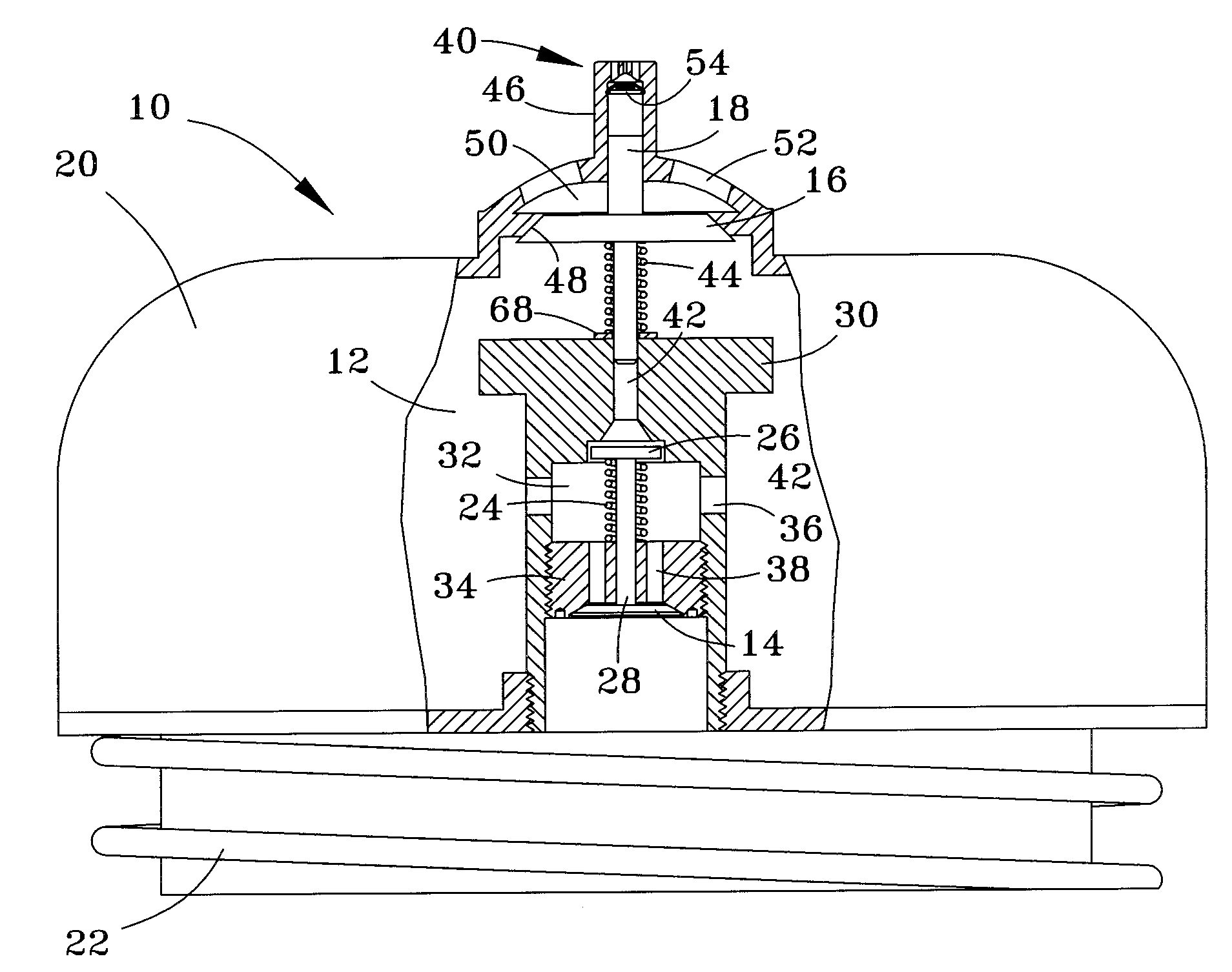
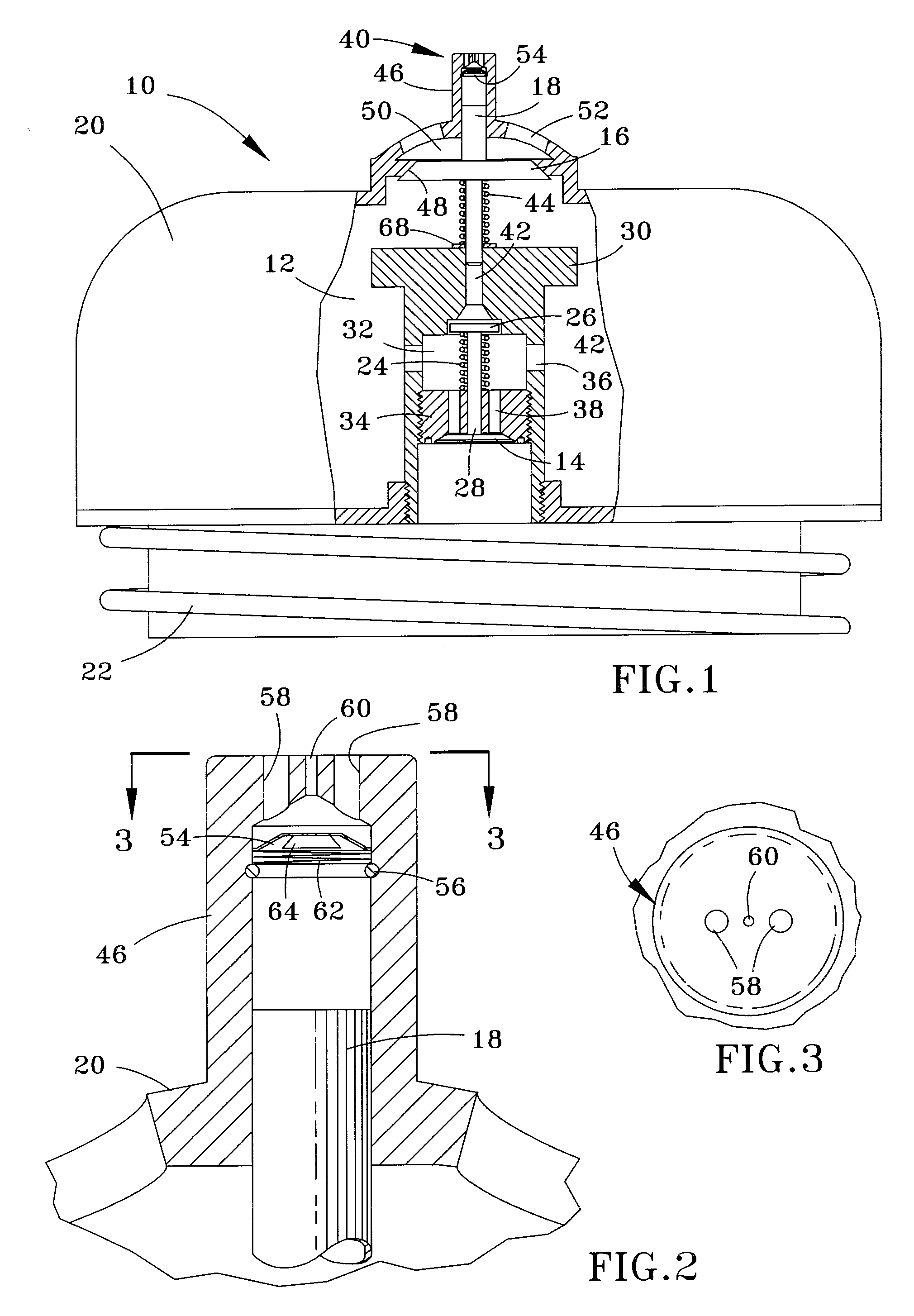
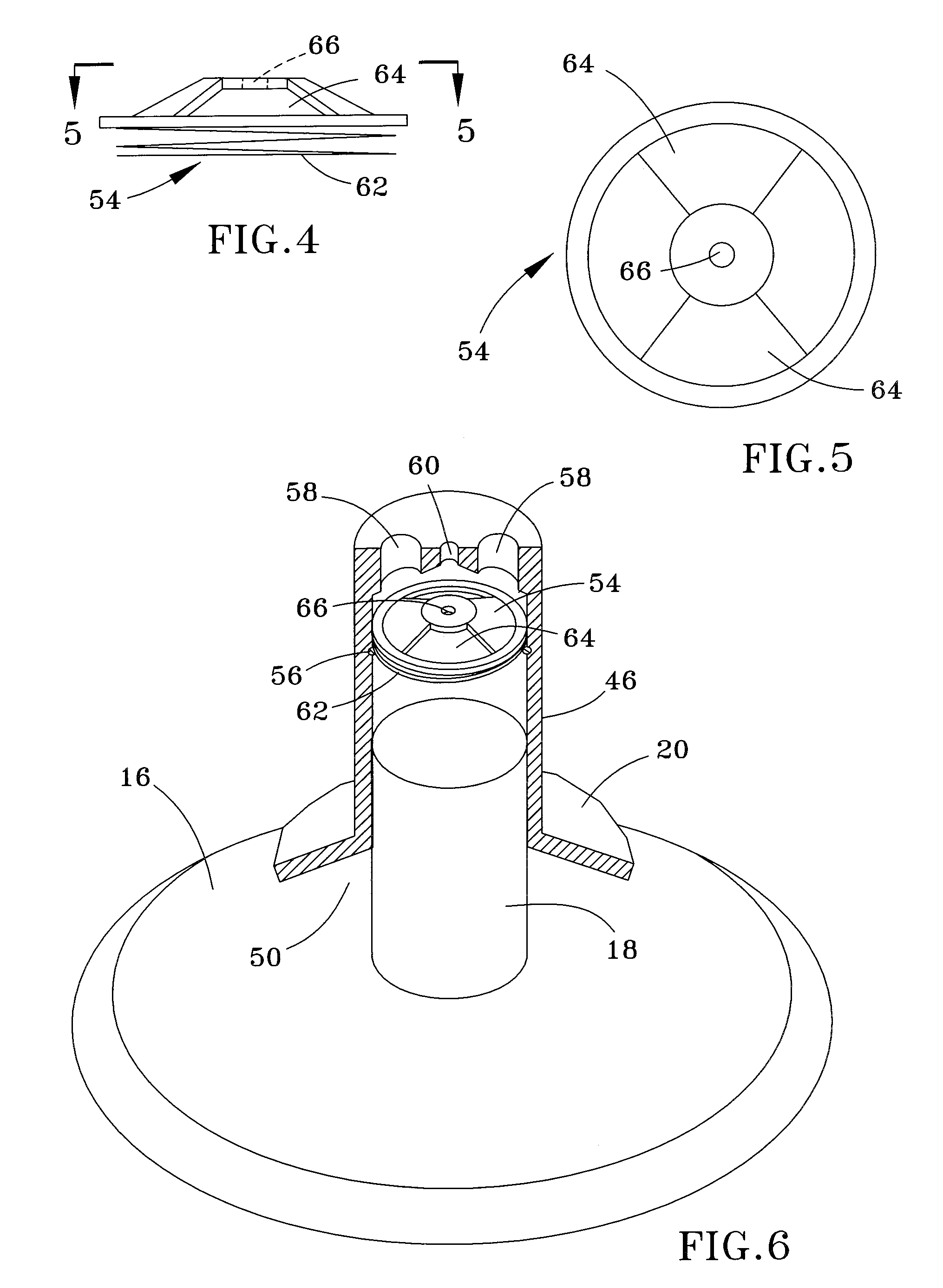
Examples
Embodiment Construction
[0016]A vacuum relief unit 10 is represented in the Figures as comprising an air chamber 12 defined by a dome-shaped housing 20, two diaphragms 14 and 16 that operate in series within the housing 20, and a piston 18 also within the housing 20. The housing 20 is configured to be installed in the cover of a pool lint trap (not shown) connected to a pumping system of a pool, hot tub, etc., and is provided with threads 22 at a lower end thereof to permit the housing 20 to be threaded into an opening formed in a conventional lint trap cover. However, it should be understood that the unit 10 is not limited to this type of installation.
[0017]From FIG. 1, it is evident that the first and second diaphragms 14 and 16 are not mechanically coupled to each other. The first diaphragm 14 operates to seal the chamber 12 from a suction line of a pool (not shown) to which the lint trap is connected, and only opens to permit venting of air within the chamber 12 to the suction line if a sufficiently lo...
PUM
 Login to View More
 Abstract
Description
Claims
Application Information
 Login to View More