Authentication system for financial transactions

a technology for authenticating accounts and financial transactions, applied in the field of authentication, can solve the problems of insufficient precautions, no effective verification method, and significantly less risk of fraudulent transactions occurring with card present transactions, and achieve the effect of reducing transaction fees

US20080178258A1Active Publication Date: 2008-07-24FIRST DATA
19 Cites 12 Cited by

Patent Information

Authority / Receiving Office
US · United States
Patent Type
Applications(United States)
Current Assignee / Owner
Publication Date
2008-07-24

Smart Images

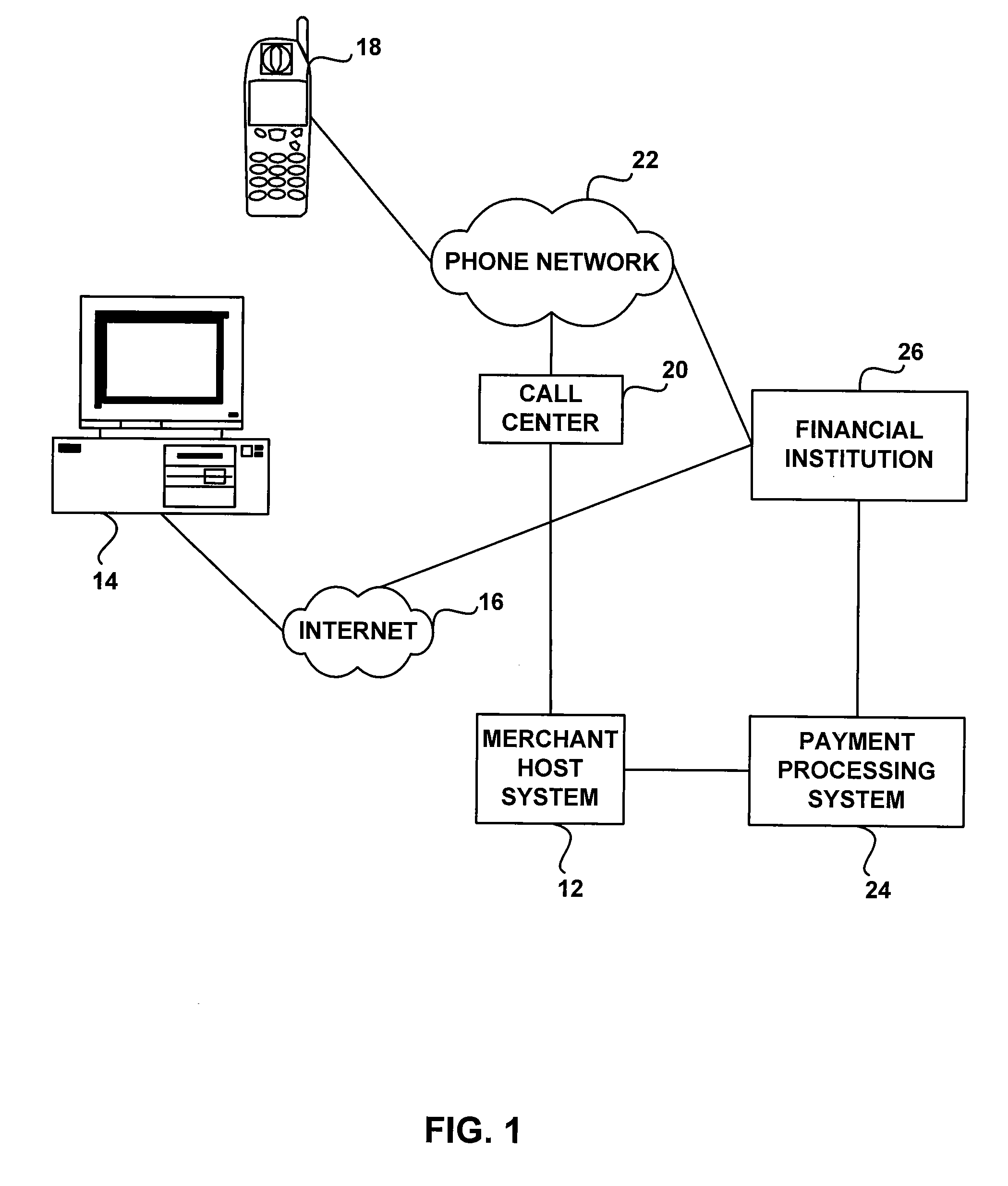
  • Figure 1
    Figure 1
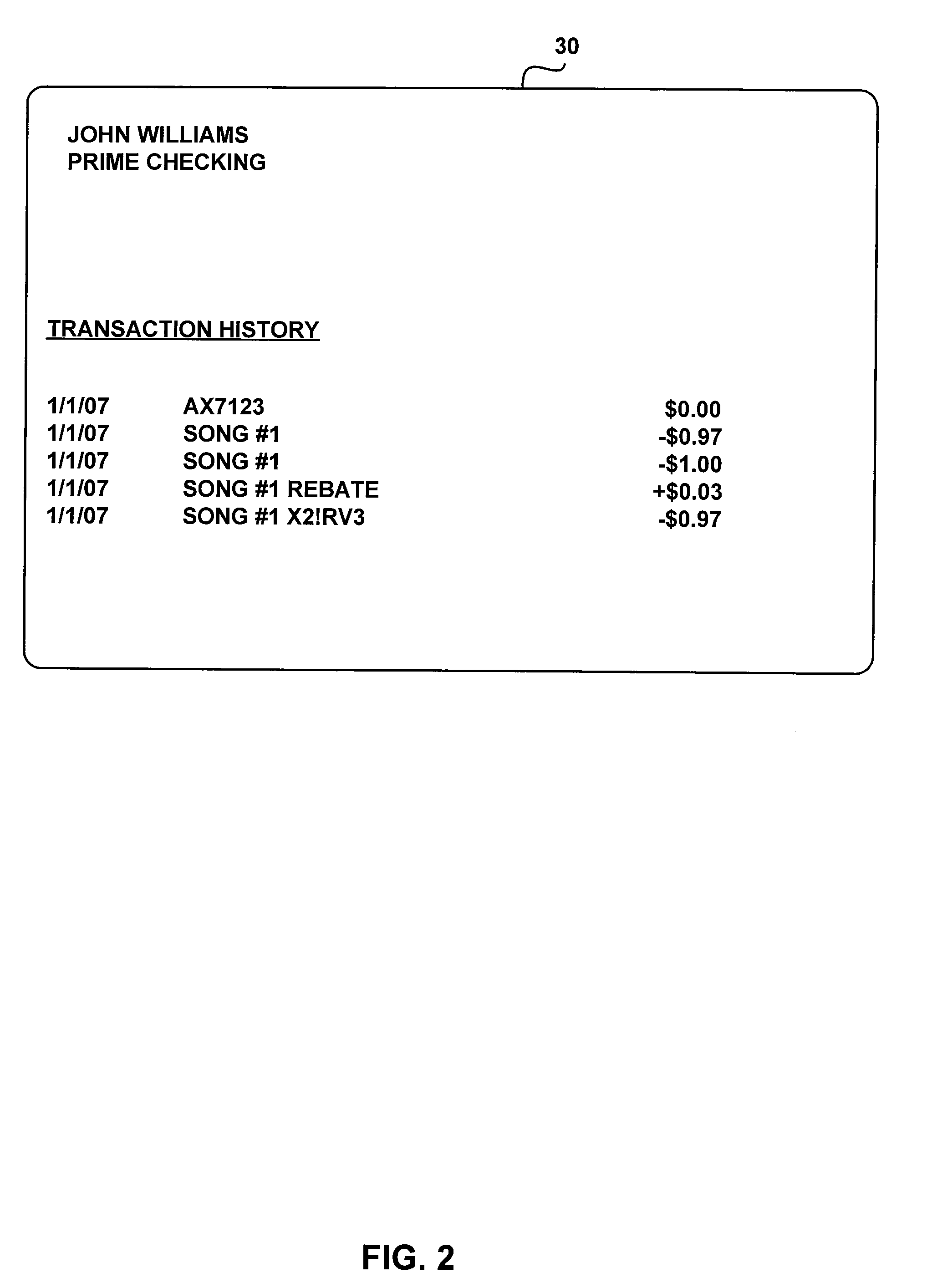
  • Figure 2
    Figure 2
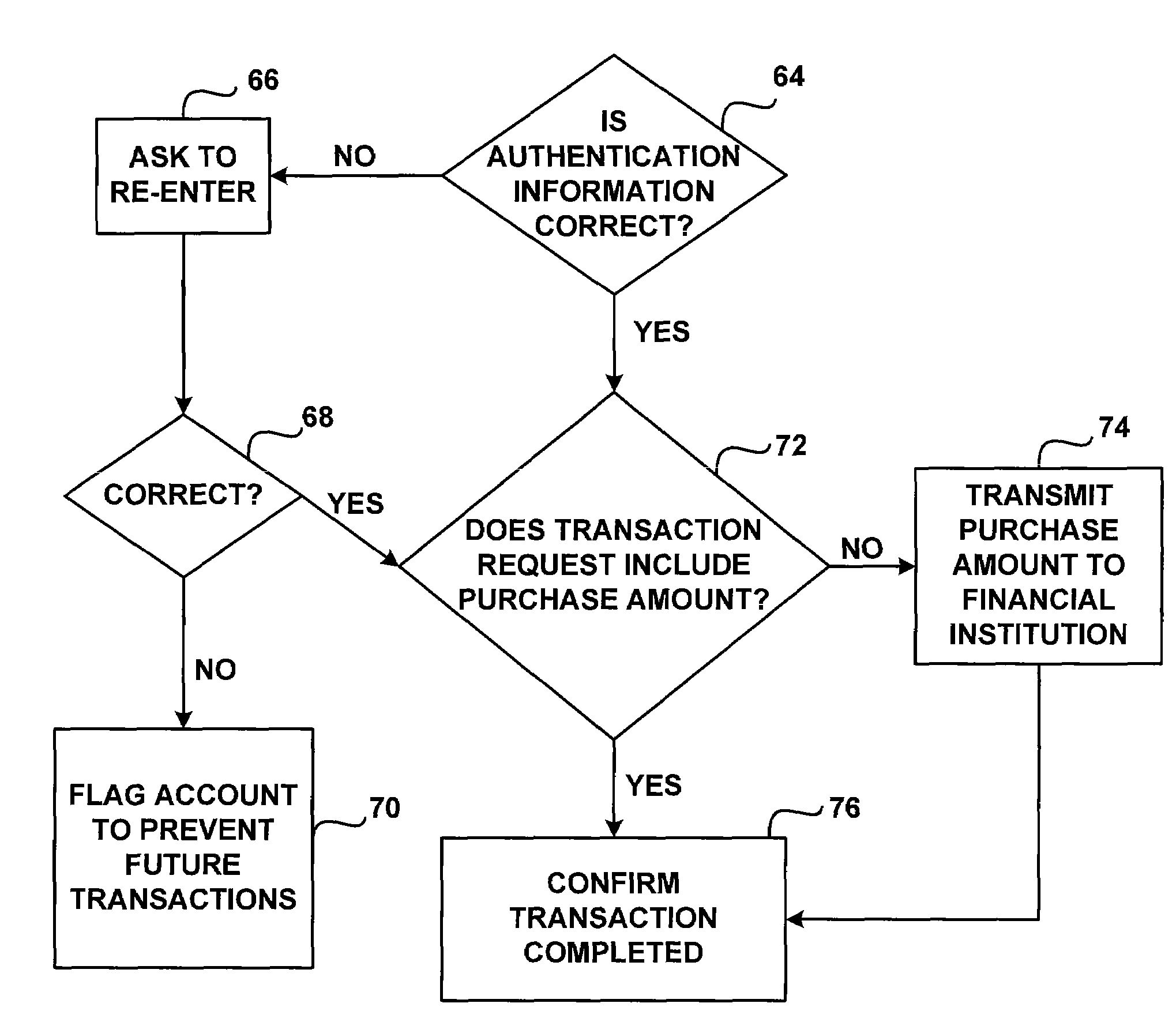
  • Figure 3
    Figure 3
Patent Text Reader

Abstract

In one embodiment, a computerized method for authenticating a financial account when making a purchase utilizes a merchant computer system which receives a purchase request from an account holder. The merchant computer system prepares transaction data that comprises account holder account data and authentication information. The transaction data is transmitted to a financial institution of the account holder. Subsequently, the merchant computer system receives the authentication information that was obtained by the account holder from the financial institution. The authentication information from the account holder is analyzed and future transactions are authenticated if the authentication information is correct.
Need to check novelty before this filing date? Find Prior Art

Description

BACKGROUND OF THE INVENTION

[0001] This invention relates generally to the field of authentication, and in particular to authenticating an account holder. In one specific aspect, the invention relates to authenticating an account holder when making a card not present transaction, such as over the Internet or the phone.

[0002] Fraud involving stolen credit or debit account numbers is a major concern for financial institutions worldwide. This risk of fraudulent transactions occurring with card present transactions is significantly less than with card not present transactions. This is primarily because the clerk can check to make sure there is a physical card and that the signature on the card matches the signature on the receipt.

[0003] For card not present transactions, these precautions are not available. As such, if an account number is stolen and provided over the Internet, there is no effective way to verify this fact. While debit cards often have an associated personal identification ...

Examples

Embodiment Construction

[0022]The invention provides a merchant with the ability to authenticate an account holder when performing a card not present transaction. Such transactions may originate from Internet purchases, phone order purchases, mail in purchases and the like. Also, the authentication techniques of the invention may be used with a wide variety of financial accounts and payment instruments. Merely by way of example, the authentication techniques may be used with open or closed loop debit cards, credit cards, stored value cards and the like. Also, the payment instruments associated with such financial accounts may have account information stored on a wide variety of media, such as magnetic stripes, bar codes, microprocessors, RF memory chips and the like. However, when making card not present transactions, the account information is usually provided to the merchant without the use of such presentation instruments. For example, when making an Internet purchase, the information is usually typed i...