

Method and apparatus for switching optical wavelengths
a technology of optical wavelengths and switching nodes, applied in the field of methods and apparatus for switching optical wavelengths, can solve the problems of large and variable optical signal losses, low design flexibility, and limited number of fiber lines a switching node can handle, so as to reduce the number of wsss and minimize the loss of optical signals
- Summary
- Abstract
- Description
- Claims
- Application Information
AI Technical Summary
Benefits of technology
Problems solved by technology
Method used
Image

Examples
Embodiment Construction
[0025]A description of example embodiments of the invention follows.
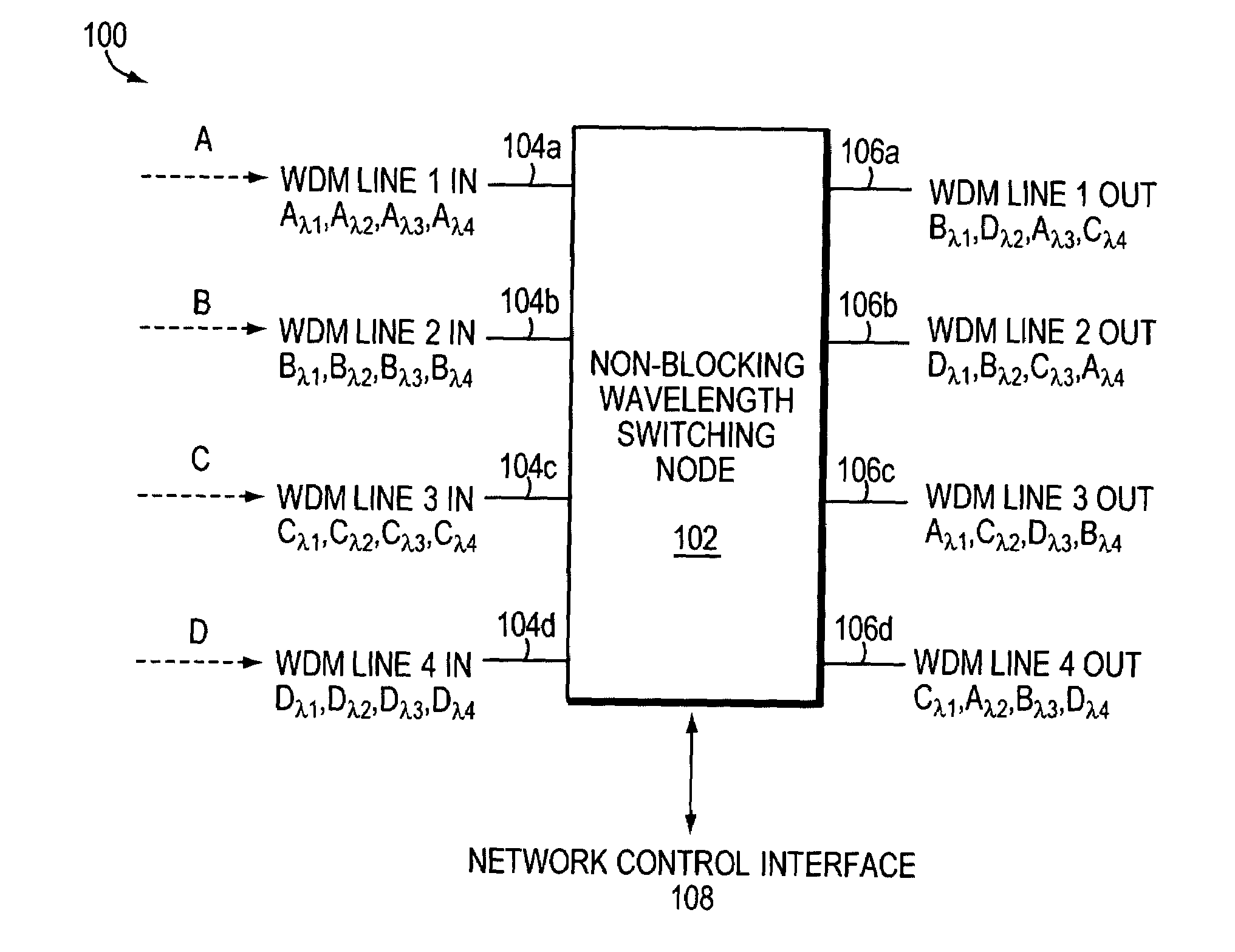
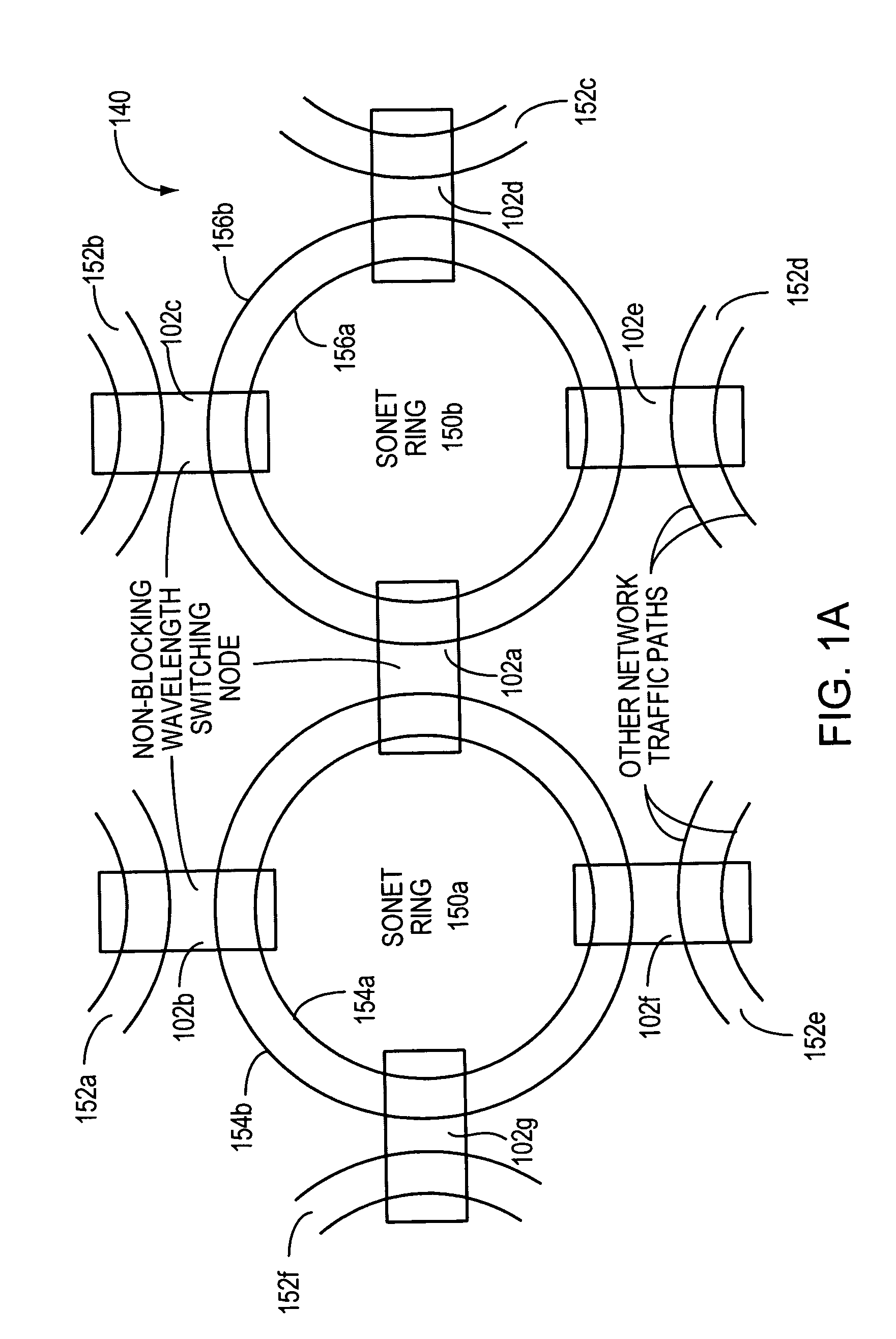
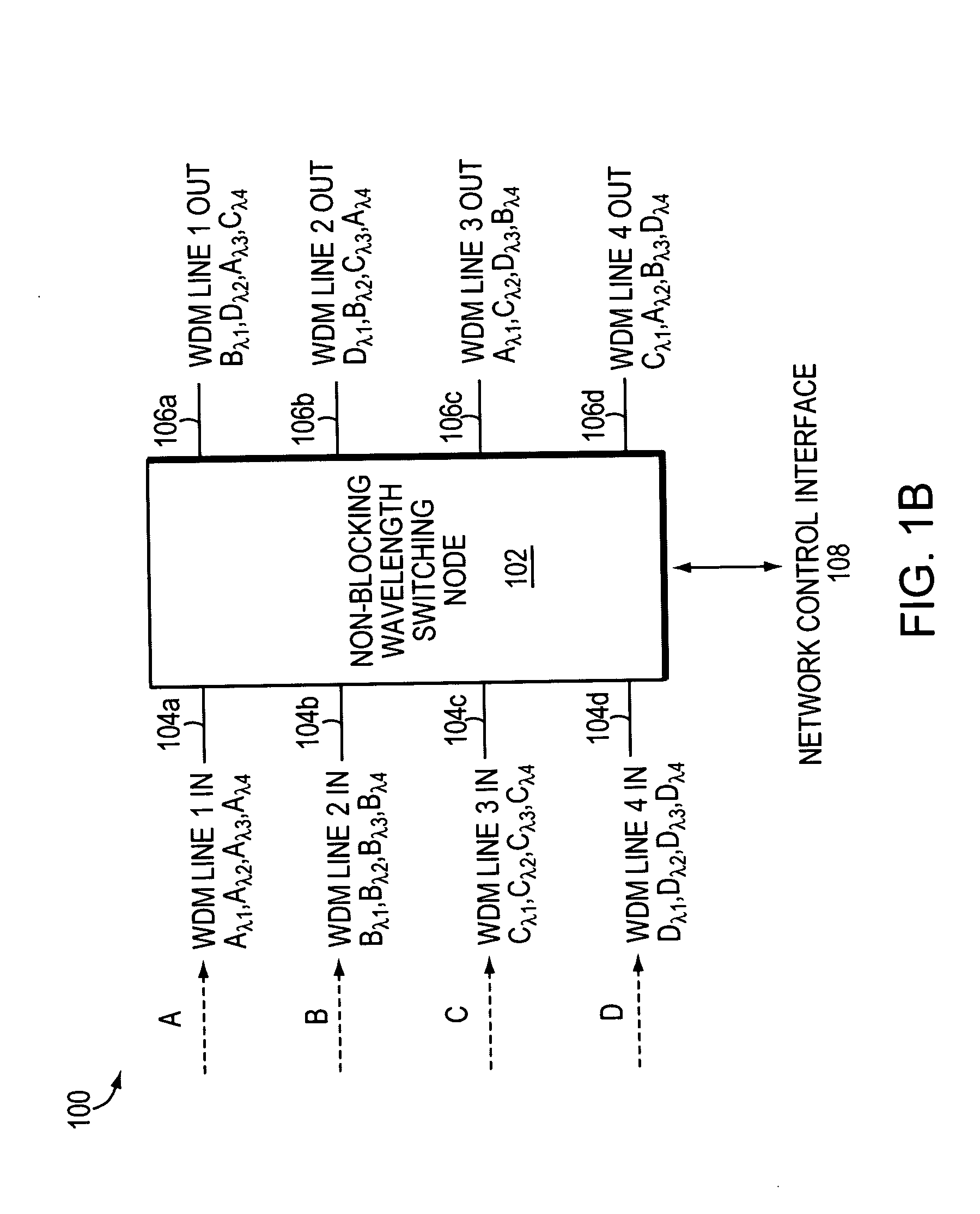
[0026]FIG. 1A shows an embodiment of a non-blocking wavelength switching node 102a deployed in a possible network architecture 140 utilizing SONET rings 105a-b. The non-blocking wavelength switching node 102a is coupled to inner ring 154a and outer ring of SONET ring 150a and also to inner ring 156a and outer ring 156b of SONET ring 150b. Consequently, non-blocking wavelength switching node 102a can switch optical signals between any of these paths 154a-b, 156a-b. For example, an optical signal may be switched from inner ring 154a to the outer ring 154b of SONET ring 150a. As another example, an optical signal may be switched from inner ring 154a to either inner ring 156a or outer ring 156b of SONET ring 150b. FIG. 1A also shows additional non-blocking wavelength switching nodes 102b-g coupled to SONET rings 150a-b and also to other network traffic paths 152a-f. The other network traffic paths 152a-f may be, for exa...
PUM
 Login to View More
 Abstract
Description
Claims
Application Information
 Login to View More