Dichroic Filter

US20090002830A1Inactive Publication Date: 2009-01-01NIKON CORP

Patent Information

Authority / Receiving Office
US · United States
Current Assignee / Owner
NIKON CORP
Publication Date
2009-01-01
Estimated Expiration
Not applicable · inactive patent

Smart Images

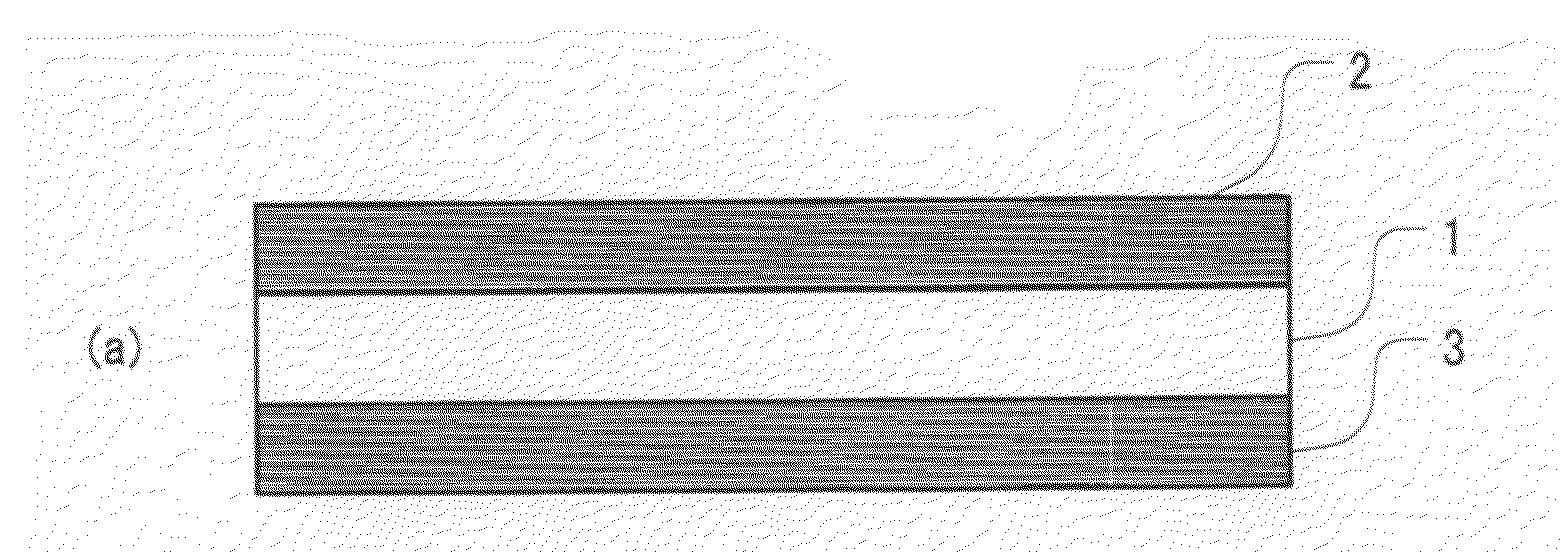
  • Figure 1
    Figure 1
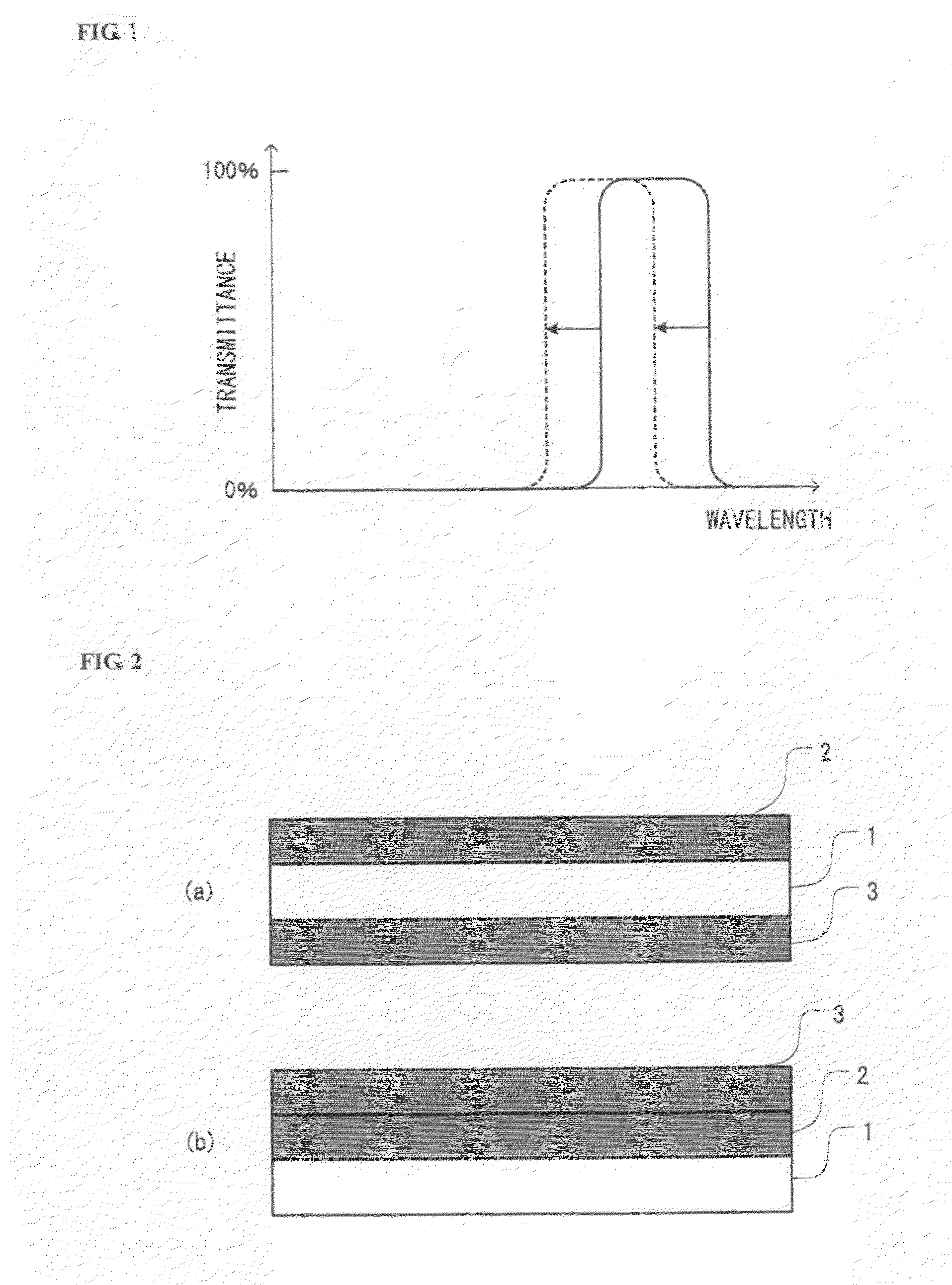
  • Figure 2
    Figure 2
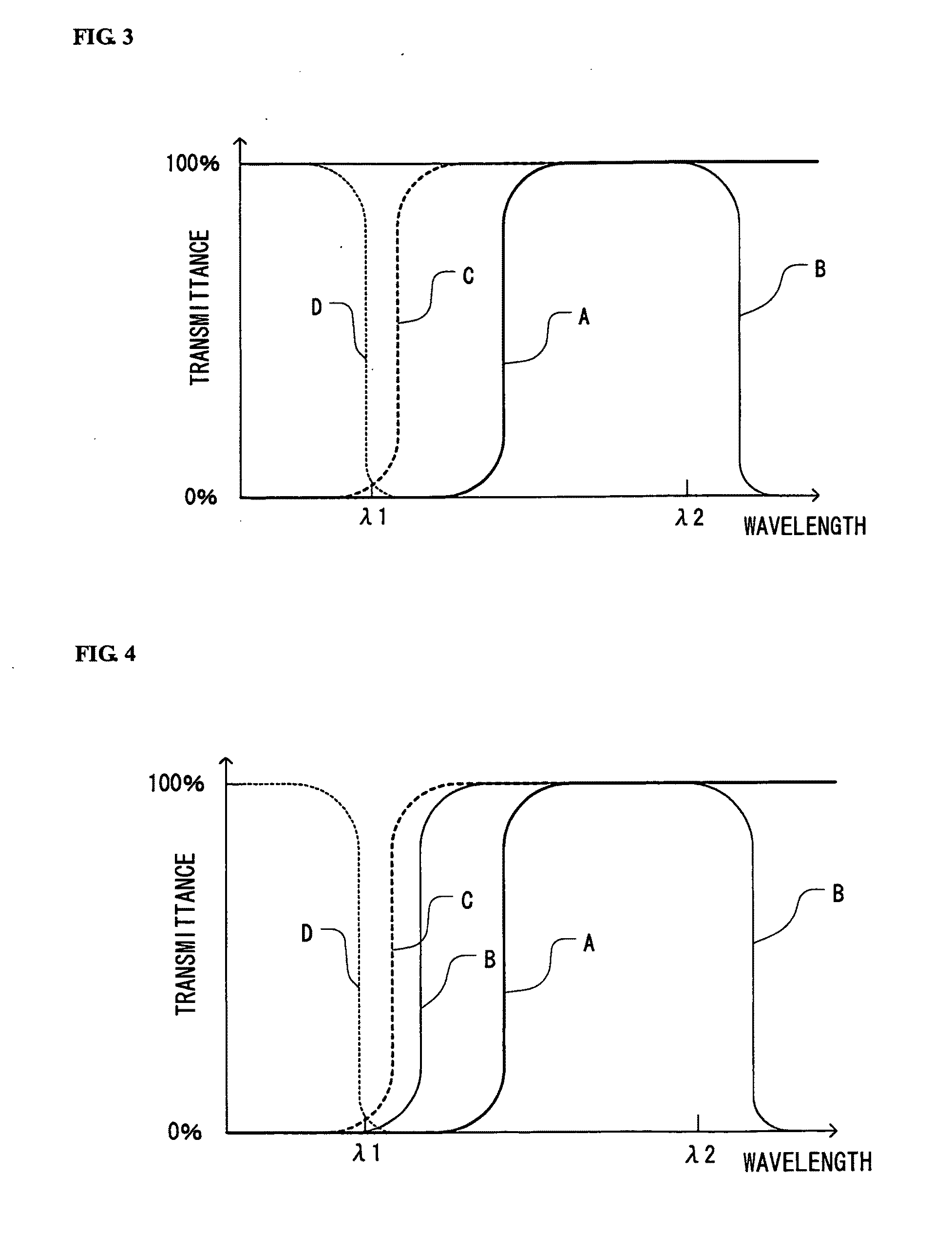
  • Figure 3
    Figure 3
Patent Text Reader

Abstract

A first multilayer film filter 2 is formed on one side of a transparent substrate 1, e.g., glass, and a second multilayer film filter 3 is formed on the other side. The multilayer film filter 2 is a low pass filter, and the multilayer film filter 3 is a high pass filter. Furthermore, the multilayer films are designed so that a shift in spectral transmittance characteristics produced by changes in incident angle is larger for the multilayer film filter 2 than for the multilayer film filter 3. Thereby, even if light of a wavelength that should be blocked is transmitted due to the shift in the spectral transmittance characteristics of the multilayer film filter 2, the transmittance of light of that wavelength is blocked because of the shift in the spectral transmittance characteristics of the multilayer film filter 3. Thereby, the dichroic filter transmits a significantly reduced percentage of stray light that impinges at large incident angles.
Need to check novelty before this filing date? Find Prior Art

Description

FIELD OF THE INVENTION

[0001] The present invention relates to a dichroic filter.RELATED ART

[0002] Dichroic filters are used in the field of, for example, optical communications for the purpose of transmitting light of a first wavelength and reflecting (without transmitting) light of a second wavelength. For example, with a dichroic filter that is designed to, for example, transmit light with a wavelength of 1,560 nm and reflect (without transmitting) light with a wavelength of 1,310 nm, the 1,560 nm light that emerges from an optical fiber enters the dichroic filter perpendicularly and transmits therethrough, and the 1,310 nm light that emerges from a separate light source is reflected by the same dichroic filter and enters the optical fiber.

[0003] In an optical system of the type discussed above, the 1,560 nm light enters the dichroic filter perpendicularly and is transmitted therethrough with high transmittance, and therefore the amount of the stray light is small, which makes it unn...

Claims

the structure of the environmentally friendly knitted fabric provided by the present invention; figure 2 Flow chart of the yarn wrapping machine for environmentally friendly knitted fabrics and storage devices; image 3 Is the parameter map of the yarn covering machine
Login to View More