
Transmission system for a cycle
a transmission system and cycle technology, applied in the direction of motorcycles, cycles, transportation and packaging, etc., can solve the problems of less energy-efficient pedal power motion and the individual's inability to pedal power to negotiate hills or other inclines, and achieve the effect of convenient releasable coupling
- Summary
- Abstract
- Description
- Claims
- Application Information
AI Technical Summary
Benefits of technology
Problems solved by technology
Method used
Image

Examples
Embodiment Construction
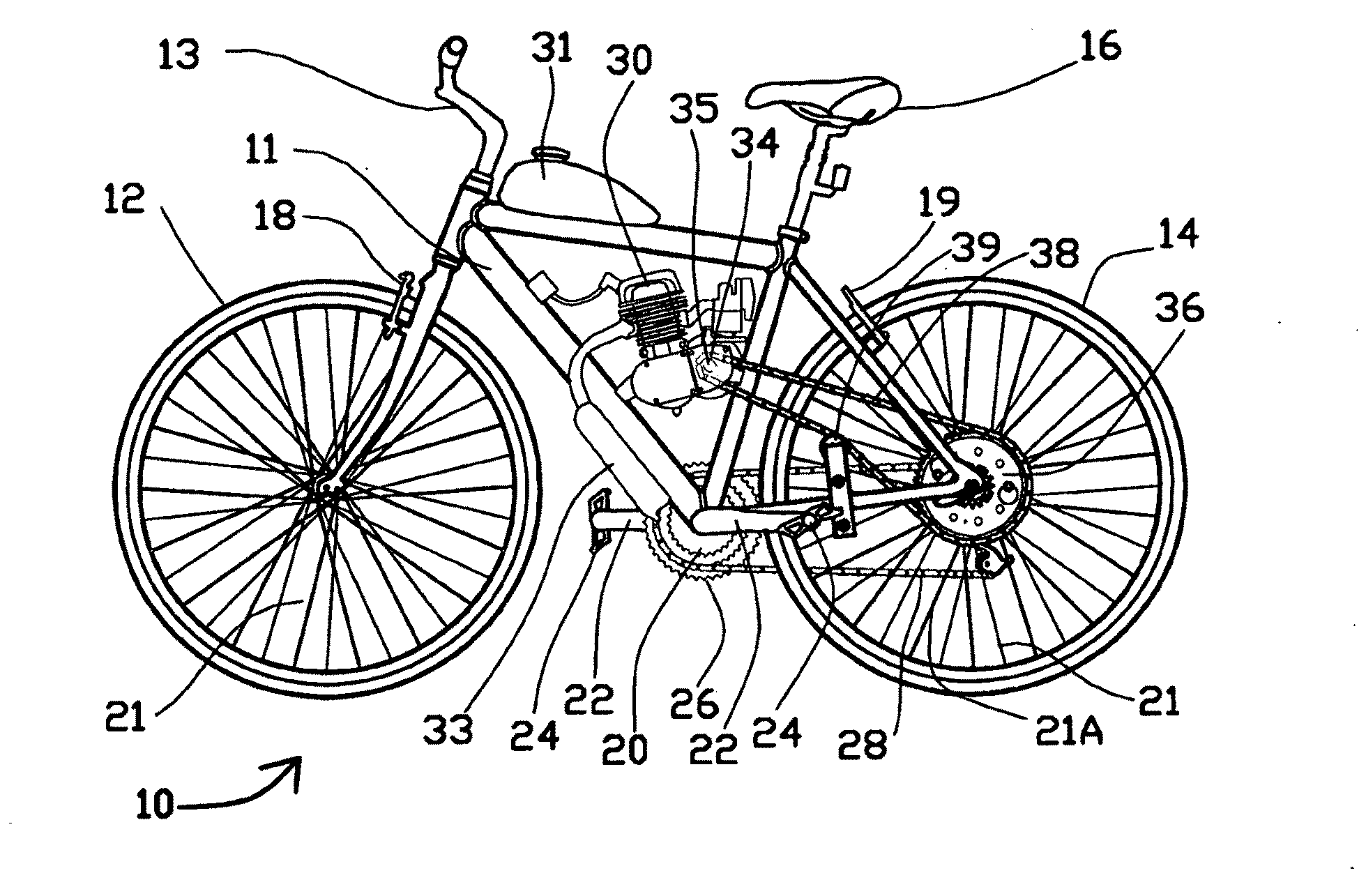
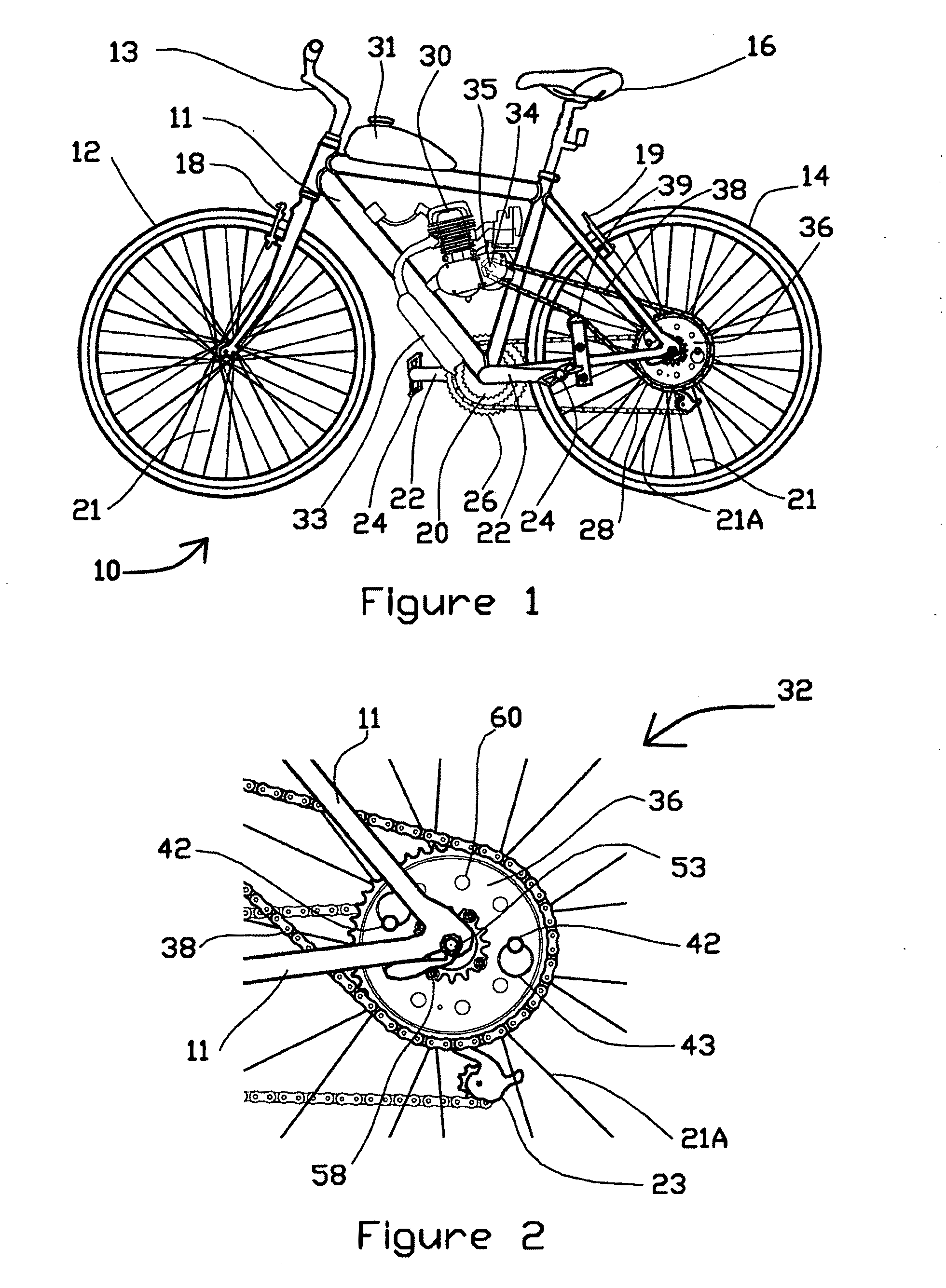
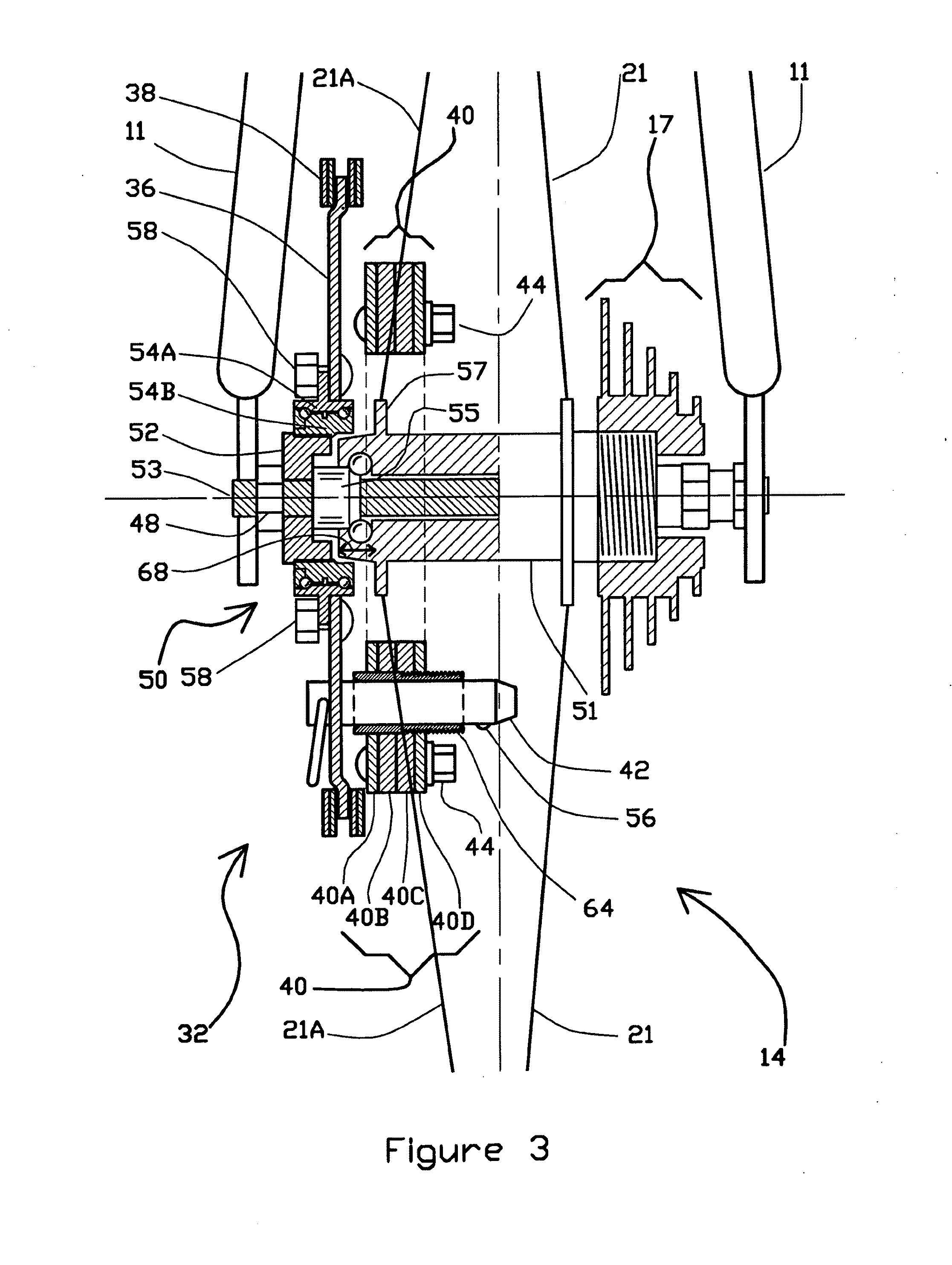
[0037]Referring firstly to FIGS. 1 to 6, there is shown a conventional bicycle 10 fitted with a transmission system 32 according to the present invention. Referring firstly to FIG. 1, it can be observed that the bicycle 10 includes a tubular frame 11 to which is connected a front wheel 12 which can be laterally directed using a steering handlebar 13, a driven wheel 14 being the rear wheel of the bicycle 10, front brakes 18, and rear brakes 19 and a seat 16 on which a rider (not shown) can be seated when riding the bicycle 10. Each of the front wheel 12 and driven wheel 14 are spoked wheels and therefore include spokes 21. The spokes 21 of the driven wheel 14 include drive-side spokes 21A being those spokes provided in the drive-motor transmission side of the driven wheel 14. The illustrated wheels 12 and 14 have a thirty-six spoke wheel configuration. In comparison, the wheel shown in FIG. 7 has a thirty-two spoke wheel configuration.
[0038]The illustrated bicycle 10 includes two act...
PUM
 Login to View More
 Abstract
Description
Claims
Application Information
 Login to View More