

Method for reselecting a cell and detecting whether a terminal is stationay in mobile telecommunications system
a mobile communication system and cell technology, applied in wireless communication services, wireless communication services, electrical equipment, etc., can solve the problems of terminals' difficulties in requesting a service and service delay, and achieve the effect of enhancing service satisfaction and reducing service delay
- Summary
- Abstract
- Description
- Claims
- Application Information
AI Technical Summary
Problems solved by technology
Method used
Image

Examples
Embodiment Construction
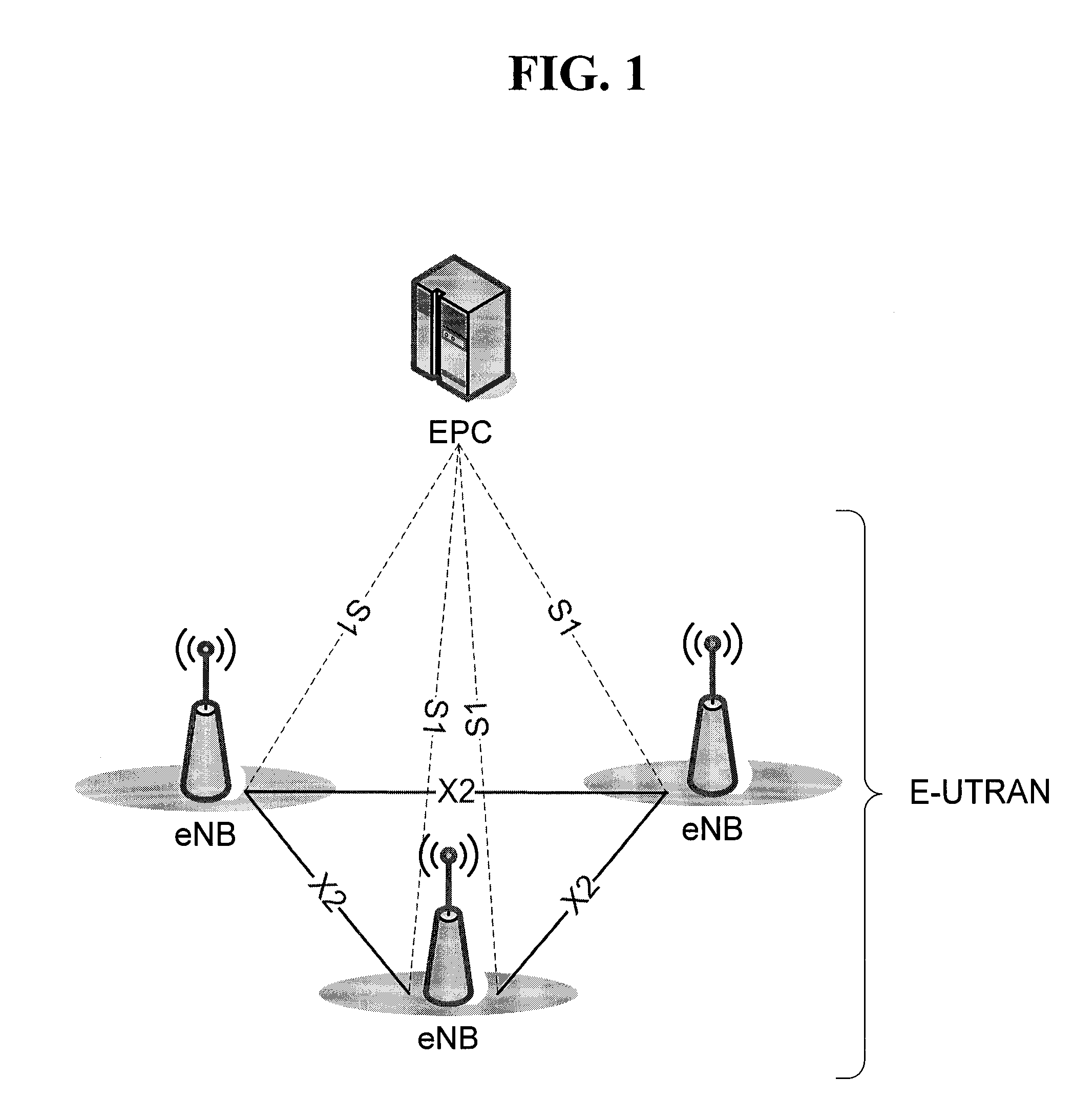
[0077]The present invention is applied to a mobile telecommunications system and, more particularly, to an Evolved Universal Mobile Telecommunications System (E-UMTS) that has evolved from UMTS. However, without being limited thereto, the present invention may be also applied to any mobile telecommunications system and communication protocol to which technical features of the present invention is applicable.
[0078]Various modifications and embodiments can be made in the present invention, and reference will be made in detail to the preferred embodiments of the present invention, examples of which are illustrated in the accompanying drawings.
[0079]However, it should also be understood that embodiments are not limited by any of the details of the foregoing description, but rather should be construed broadly within its spirit and scope and it is intended that the present invention cover modifications and variations of this invention provided they come within the scope of the appended cl...
PUM
 Login to View More
 Abstract
Description
Claims
Application Information
 Login to View More