
Data read circuit, nonvolatile memory device comprising data read circuit, and method of reading data from nonvolatile memory device
a data read circuit and nonvolatile memory technology, applied in the field of electronic memory technologies, can solve the problems of degrading other aspects and reducing reliability, and achieve the effect of improving the reliability of read operations
- Summary
- Abstract
- Description
- Claims
- Application Information
AI Technical Summary
Benefits of technology
Problems solved by technology
Method used
Image

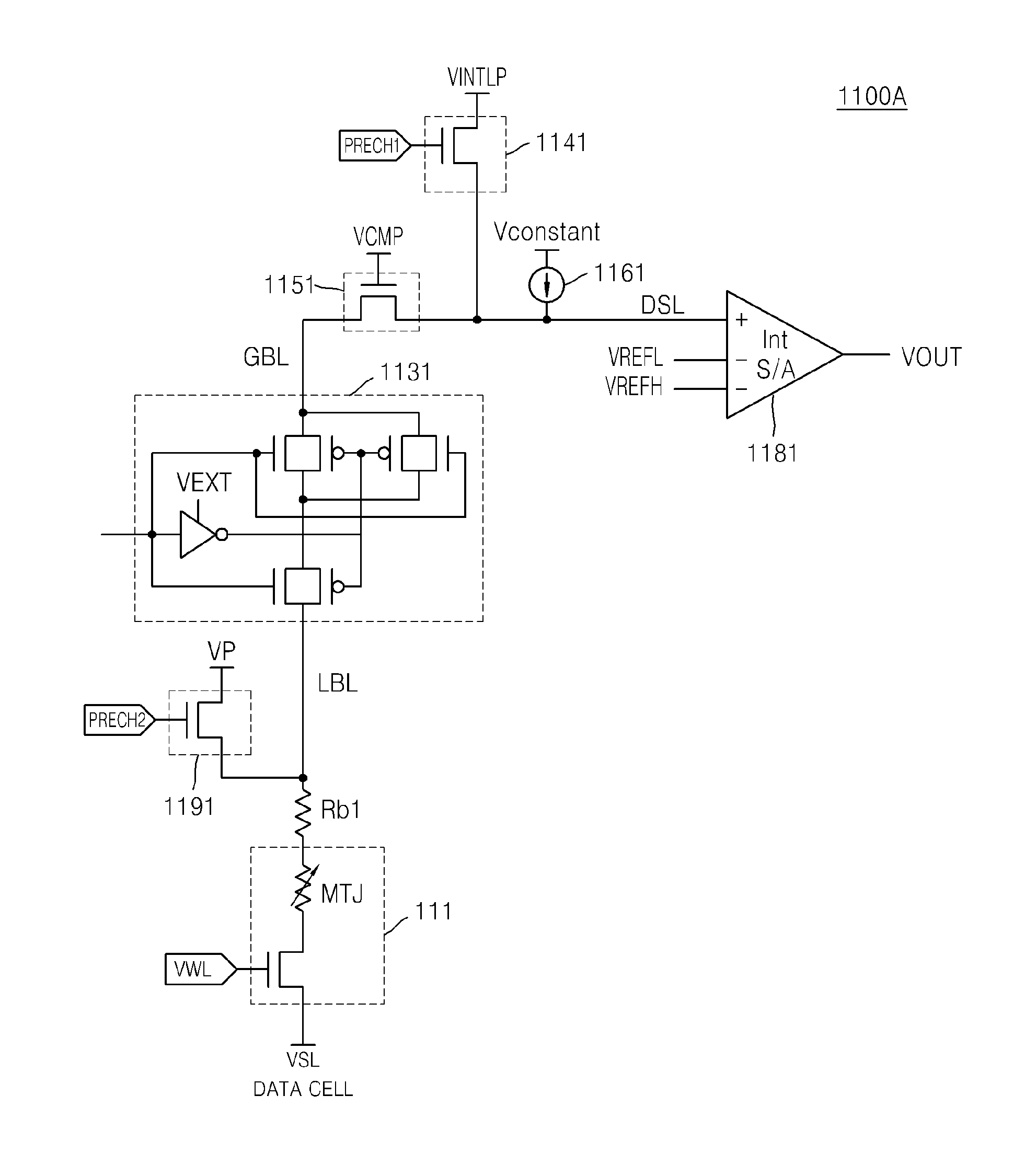
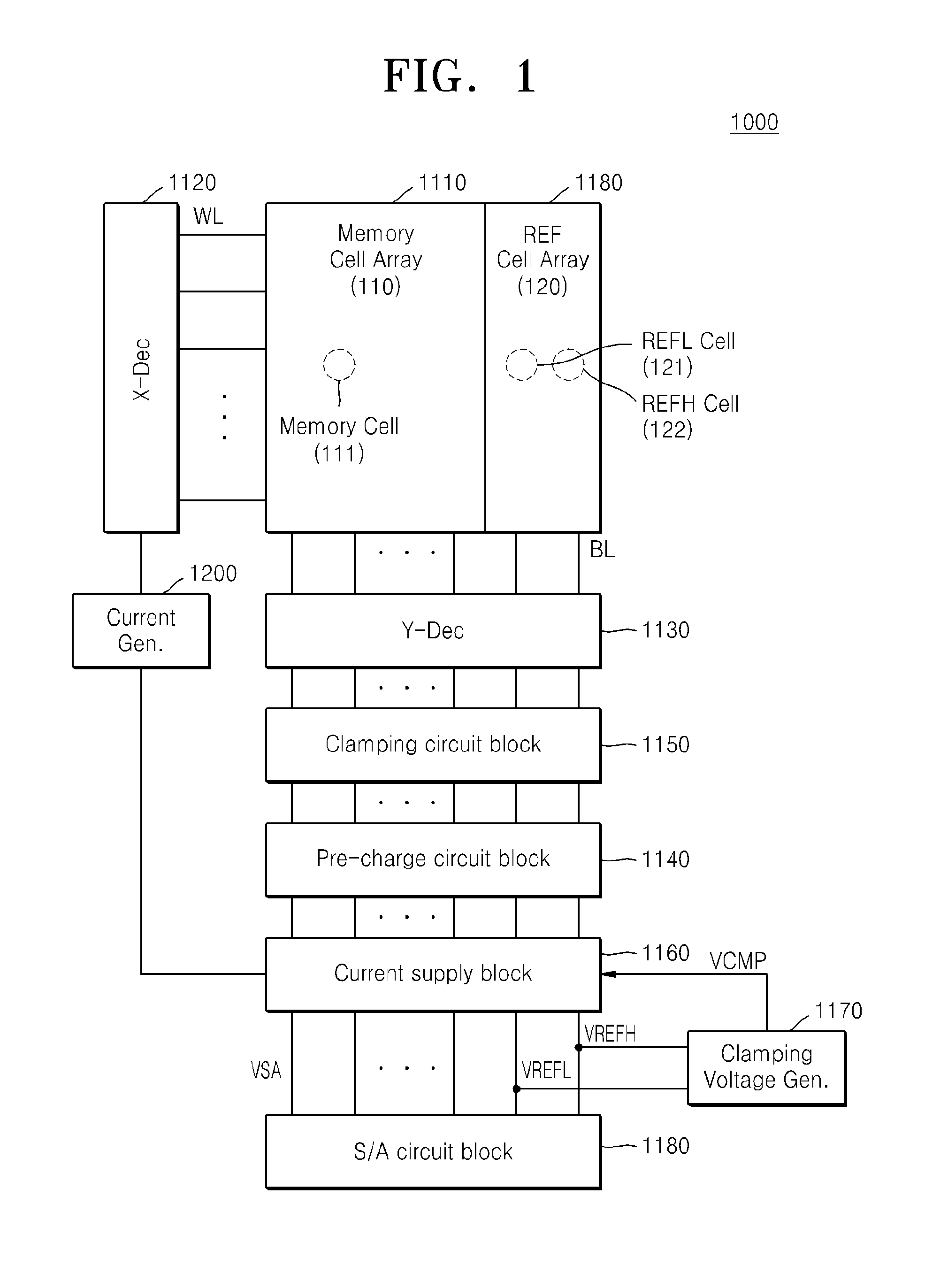
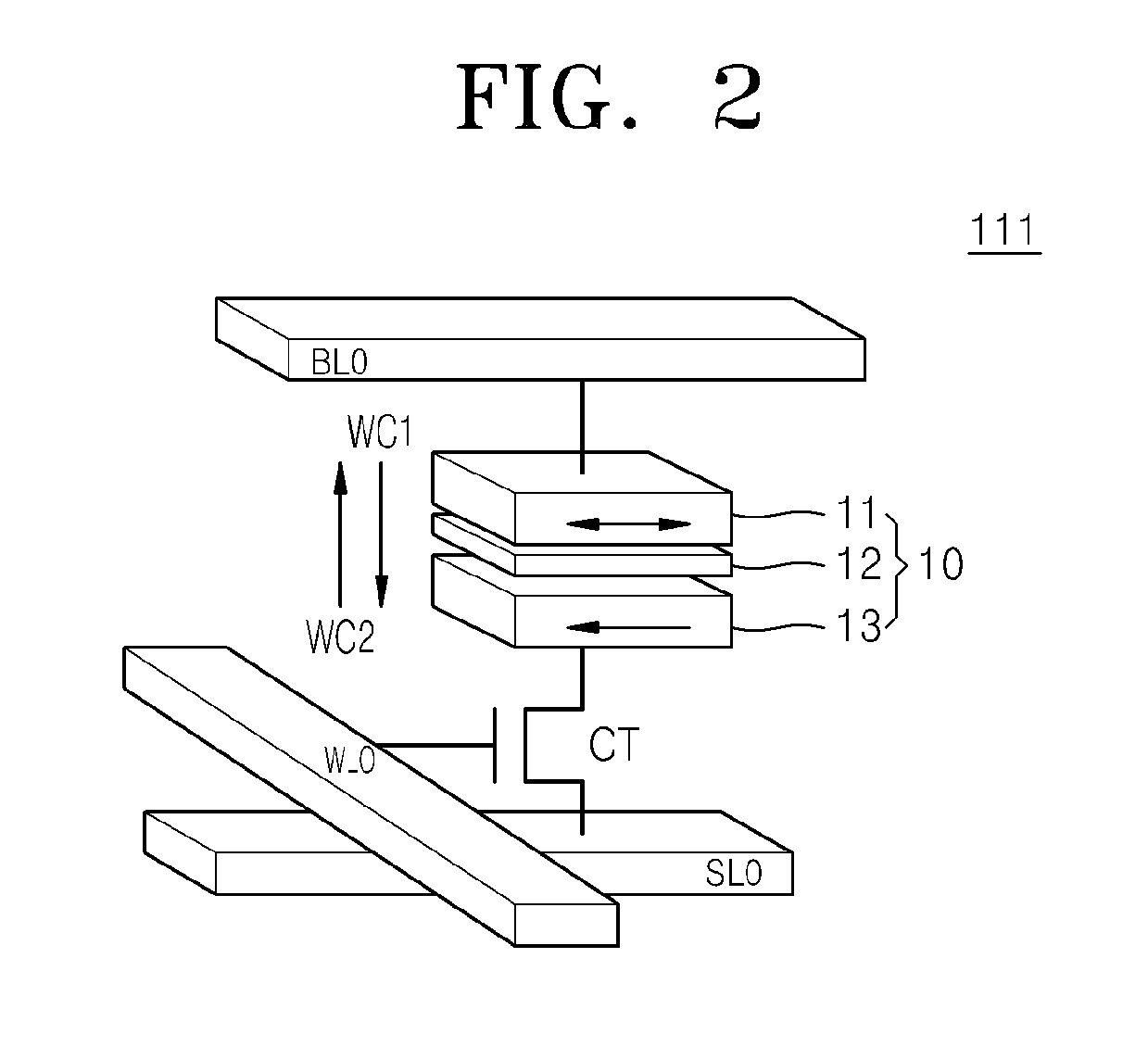
Examples
Embodiment Construction
[0029]Selected embodiments of the inventive concept are described below with reference to the accompanying drawings. These embodiments are presented as teaching examples and should not be construed to limit the scope of the inventive concept.
[0030]The described embodiments relate generally to nonvolatile memory devices and ways of improving their performance and / or reliability. For example, one way to improve the reliability of a nonvolatile memory device is by reducing variations in the operation of its memory cells. These variations can be produced by various factors, such as differences in cell resistance values (e.g., in an RRAM), or fluctuations of a bias current, a current source, or a bit line resistance. These variations may also occur due to changes to an external reference voltage applied globally to a memory region.
[0031]Certain embodiments are described with reference to an MRAM that stores data using a change in a resistance value of a magnetic tunneling junction (MTJ) ...
PUM
 Login to View More
 Abstract
Description
Claims
Application Information
 Login to View More