
Control of exhaust flow in an engine including a particulate filter
a technology of particulate filter and exhaust system, which is applied in the direction of electric control of exhaust, machines/engines, mechanical equipment, etc., can solve the problems of difficult maintenance of accurate emission control, poor combustion pocket, and difficult to remove soot, so as to avoid potential increased emissions and improve the effect of removal
- Summary
- Abstract
- Description
- Claims
- Application Information
AI Technical Summary
Benefits of technology
Problems solved by technology
Method used
Image

Examples
Embodiment Construction
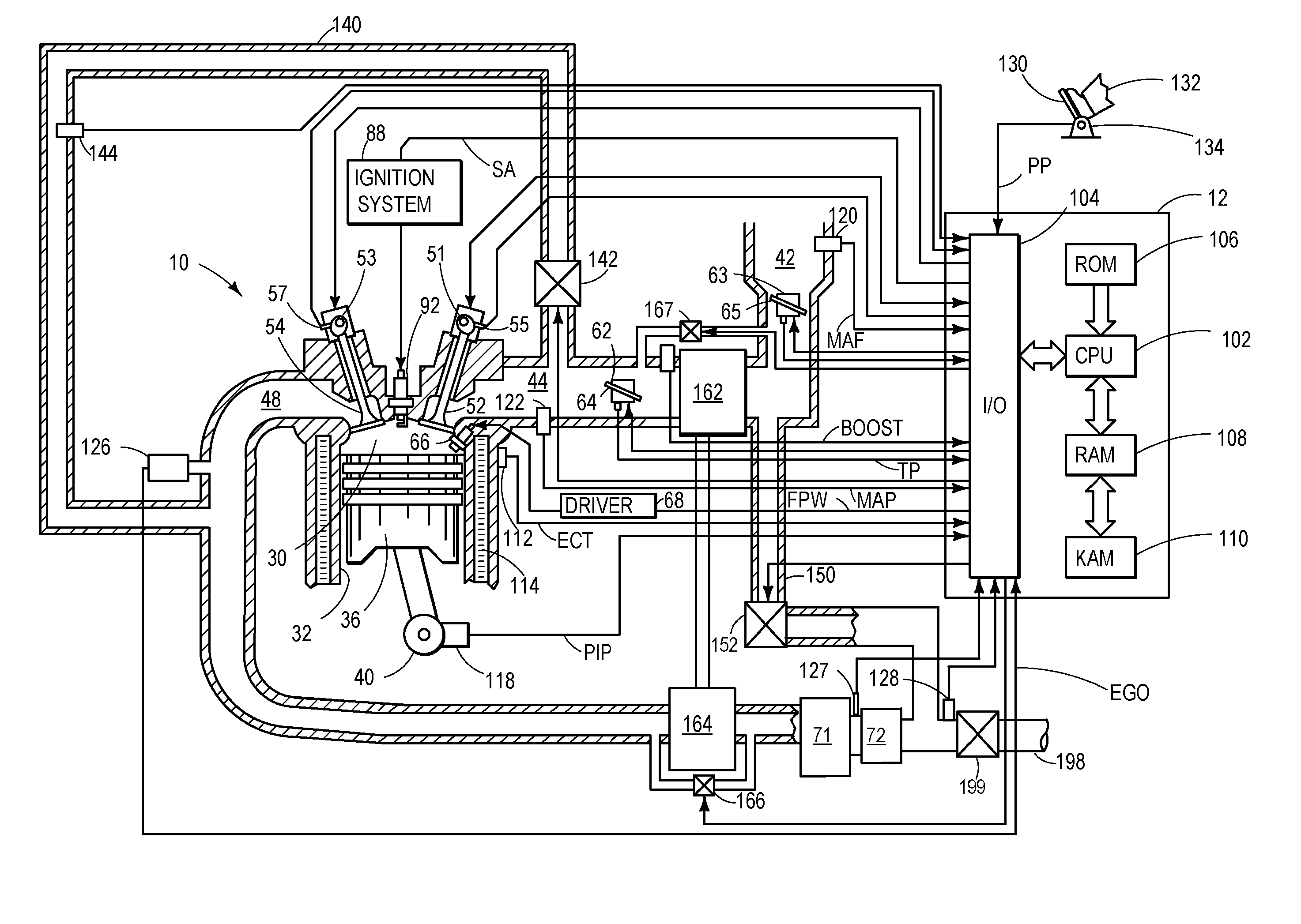
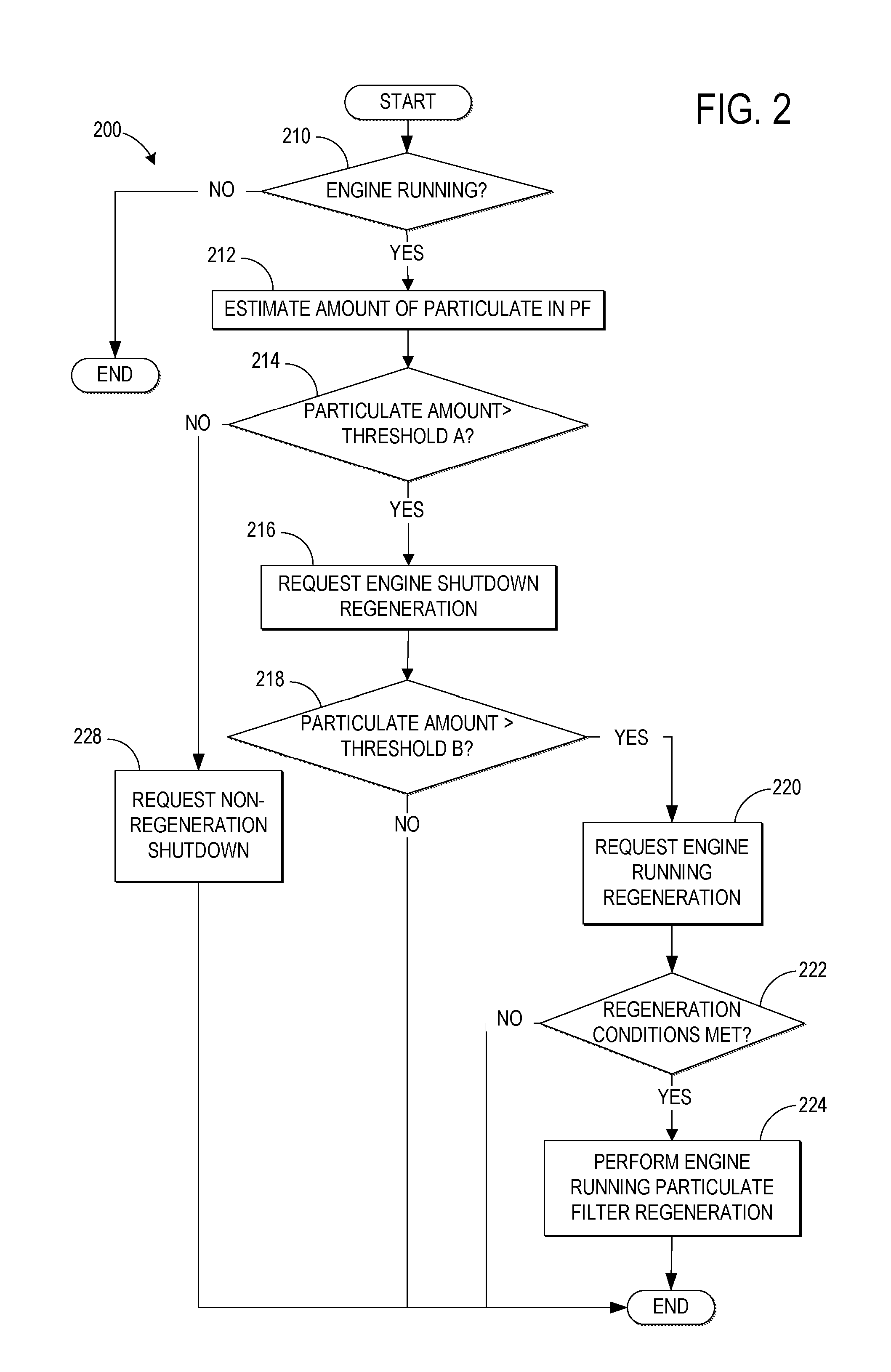
[0015]The following description relates to a method for regenerating a particulate filter in an engine, such as a direct injection gasoline engine. During a first operating condition of the engine, combustion in the engine may be carried out about stoichiometry and exhaust gas may flow from the engine in a first direction, to a particulate filter where soot generated by the engine is collected. During engine operation, vacuum generated by engine spinning (or pressure generated by turbocharger motion) may be stored in the intake system, such as in the intake manifold. Then during a subsequent engine shutdown (e.g., during engine spin-down after combustion has stopped, or during engine rest), the stored vacuum or pressure may be applied to generate regeneration flow to the filter. For example, stored vacuum may be used to draw fresh air into the filter from ambient atmosphere (e.g., via the tailpipe and / or engine inlet) in a second, reverse direction, to aid in filter regeneration. Al...
PUM
 Login to View More
 Abstract
Description
Claims
Application Information
 Login to View More