Advances in meter technology have generally not been propagated for managing parking meter
enforcement and parking meter fee payment.
This is a time-consuming and costly service.
As with many tasks, manual involvement produces inefficiencies and unreliability.
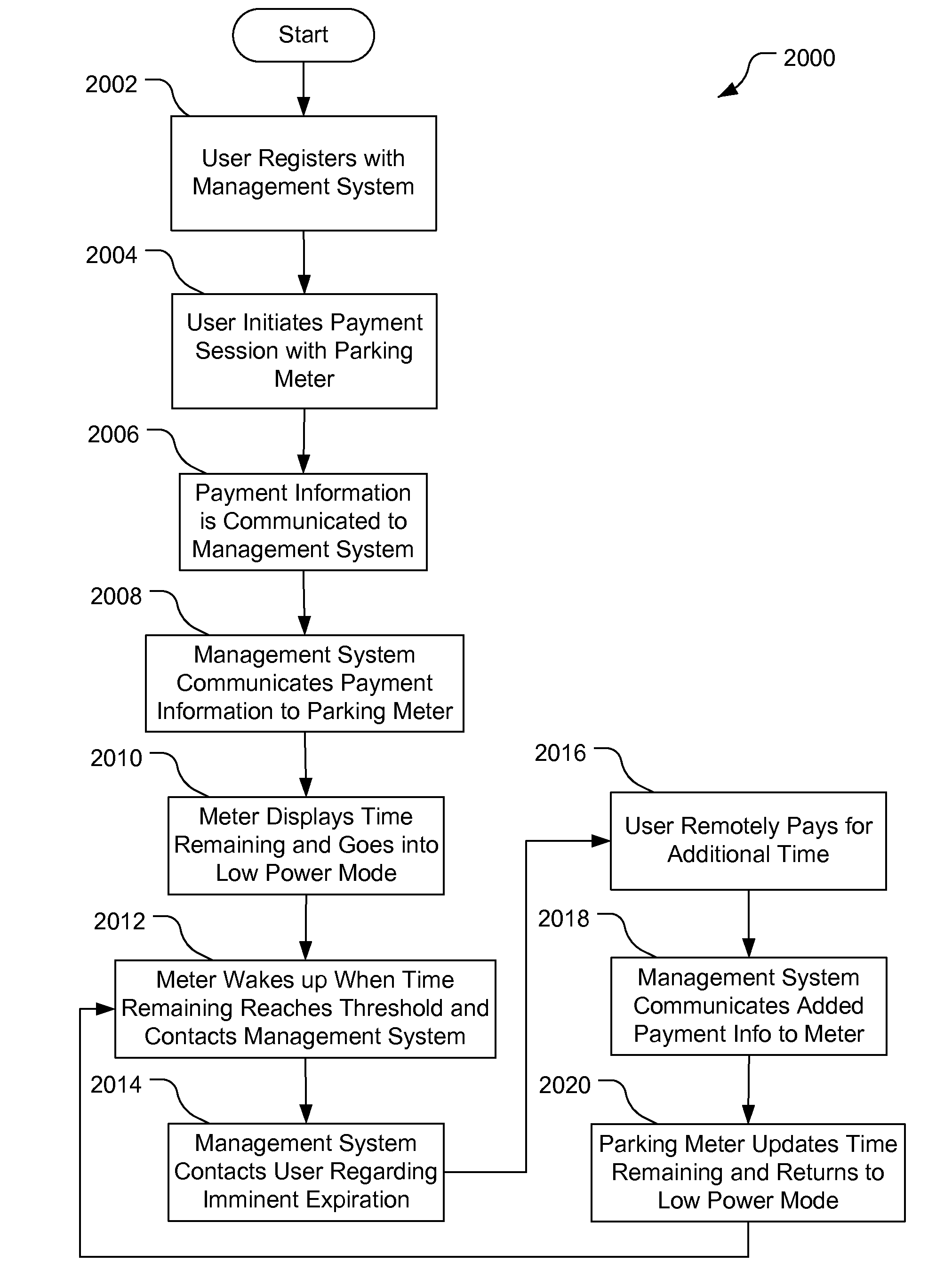
However,because the parking meters are not always awake (they power-down to savepower), the updated time cannot be communicated from the
central database tothe meter for display.8Because the meter does not display the time added in Step 7, enforcementrequires officers to check with the
central database for paid time, prior toissuing a
citation, because a meter with a display that indicates the parkingsession has expired may actually have time remaining, due to the Step 7payment.
This need for checking is cumbersome and
time consuming, makingenforcement difficult.
Performing the above pay-by-
cell process is
time consuming to the user, requiring the user to register, place a call, and note the location and the amount of time to be purchased.
In addition, the availability of
credit card payment for both multi-space and single-space parking meters is likely to have a negative
impact on pay-by-
cell use due to the ease and speed of paying with a
credit card.
The above pay-by-
cell process is also difficult from an
enforcement perspective, as it requires enforcement personnel to contact the
central database to determine if time has been added to the meter.
The need for checking with the central
database to determine remaining time, on a meter that otherwise indicates time has expired, translates into a slower enforcement pace and reduces the number of spaces that can be monitored by enforcement officers and reduces the citations issued for expired meters, which also translates into less revenue for a city or parking authority.
Some companies have implemented new technologies to address the primary drawbacks discussed above, with limited success.
However, this still requires additional time and money to perform the checking Meters can be configured to communicate over low-power mesh network
wireless systems to enable the meters to always be awake and thereby receive updated data over the mesh network.
However, mesh network parking meters are not without problems.
Installation of the
wireless routers is costly, can require permitting, and consumes
electricity.
This creates any number of issues, depending on which entity owns the poles, the permitting process and added bureaucracy to determine how to pay for the consumed
electricity, allocating responsibility for who will maintain the installed
router system, and what will be the
impact if a
router fails.
Mesh network technology can be relatively expensive in terms of material costs, maintenance costs, installation, and permitting costs.
While it is possible that other services can be processed through the mesh network, the economics of the service is such that few customers are willing to make such an investment of money and resources to install and maintain mesh network parking systems for such a limited
economic return.
Due to the cumbersome steps in current pay-by-cell processes, pay-by-cell payments typically represent less than 5% of all parking revenues for a given city.



 Login to View More
  Login to View More