
Process for converting bio-oil
a bio-oil and process technology, applied in the field of bio-oil conversion, can solve the problems of high oxygen content, high water content, corrosion, etc., and achieve the effects of improving stability, reducing acidity, and improving stability
- Summary
- Abstract
- Description
- Claims
- Application Information
AI Technical Summary
Benefits of technology
Problems solved by technology
Method used
Image

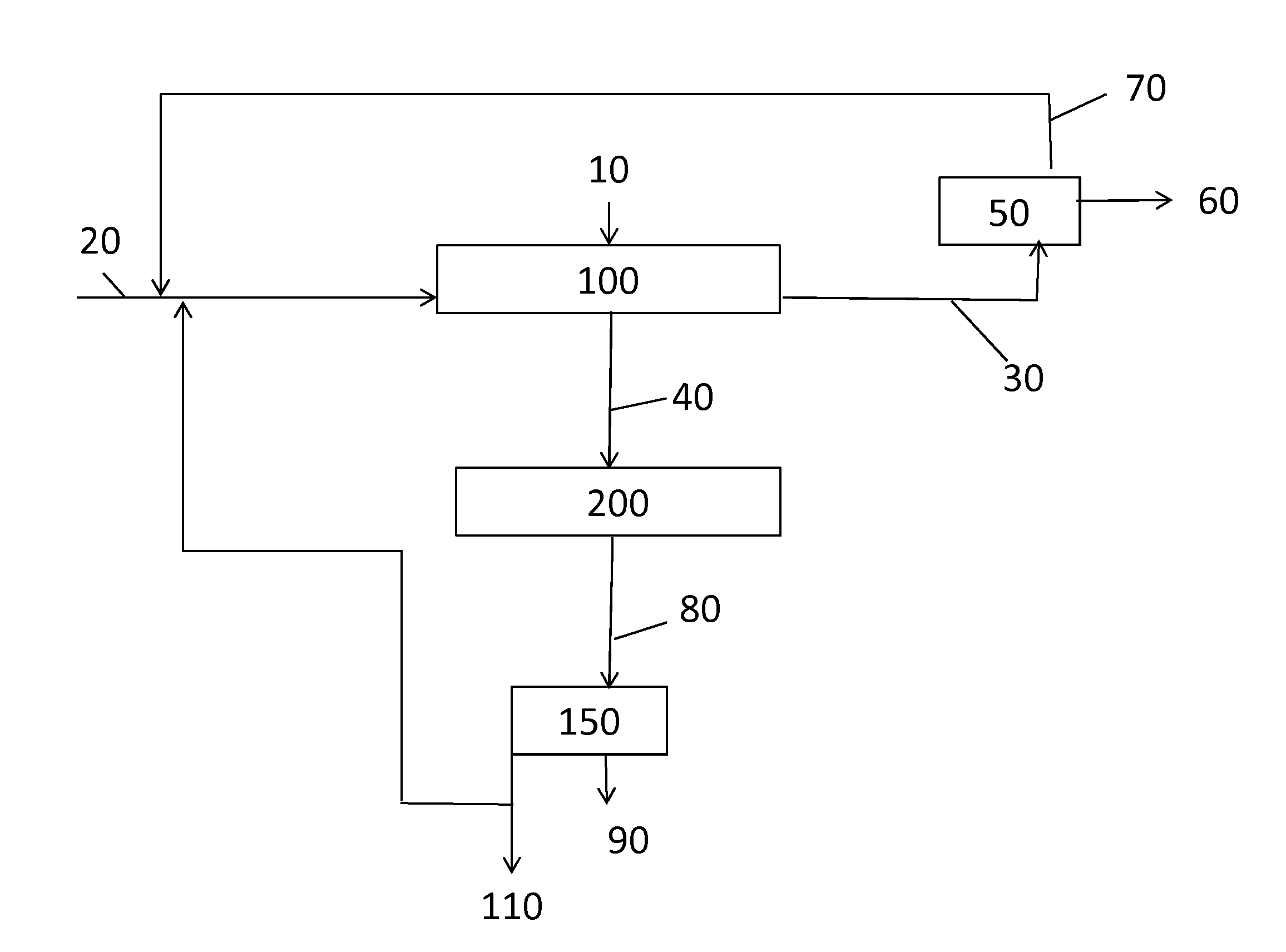
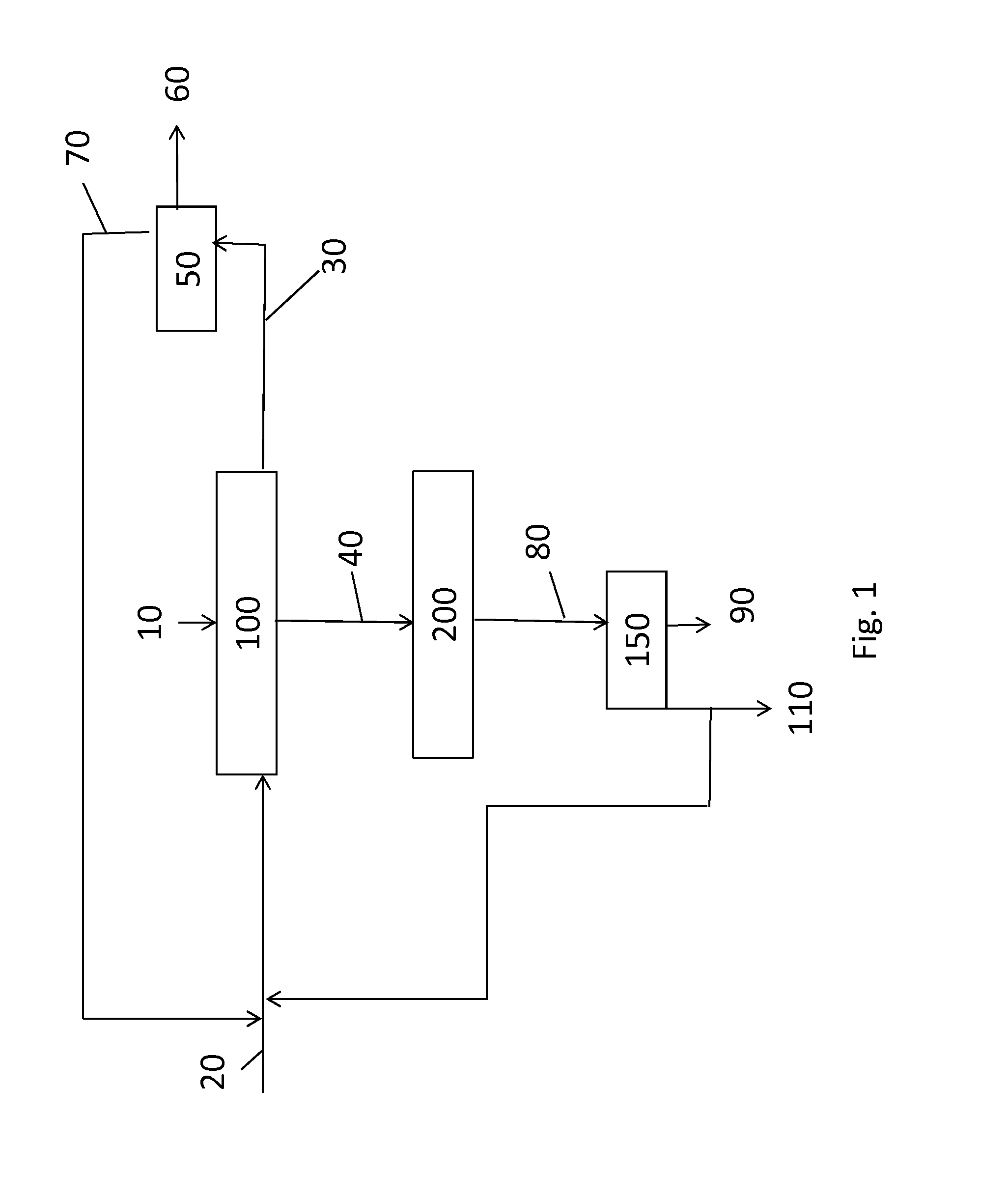

Examples
example 1
Methanolysis of Pyrolysis Oil
[0070]Pyrolysis oil was freeze-dried to obtain dry pyrolysis oil, which was subjected to methanolysis in dry methanol. The freeze dried pyrolysis oil (10 g) was dissolved in 50 ml MeOH and refluxed at 65° C. for 7 hours. GC-MS and TAN (Total Acid Number) was measured after reaction. GC-MS (Gas Chromatograph-Mass Spectrometer) revealed methyl esters of acetic, propionic and butanoic acid and benzoic acids and acetals of furfural.
[0071]The GC-MS results of the pyrolysis oil and the product are provided in the following table 1.GC: Agilent 7890A, MSD: Agilent 5975C, Column: HP-1, 30 m, id 0.25 mm, film thickness 0.25 μm, Carrier gas: He
TABLE 1Retentiontime (min)IdentifiedstructureRetentiontime (min)Methanolysisproduct3.3345.1474.8098.51511.72112.55618.08019.42424.08226.77127.73041.15031-33
example 2
Azeotropic Distillation of Pyrolysis Oil Followed by Methanolysis
[0072]Pyrolysis oil (45 g) was dissolved in 50 ml MeOH and heated to 65° C., when MeOH started to distill. When methanol distilled out fresh dry methanol (150 ml) was introduced to the pyrolysis oil. All together 150 ml of methanol was distilled from the pyrolysis oil. After distillation the distillation column was closed and pyrolysis oil was refluxed with methanol for 5 h. GC-MS and TAN was measured after the reaction. Pyrolysis oil(feedstock) had TAN (acid number) of 130. In the product it was reduced to 100. Water content was reduced from 30% to 5% measured by Karl-Fischer titration. GC-MS revealed methyl esters of acetic acid and benzoic acids and acetals of furfural.
PUM
| Property | Measurement | Unit |
|---|---|---|
| temperature | aaaaa | aaaaa |
| temperature | aaaaa | aaaaa |
| pressure | aaaaa | aaaaa |
Abstract
Description
Claims
Application Information
 Login to View More