
Tactile and Visual Smoke Detector System
a smoke detector and visual technology, applied in the field of smoke detector systems, can solve the problems of vibrating and buzzing steadily, red lights, etc., and achieve the effect of maximizing safety
- Summary
- Abstract
- Description
- Claims
- Application Information
AI Technical Summary
Benefits of technology
Problems solved by technology
Method used
Image

Examples
Embodiment Construction
[0029]Reference is made herein to the attached drawings. Like reference numerals are used throughout the drawings to depict like or similar elements of the multi-feedback fire alarm system. For the purposes of presenting a brief and clear description of the present invention, the preferred embodiment will be discussed as used for alerting hearing impaired users about specific threats. The figures are intended for representative purposes only and should not be considered to be limiting in any respect.
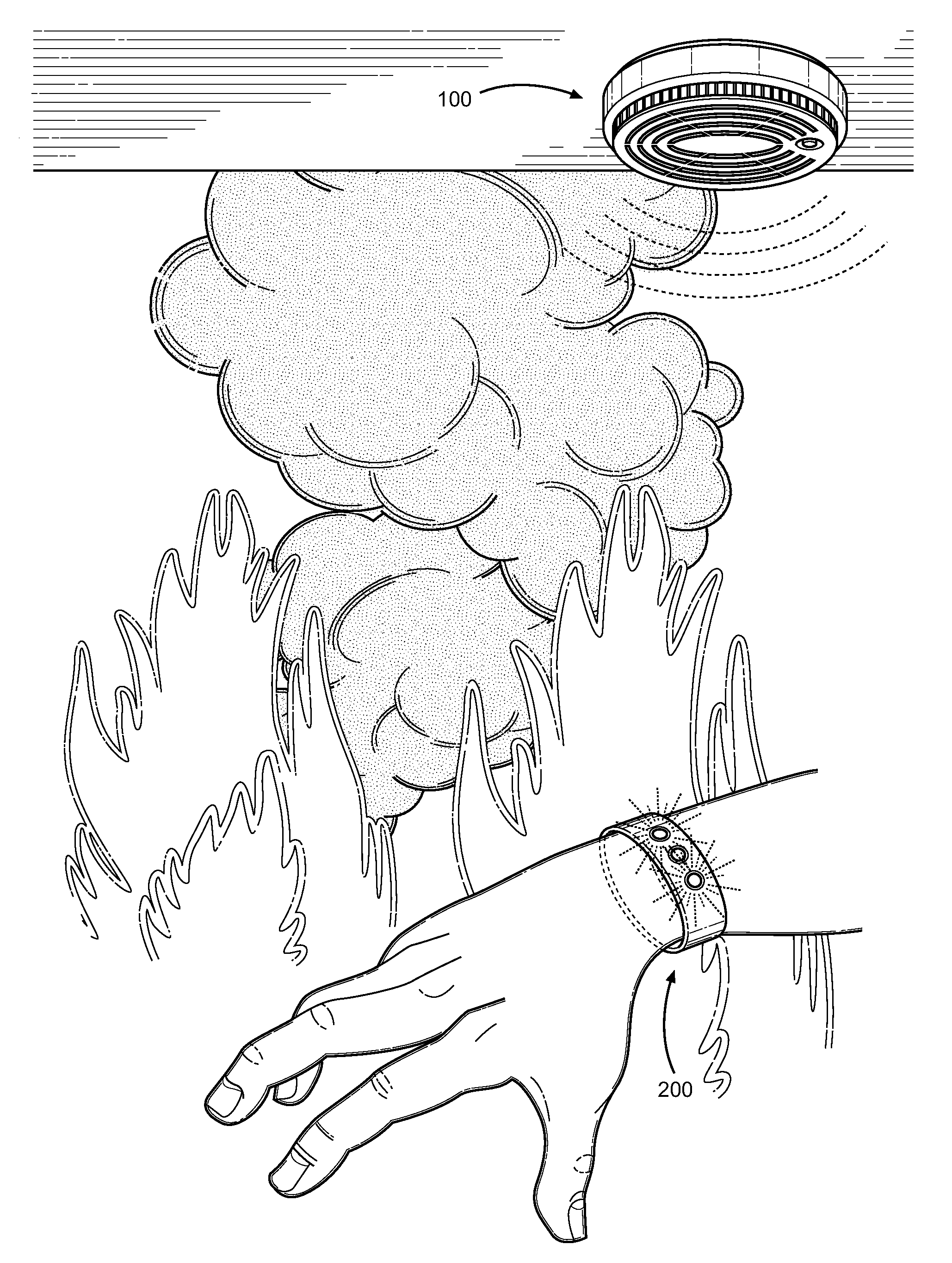
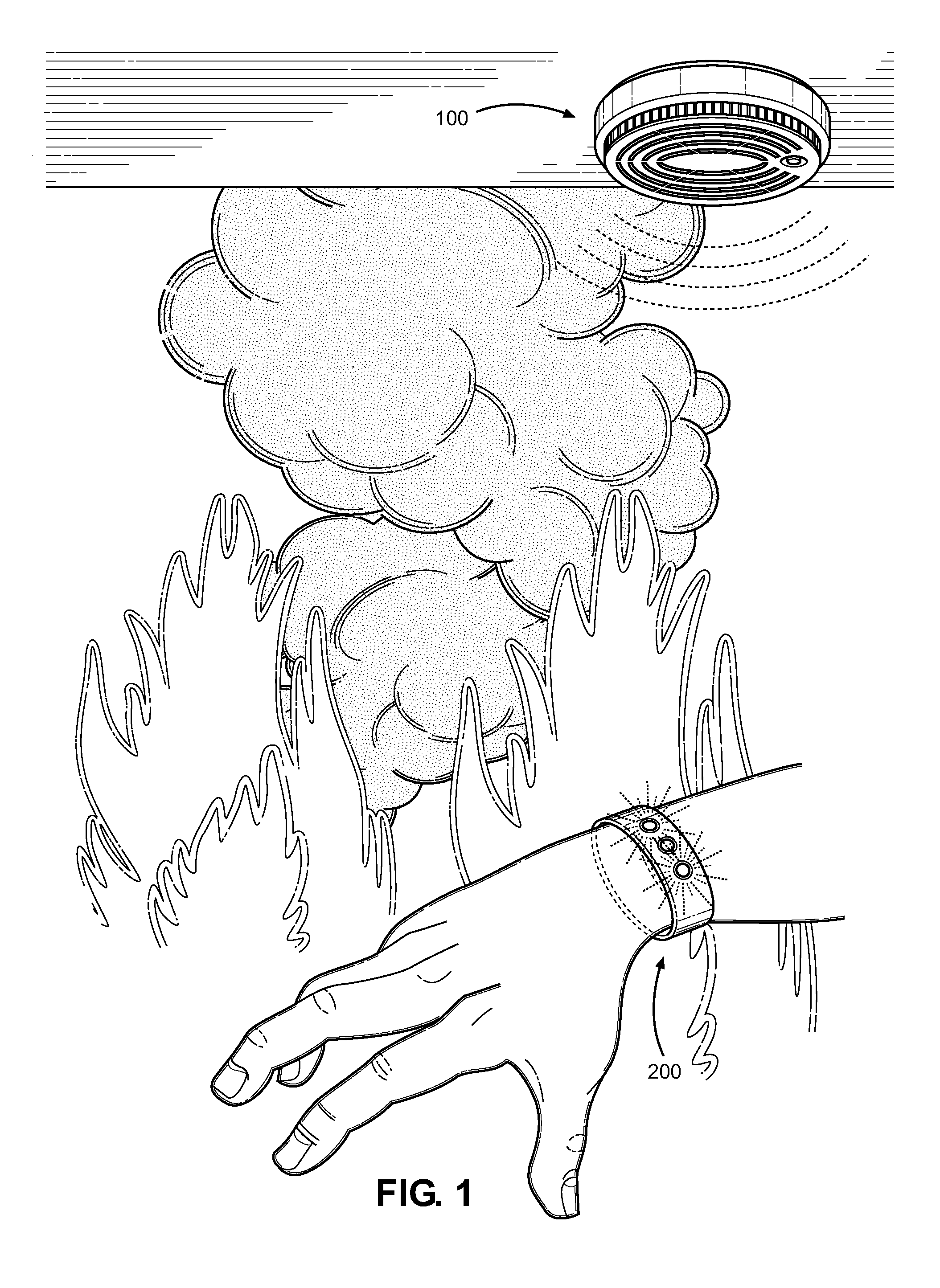
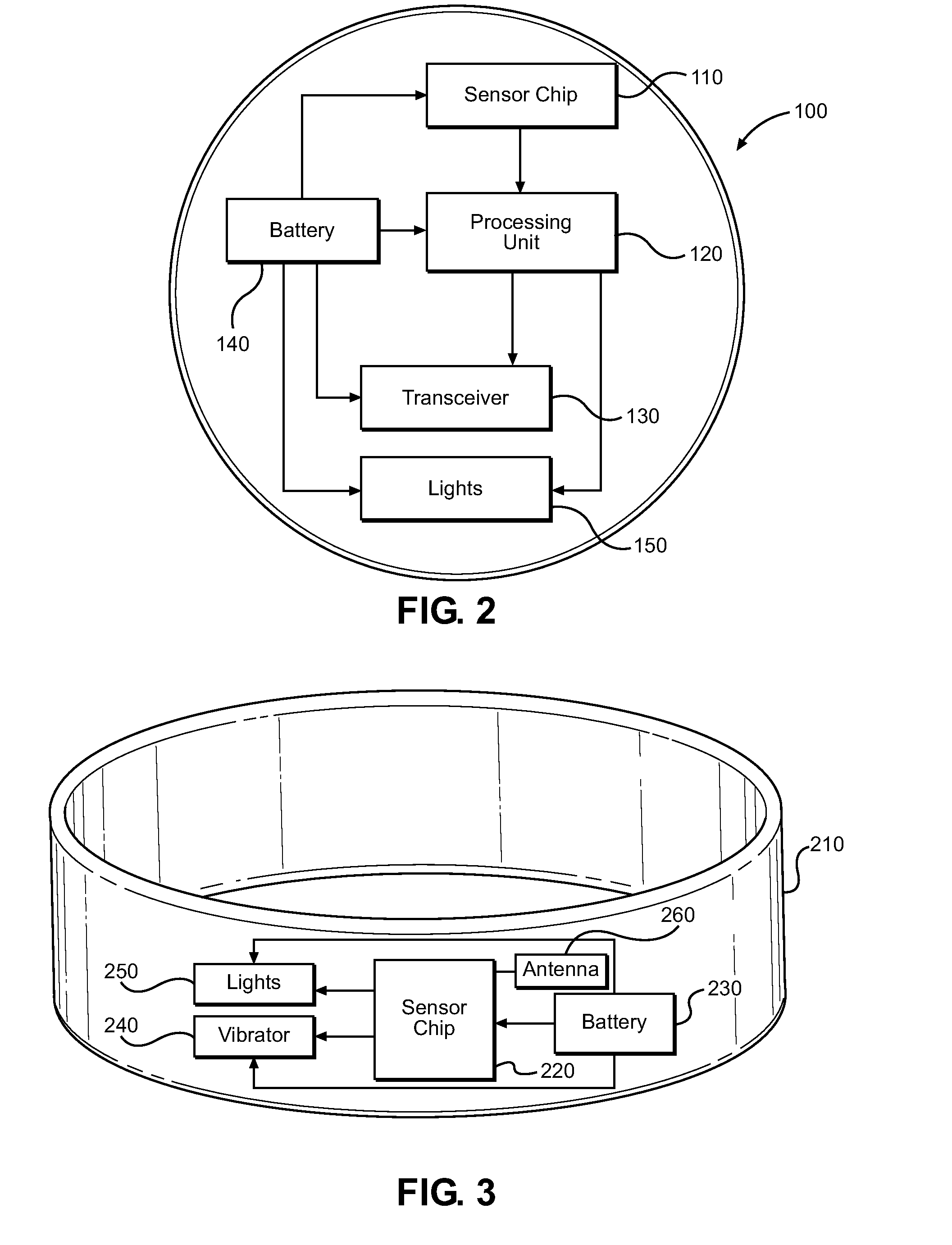
[0030]Referring now to FIG. 1, there is shown an exemplary implementation of the overall system. The system includes one or more detection units 100 capable of perceiving temperature changes, carbon monoxide levels, and airborne particulate concentration. Each of the one or more detection units is secured to a location throughout a target environment. Target environments may include buildings such as homes, office buildings, stables, or any other enclosed or semi-enclosed structure. Idea...
PUM
 Login to View More
 Abstract
Description
Claims
Application Information
 Login to View More