Push-coil steering mechanism

a steering mechanism and push-coil technology, applied in the field of push-coil steering mechanism, can solve the problems of increasing moving steering wires, increasing friction, etc., and achieve the effect of reducing the risk of steering wire breaking and preventing undesirable friction

US20150290429A1Active Publication Date: 2015-10-15ST JUDE MEDICAL ATRIAL FIBRILLATION DIV
4 Cites 0 Cited by

Patent Information

Authority / Receiving Office
US · United States
Patent Type
Applications(United States)
Current Assignee / Owner
Publication Date
2015-10-15

Smart Images

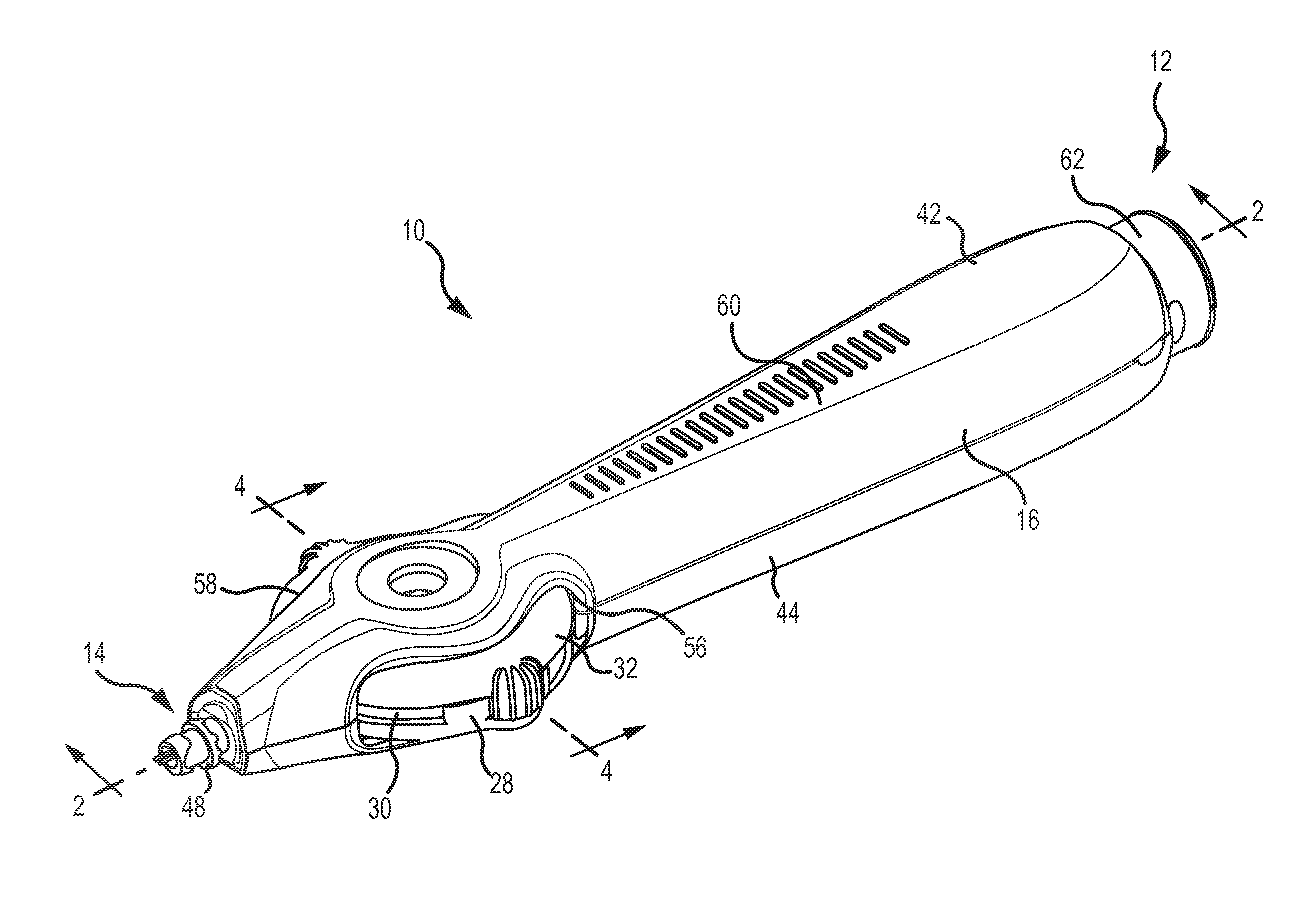
  • Figure 1
    Figure 1
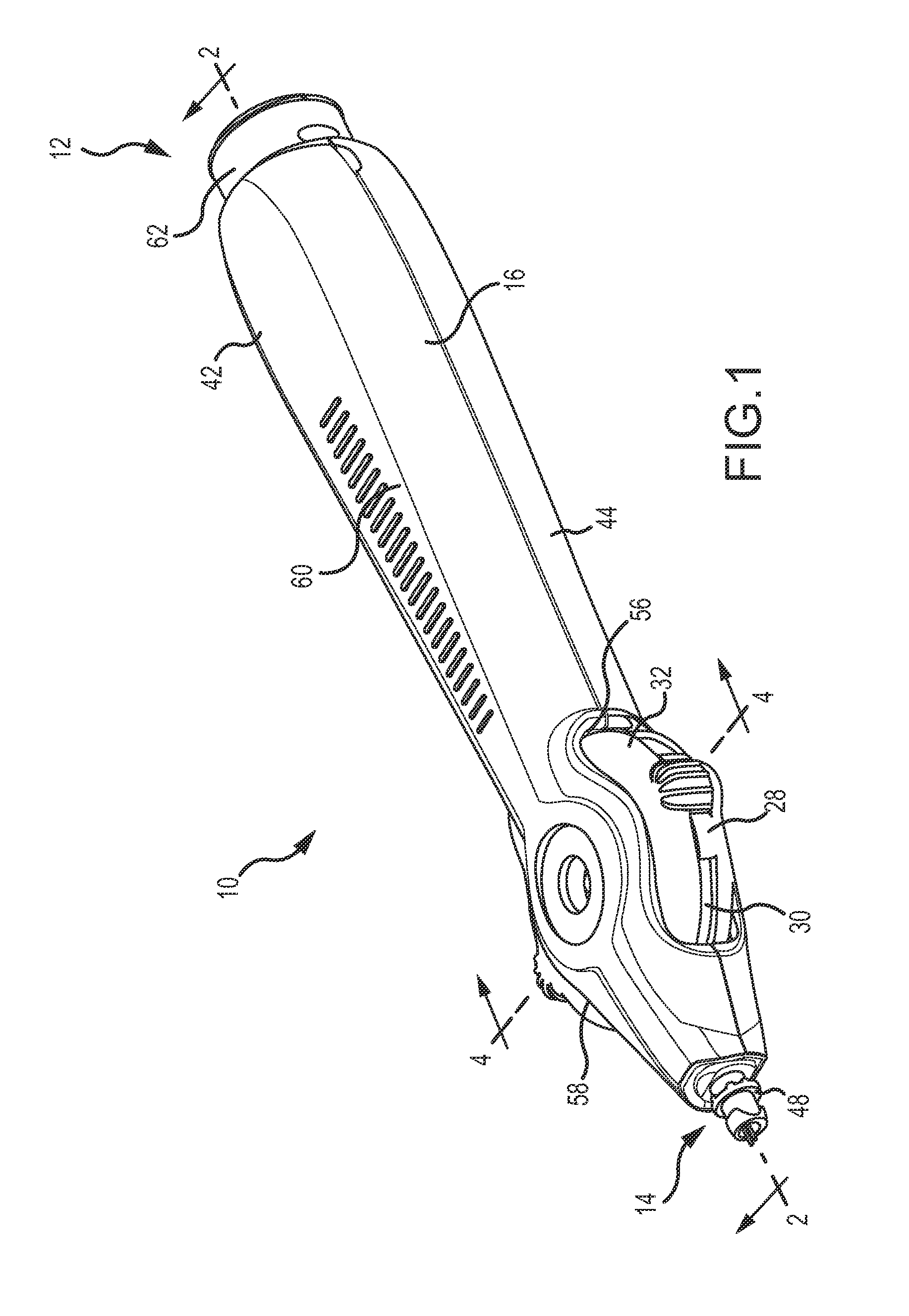
  • Figure 2
    Figure 2
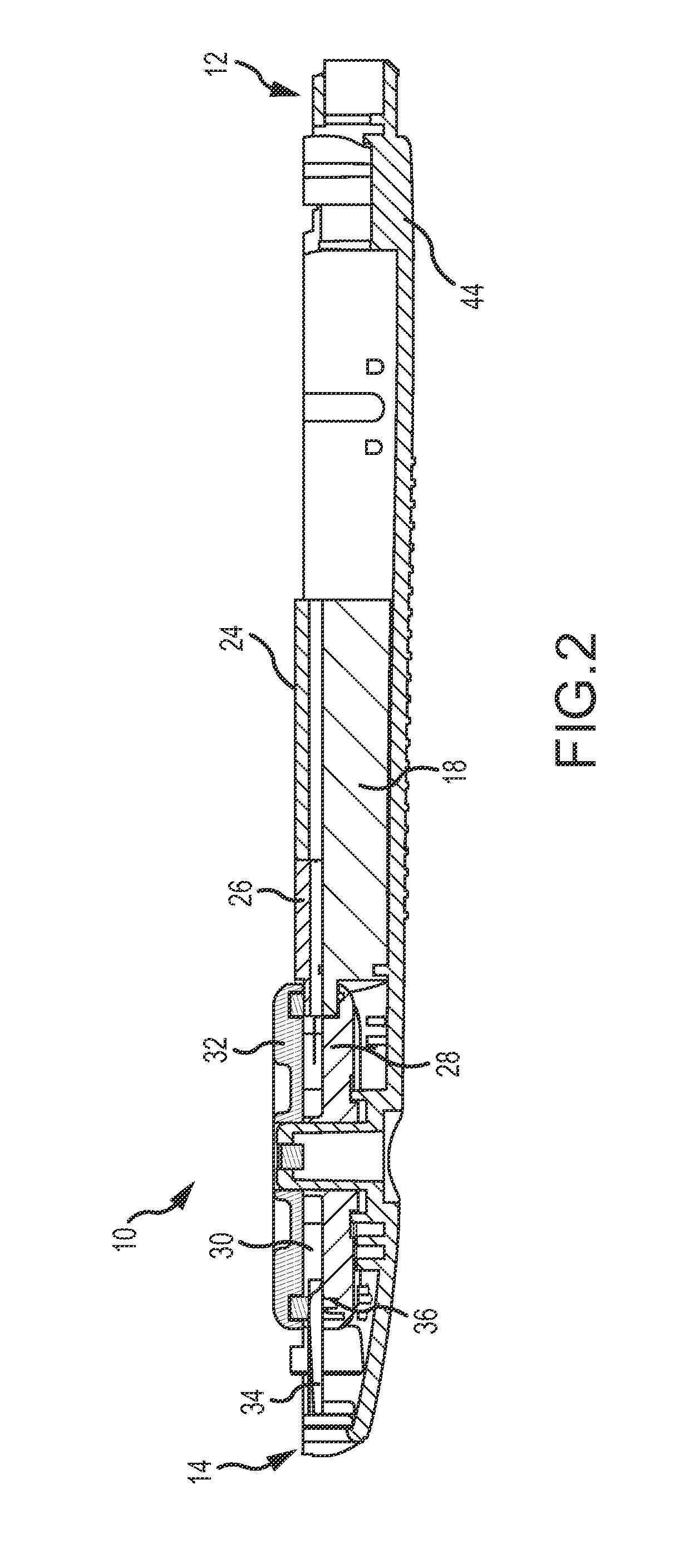
  • Figure 3
    Figure 3
Patent Text Reader

Abstract

A handle assembly is provided for use in navigating a deformable shaft within a body. The assembly includes a first guide member defining first and second linear channels and a second guide member configured for rotation relative to the first guide member. First and second connectors are disposed within, and movable within, the first and second linear channels along first and second parallel axes, respectively, and are configured for coupling to first and second steering wires, respectively. The assembly includes means, such as a flexible coupling connected to the second guide member and the connectors, for translating rotation of the second guide member into linear movement of the first connector in a first axial direction and linear movement of the second connector in a second axial direction, opposite the first axial direction such that the first and second steering wires move in opposite directions.
Need to check novelty before this filing date? Find Prior Art

Description

CROSS-REFERENCE TO RELATED APPLICATIONS

[0001] This application is a continuation of U.S. application Ser. No. 13 / 663,569, filed 30 Oct. 2012, now pending, which is hereby incorporated by reference as though fully set forth herein.BACKGROUND OF THE INVENTION

[0002] a. Field of the Invention

[0003] This invention relates to introducer sheaths, catheters and other devices configured to be maneuvered through a body. In particular, the invention relates to an improved handle assembly for use in navigating a deformable shaft of such a device within a body.

[0004] b. Background Art

[0005] A wide variety of medical devices are inserted into the body to diagnose and treat various medical conditions. Catheters, for example, are used to perform a variety of tasks within human bodies and other bodies including the delivery of medicine and fluids, the removal of bodily fluids and the transport of surgical tools and instruments. In the diagnosis and treatment of atrial fibrillation, for example, catheters...

Examples

Embodiment Construction

[0022]Referring now to the drawings wherein like reference numerals are used to identify identical components in the various views, FIGS. 1-3 illustrate one embodiment of a handle assembly 10 for use in navigating a deformable shaft (not shown) of a medical device within a body. The medical device may comprise, for example, a catheter (such an electrophysiological (EP) mapping catheter or an ablation catheter used in diagnosis or treatment of cardiac tissue within the body) or an introducer sheath. It should be understood, however, that a handle assembly 10 in accordance with the present teachings may find application in connection with a wide variety of medical devices used within body 12 for diagnosis or treatment. The deformable shaft of the medical device is typically an elongate, flexible, tubular member configured for movement within the body. The shaft may be made from conventional materials such as polyurethane and defines one or more lumens configured to house and / or transp...