
System and method for managing power in a chip multiprocessor using a proportional feedback mechanism
a multi-processor and proportional feedback technology, applied in the field of processing systems, can solve the problems of increasing power consumption, reducing battery life, and increasing power consumption, and achieve the effect of reducing the operating frequency of the processor cores
- Summary
- Abstract
- Description
- Claims
- Application Information
AI Technical Summary
Benefits of technology
Problems solved by technology
Method used
Image

Examples
Embodiment Construction
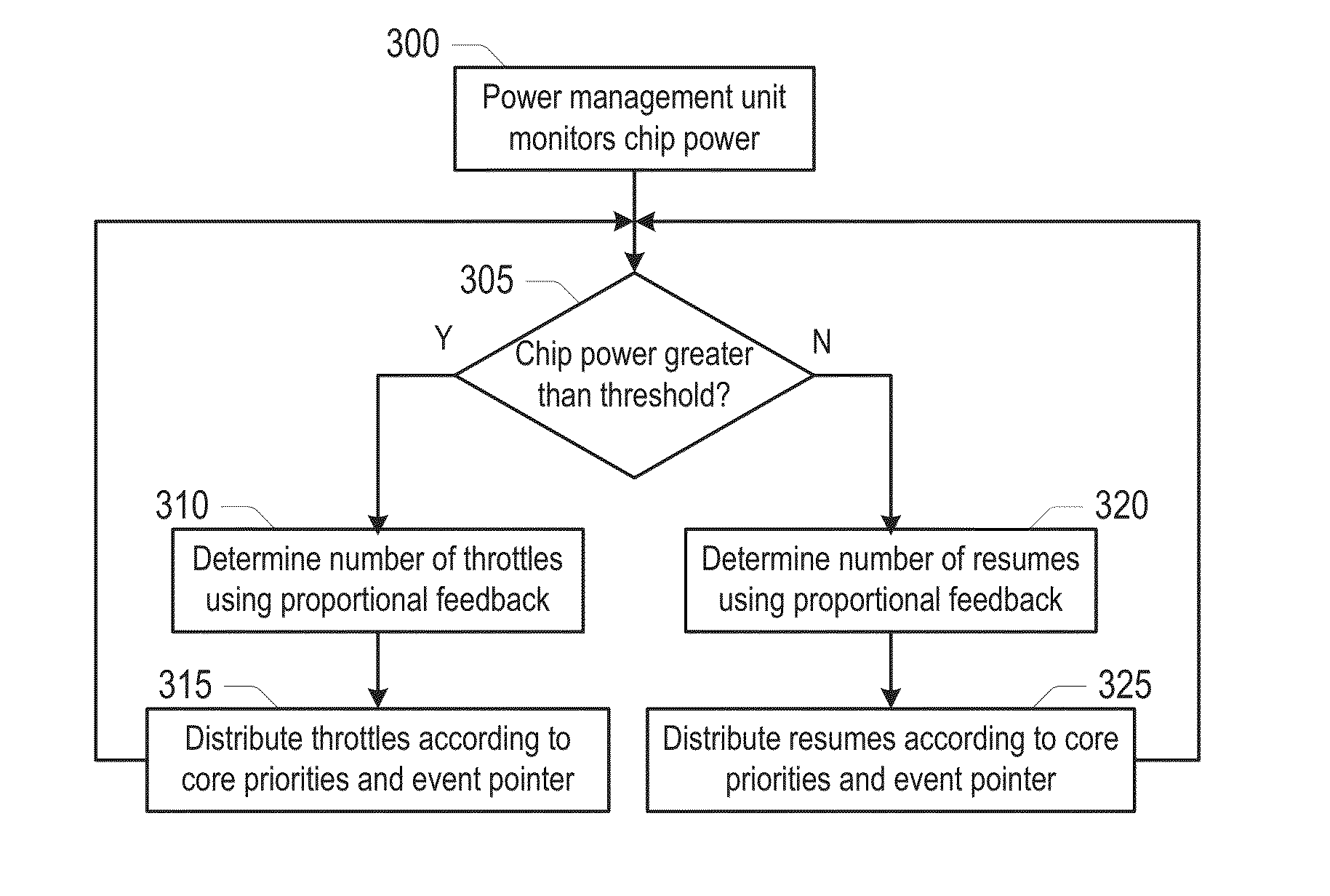
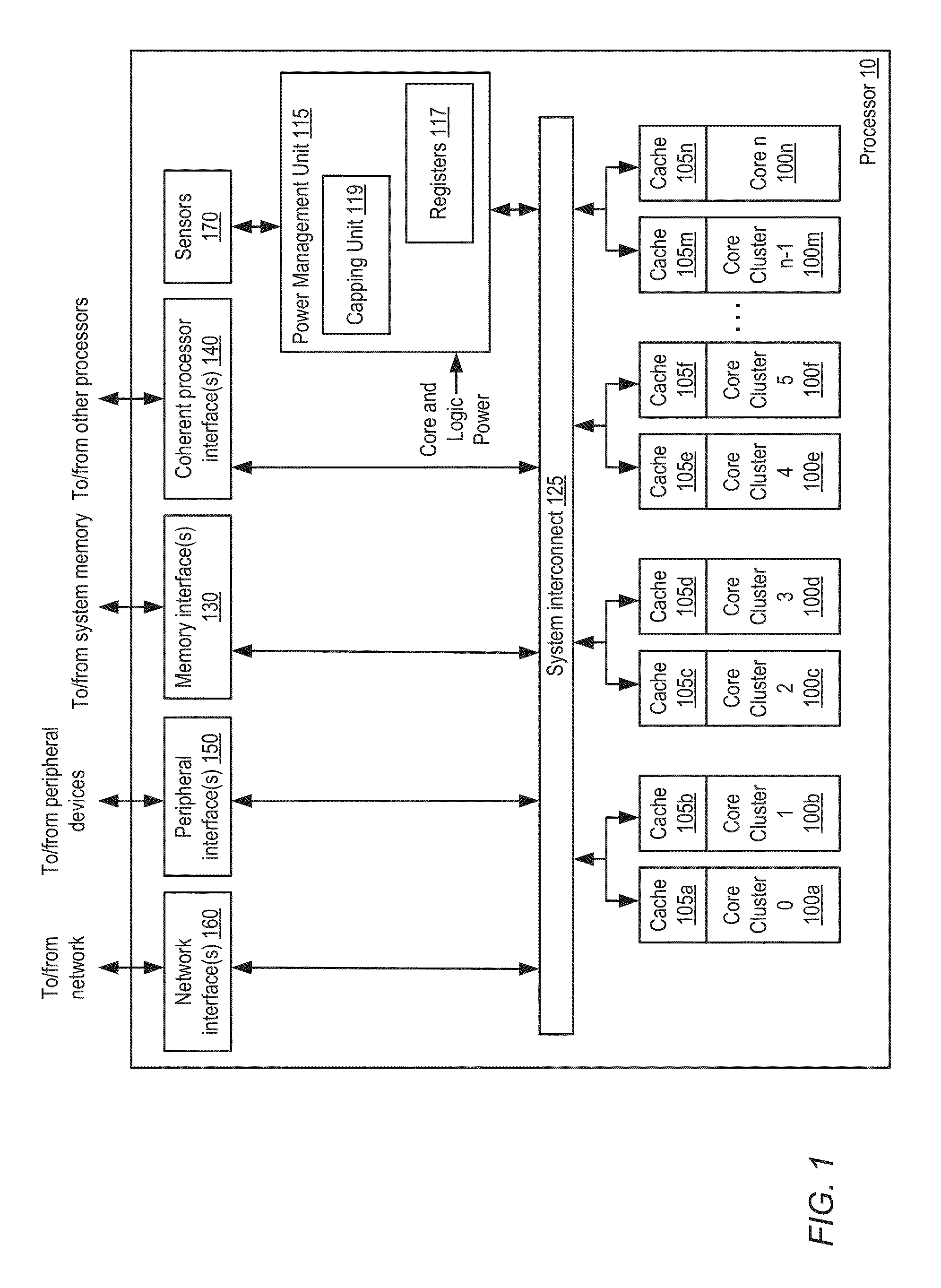
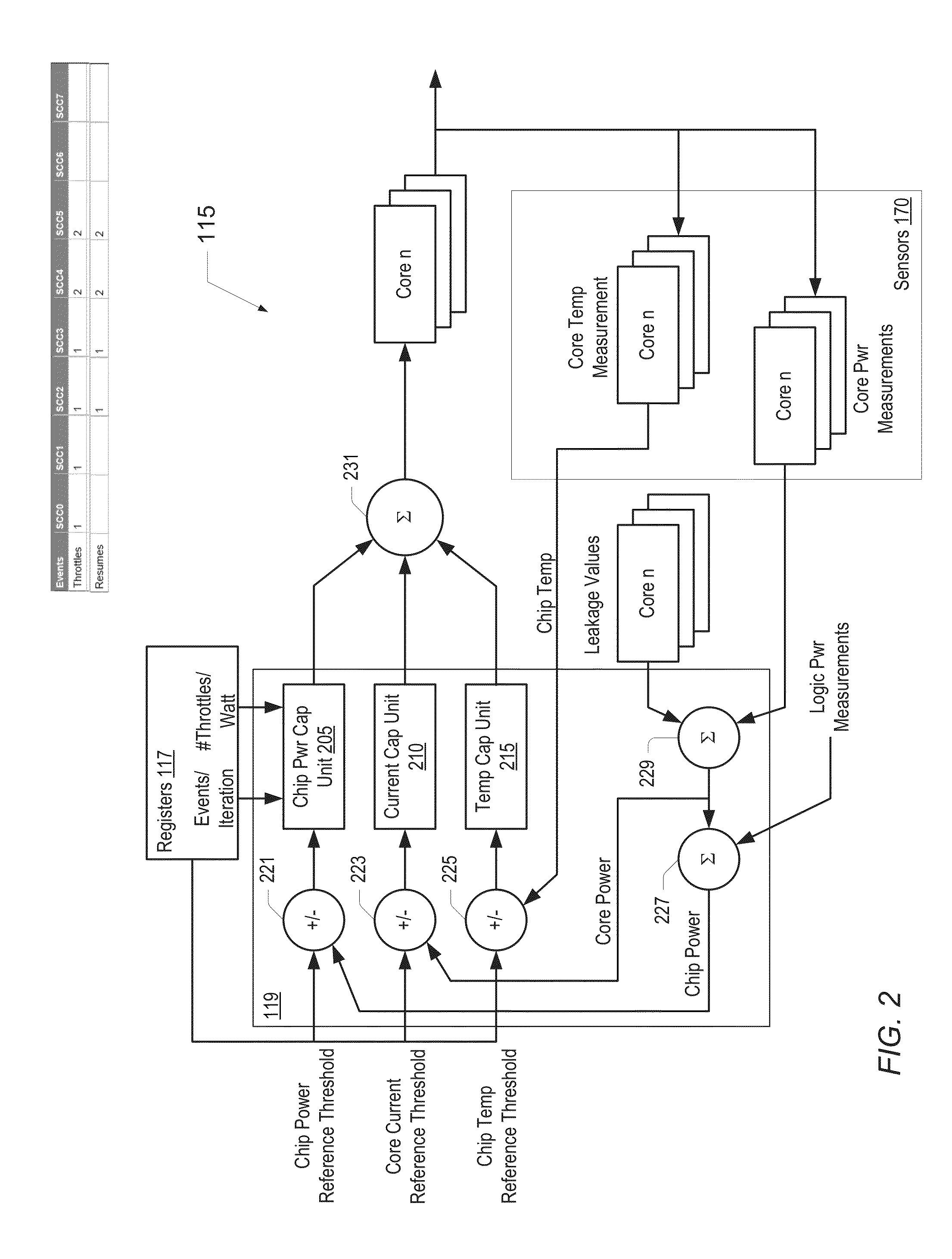
[0006]Various embodiments of a system and method of managing power in a chip multiprocessor are disclosed. Broadly speaking, the system includes a processor having a number of processor cores that execute program instructions and a power management unit that may monitor the power consumed by the processor cores and any logic within the processor. The power management unit may throttle or reduce the operating frequency of the processor cores by applying a number of throttle events in response to determining that the processor is operating above a predetermined power threshold during a given monitoring cycle. The number of throttle events may be based upon a relative priority of each of the plurality of processor cores to one another and an amount that the processor is operating above the predetermined power threshold. In particular, the number of throttle events may correspond to a portion of a total number of throttle events, which may be dynamically determined during operation base...
PUM
 Login to View More
 Abstract
Description
Claims
Application Information
 Login to View More