
Angling Support Attachment for Hair Clippers
a technology of support attachment and hair clipper, which is applied in the direction of metal working apparatus, etc., can solve the problems of reducing the chance of cutting surface gouges or damage in any way, and achieve the effects of less damage, improved accuracy and quality of finished haircut, and more control of clippers
- Summary
- Abstract
- Description
- Claims
- Application Information
AI Technical Summary
Benefits of technology
Problems solved by technology
Method used
Image

Examples
Embodiment Construction
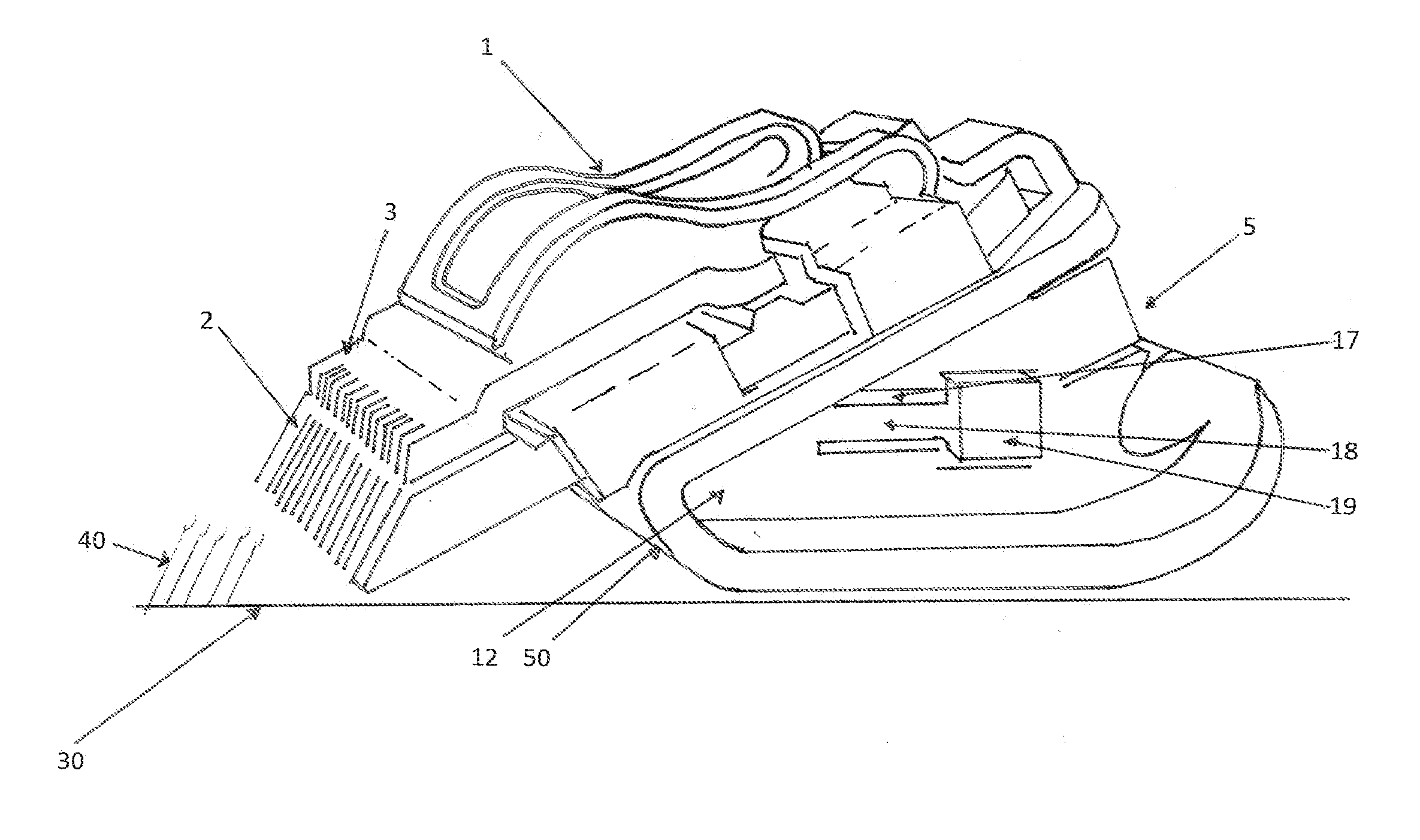
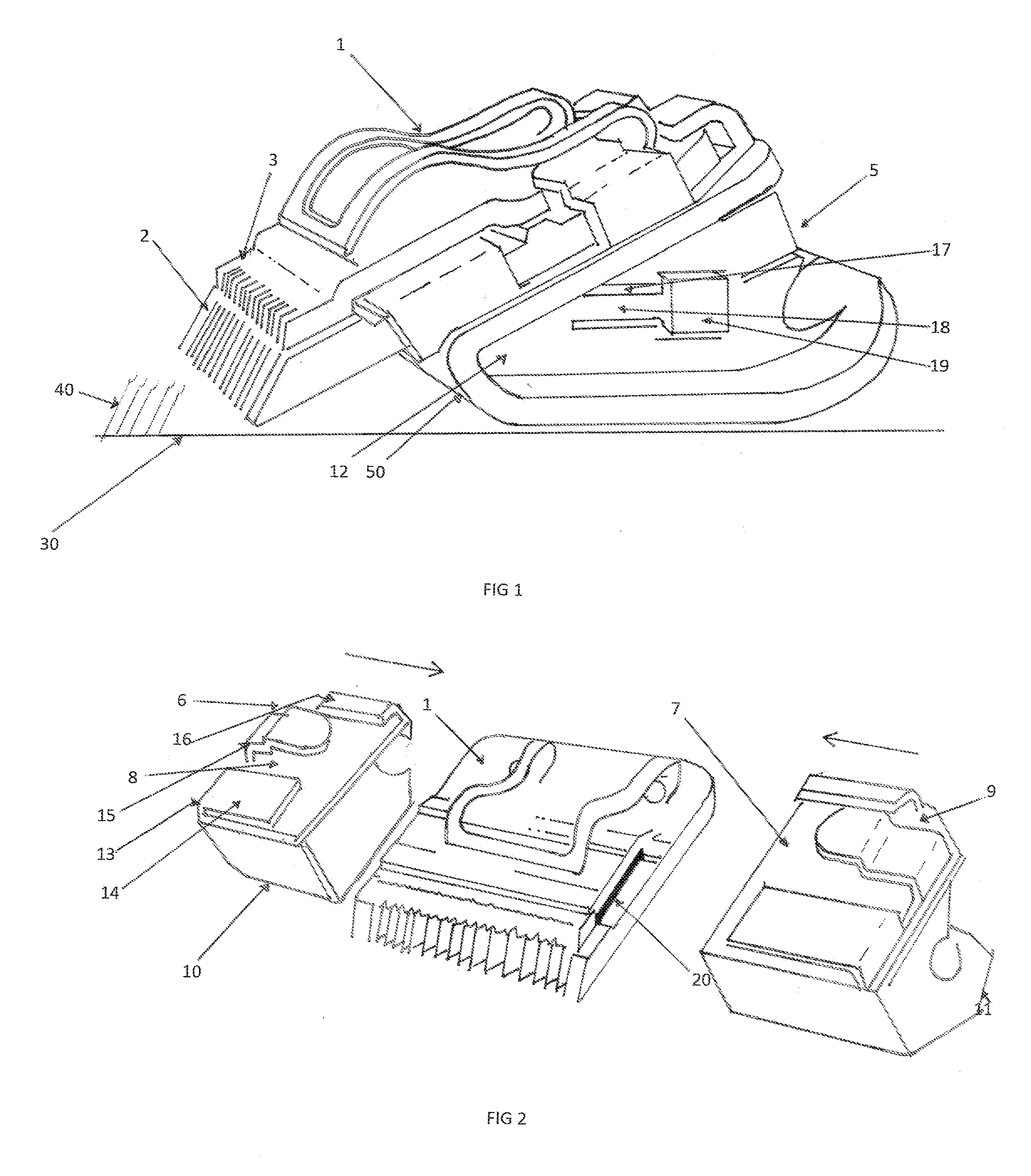
[0016]Referring to the drawings in detail, depicts a conventional hair clipper 1 is provided with the bottom blade 2 attached at the front end of the clipper 1 with the usual reciprocating blade 3 mounted above the bottom fixed blade 2 and having a space 20 between the two blades. On the underside of the clipper 1, the wedge 5 can be mounted. The hair clipper blade illustrated is a conventional example of one type of hair clipper on which the invention may be mounted.
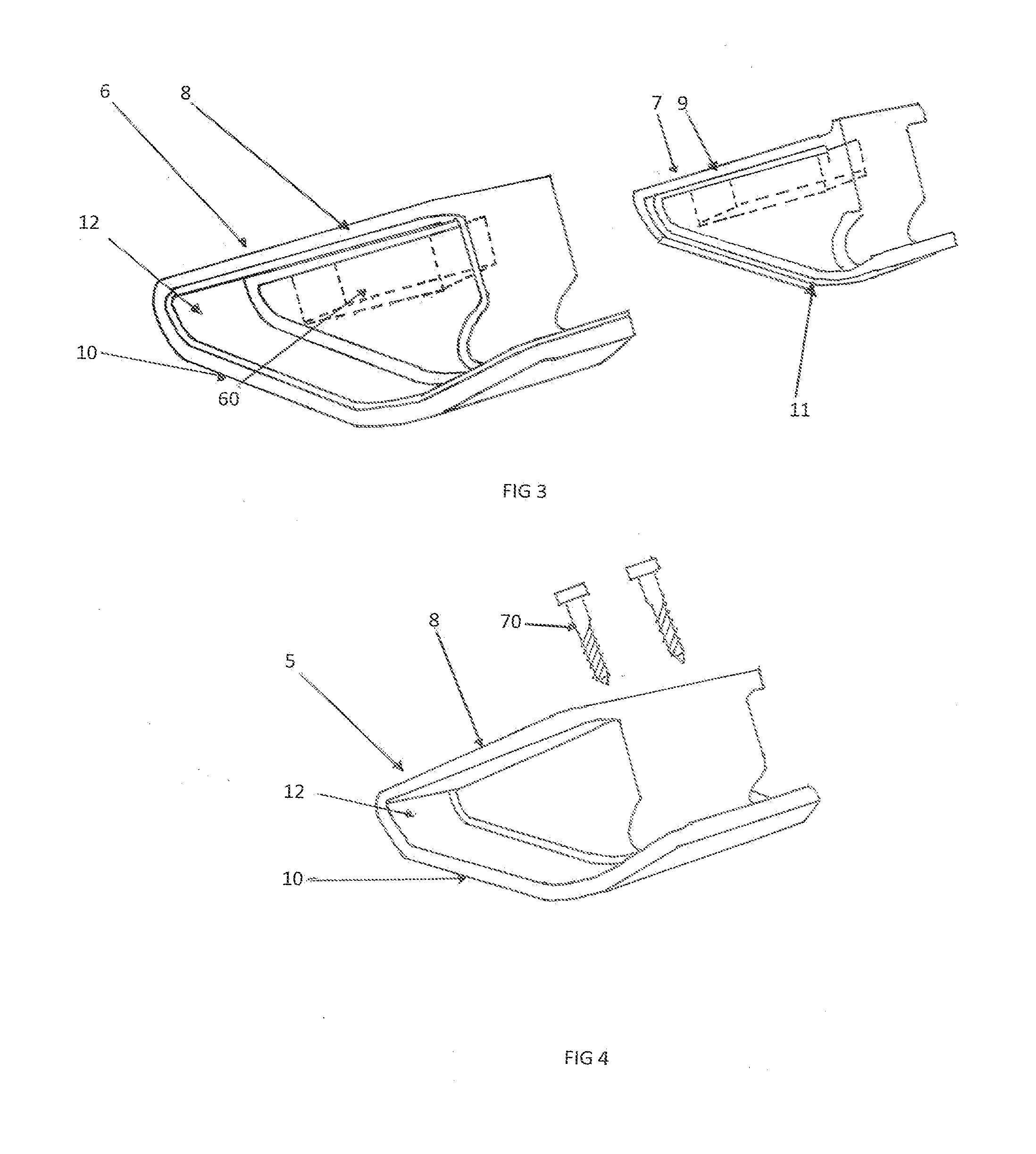
[0017]The wedge 5 can be one piece (as shown in FIG. 4) or two pieces; the preferred embodiment is in two pieces. The wedge 5 is made up of a left portion 6 and a right portion 7 which are generally mirror images of each other. Each portion has a top side 8 and 9, respectively, a bottom side, 10 and 11, respectively, and a predetermined angle 12 in the range of 1 degree to 90 degrees formed at an apex 50. The bottom sides, 10 and 11, can easily slide or glide over a cutting surface 30, allowing for hair 40 to pass throu...
PUM
 Login to View More
 Abstract
Description
Claims
Application Information
 Login to View More