
Frequency Response Calibration of Synchronized MIMO Measurement Receivers with Local and Remote Transmitters
- Summary
- Abstract
- Description
- Claims
- Application Information
AI Technical Summary
Benefits of technology
Problems solved by technology
Method used
Image

Examples
Embodiment Construction
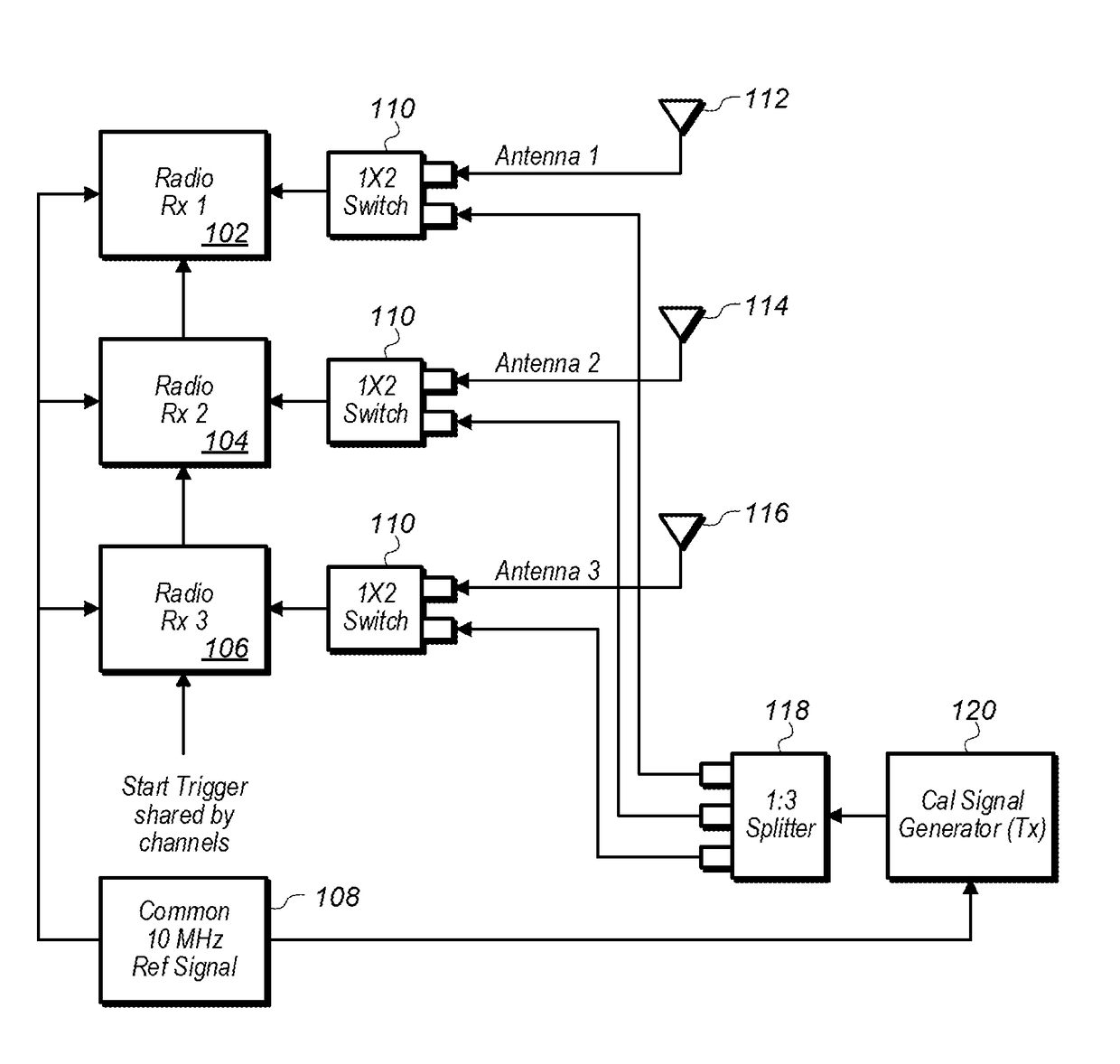
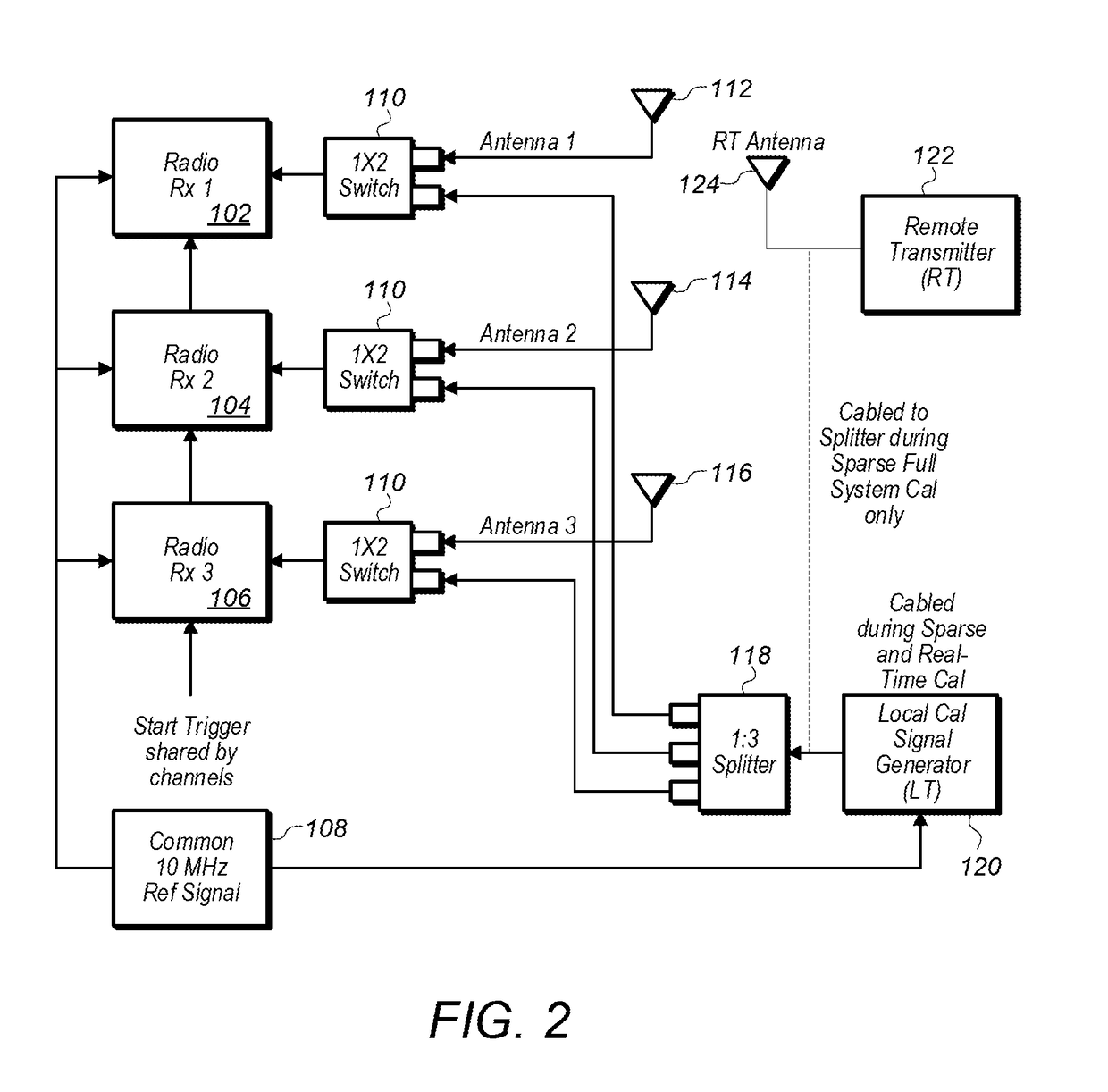
[0024]The use of a multiple-input multiple-output (MIMO) radio device or a MIMO communication system for transmitting and receiving data may be improved if each of the multiple receivers and / or transmitters of the MIMO device are properly calibrated. Embodiments herein describe methods and devices for calibrating a MIMO device, which may be employed in any of a variety of technological fields and devices. For example, the MIMO device may be a mobile or portable computer system device which performs wireless communications, often referred to as a user equipment device (UE). Examples of UE devices include mobile telephones or smart phones (e.g., iPhone™, Android™-based phones), portable gaming devices (e.g., Nintendo DS™, Play Station Portable™, Gameboy Advance™), laptops, wearable devices (e.g., smart watch, smart glasses), PDAs, portable Internet devices, music players, data storage devices, or other handheld devices, etc. In general, the term “UE” or “UE device” can be broadly defi...
PUM
 Login to View More
 Abstract
Description
Claims
Application Information
 Login to View More