
Apparatus for Use in Surgery
- Summary
- Abstract
- Description
- Claims
- Application Information
AI Technical Summary
Benefits of technology
Problems solved by technology
Method used
Image

Examples
Embodiment Construction
[0133]First Step
[0134]The first step of the surgical procedure is suitably effected using a targeting kit, which ensures the access tunnels are created at the required locations on the anterior and posterior of the implant. The access tunnels may be created using conventional tools, such as a drill and drill bits.
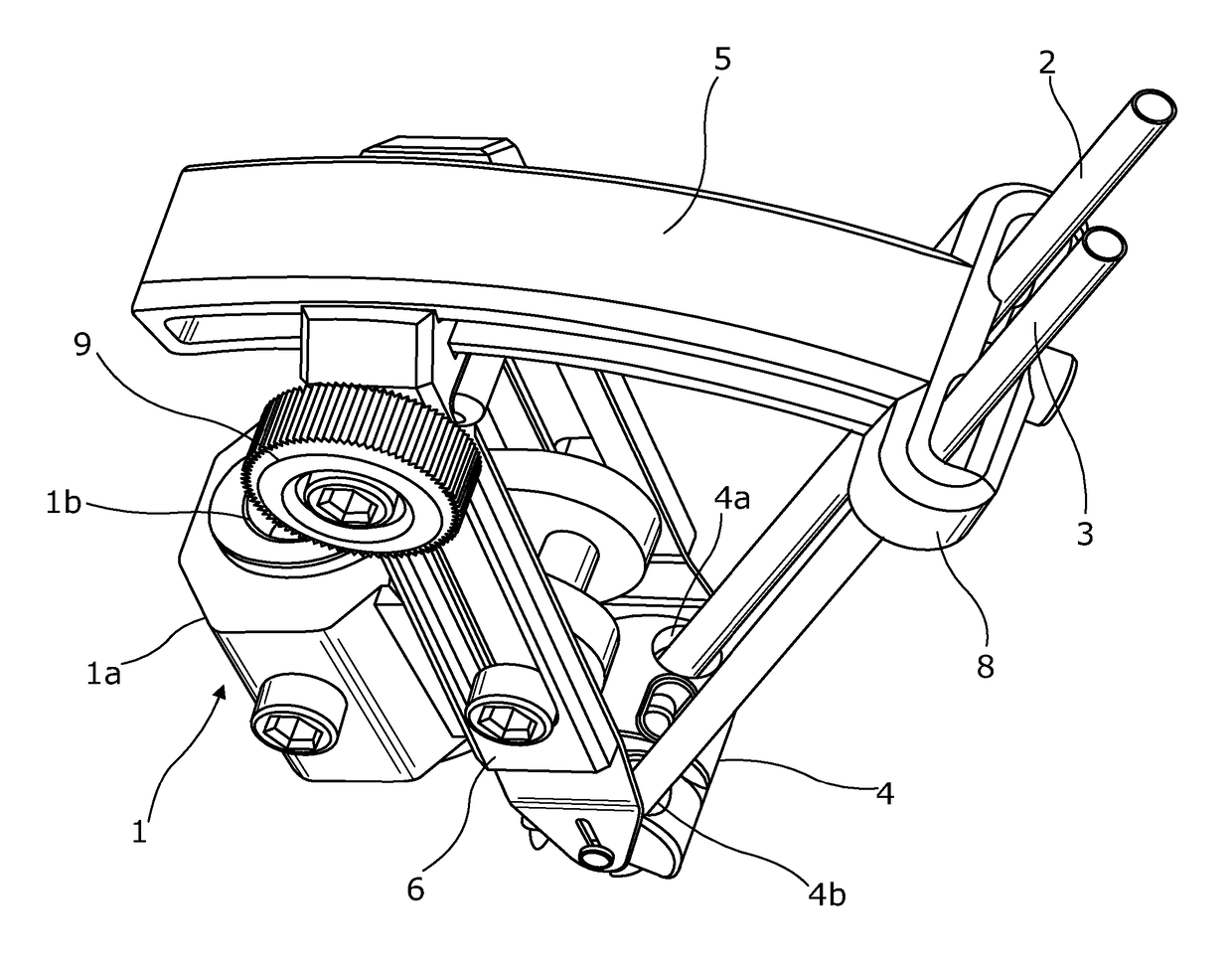
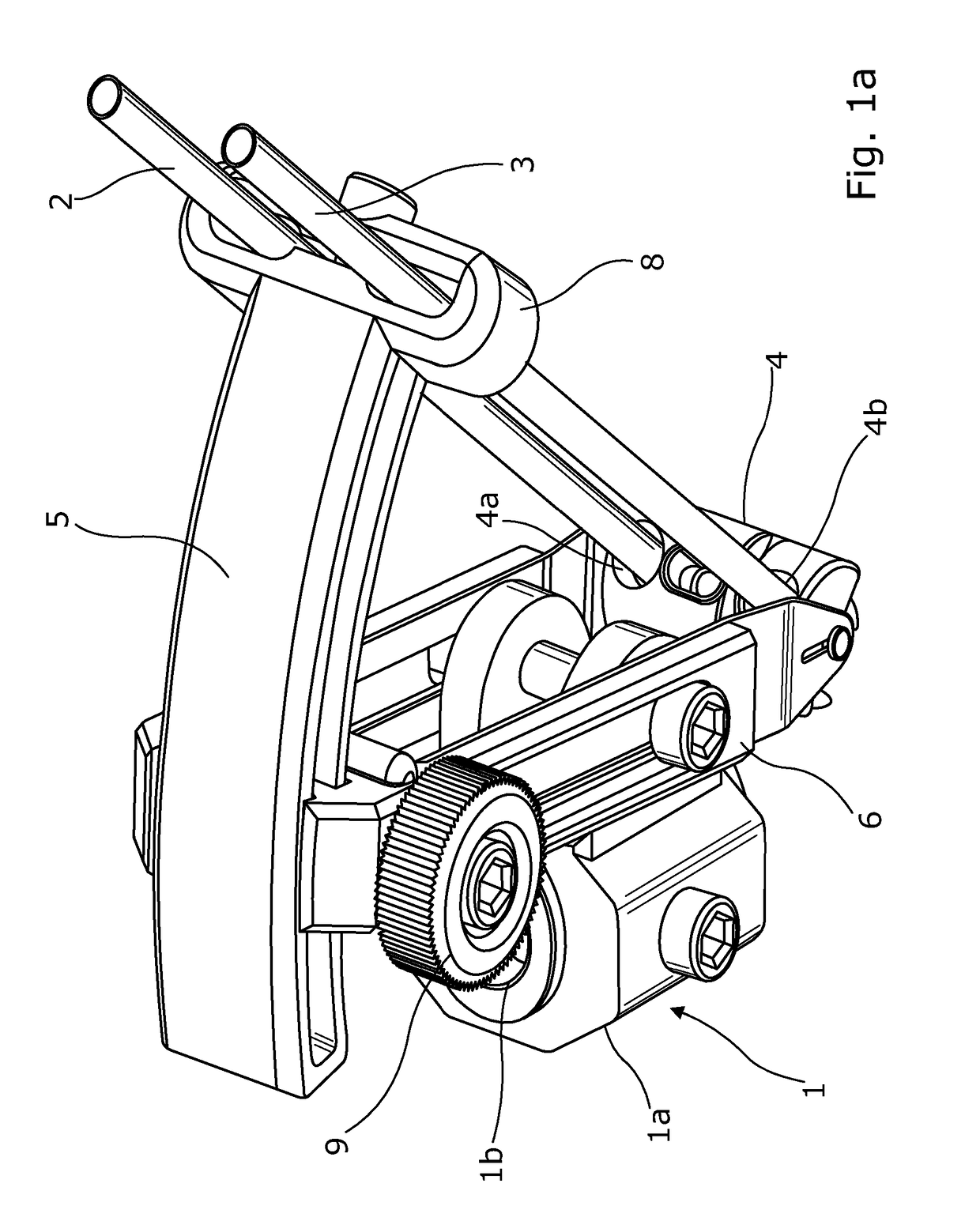
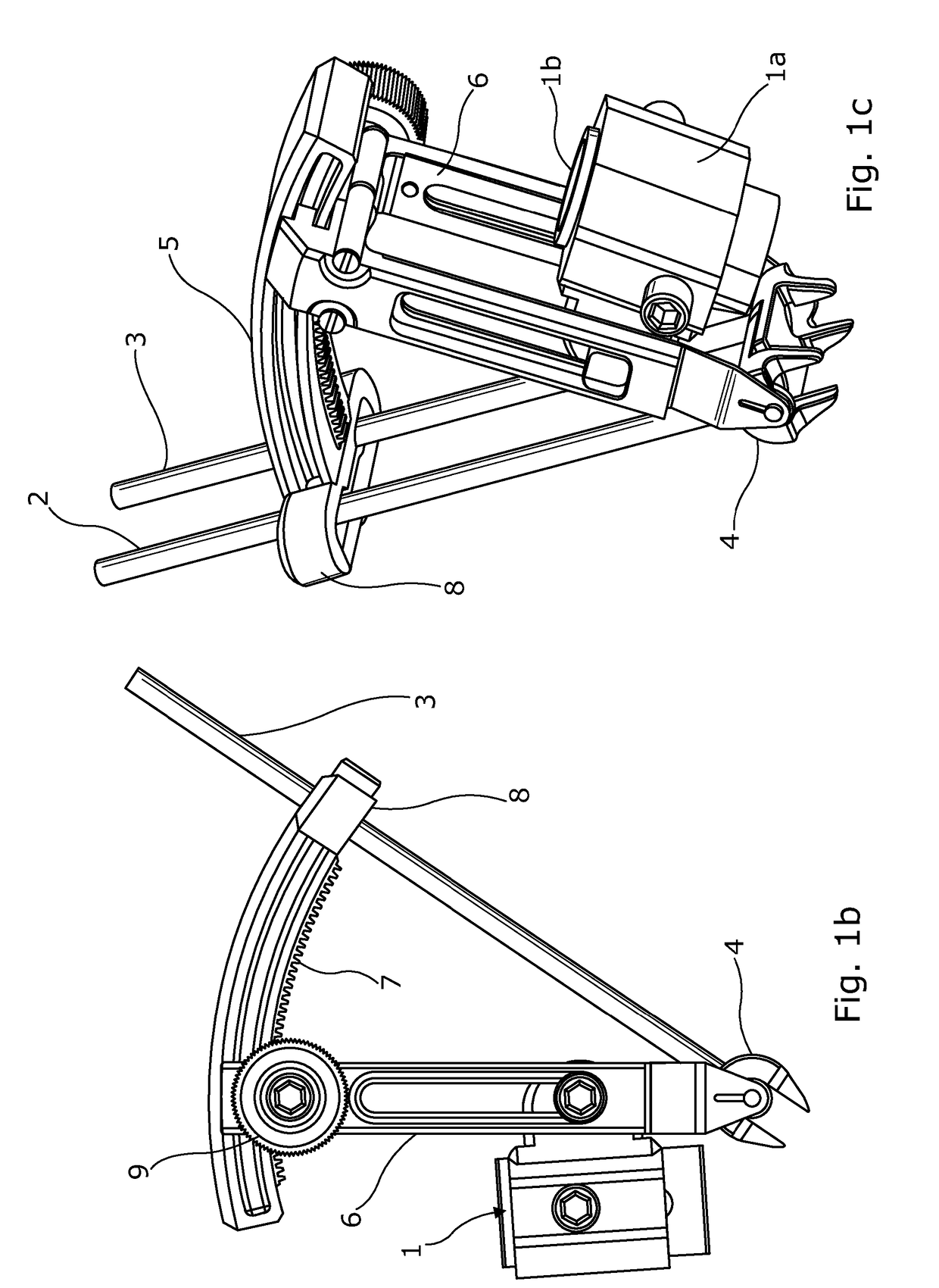
[0135]The targeting kit of the invention comprises:[0136]a mounting arrangement for releasably mounting the targeting kit on the head or neck of a femoral implant,[0137]first and second guide members, each of which is an elongate shape with a bore running along its longitudinal axis, each guide member being able to receive a drill bit through its bore,[0138]a holding arrangement for holding the first and second guide members, the holding arrangement being adjustable between a release condition, in which the positions of the first and second guide members are adjustable relative to each other, and a holding condition, in which the first and second guide members are held by t...
PUM
 Login to View More
 Abstract
Description
Claims
Application Information
 Login to View More