Axle device for the connection of a wheel to the body of a vehicle

US20190225040A1Active Publication Date: 2019-07-25DR ING H C F PORSCHE AG
0 Cites 0 Cited by

Patent Information

Authority / Receiving Office
US · United States
Current Assignee / Owner
Publication Date
2019-07-25

Smart Images

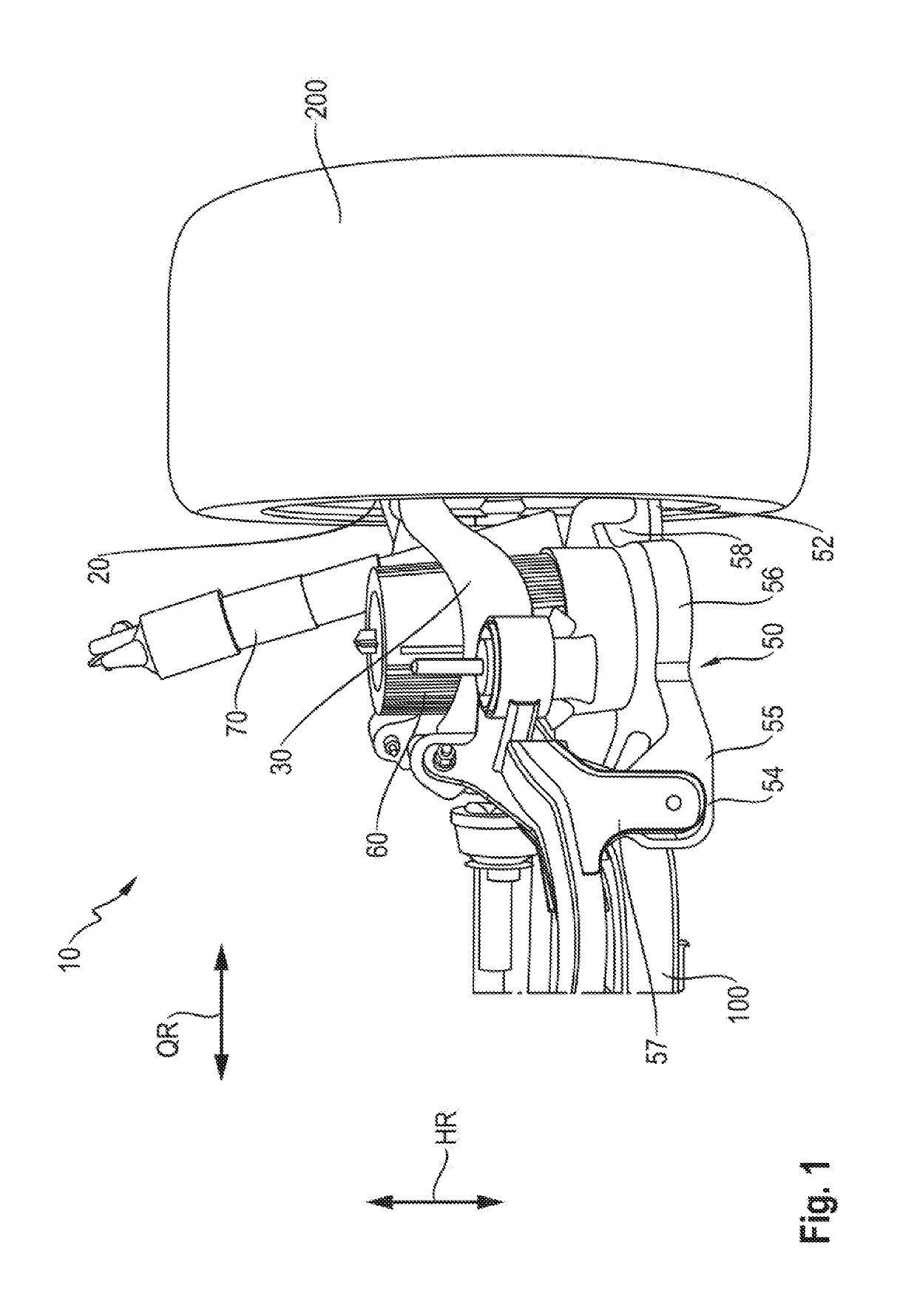
  • Figure 1
    Figure 1
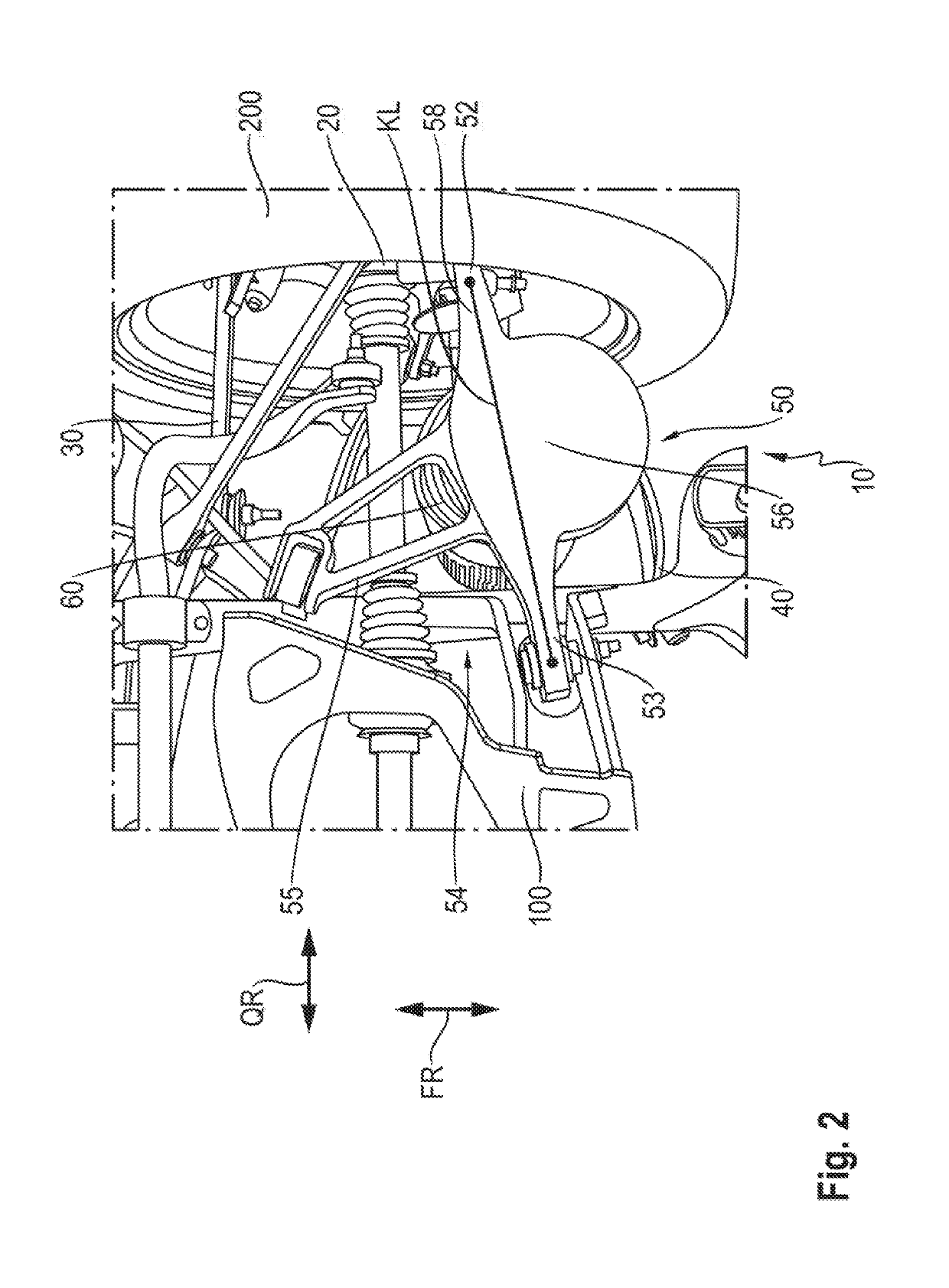
  • Figure 2
    Figure 2
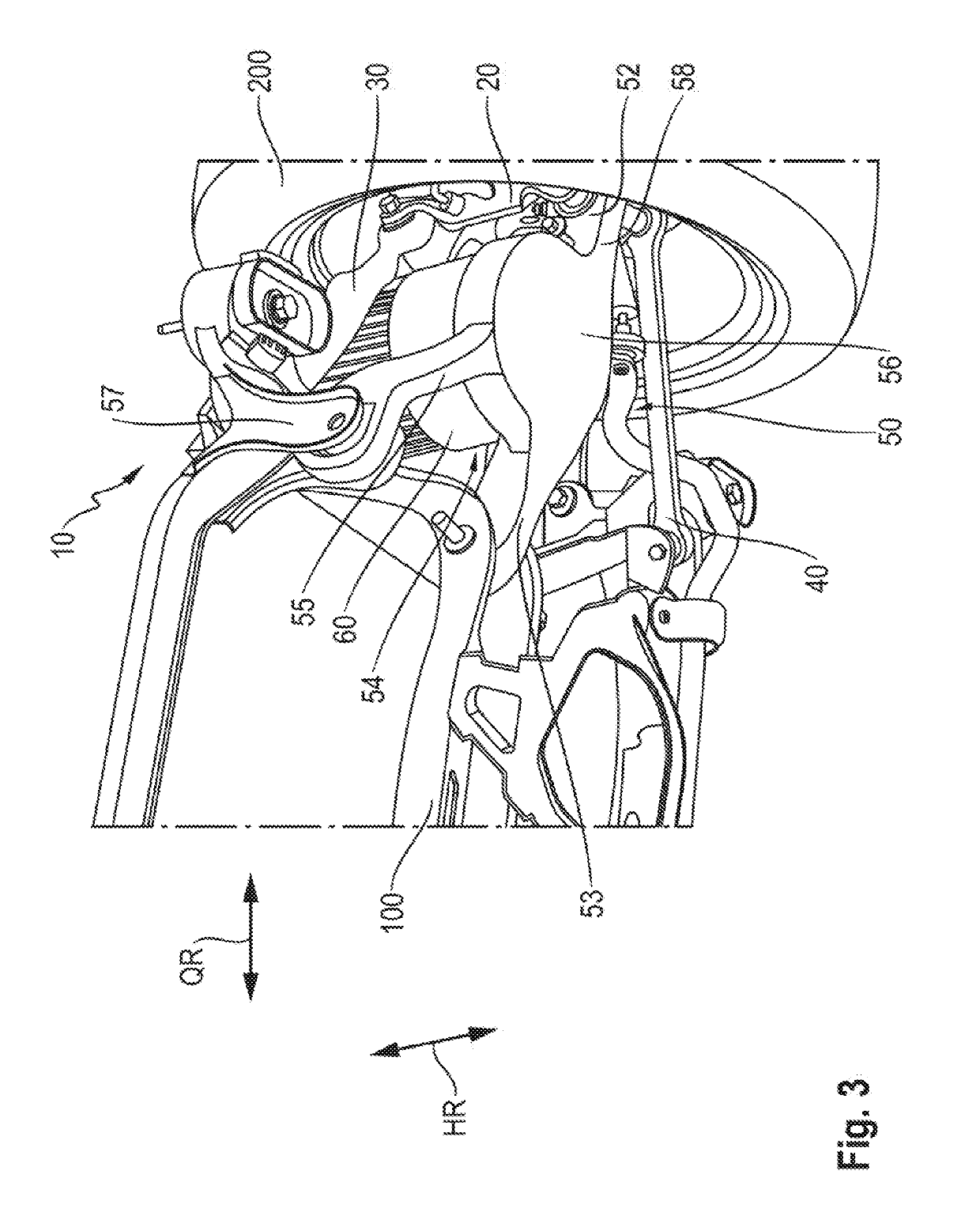
  • Figure 3
    Figure 3
Patent Text Reader

Abstract

An axle device for the connection of a wheel to the body of a vehicle, having a wheel carrier for the fastening of the wheel, a first link and a second link for force-transmitting connection to the body, which links are both connected to the wheel carrier, furthermore having a supporting link with a carrier portion, which is connected to the wheel carrier, and with a body portion for force-transmitting connection to the body. The supporting link has a spring portion or supporting a spring unit and a damper portion for supporting a damper unit, which spring portion and damper portion are spaced apart from each other in the direction of travel of the body. The body portion has a torsion support portion with fastening freedom in the direction of travel and in the transverse direction of the body and with fastening stiffness in the vertical direction of the body.
Need to check novelty before this filing date? Find Prior Art

Description

CROSS-REFERENCE TO RELATED APPLICATION

[0001] This application claims priority to German Patent Application No. DE 10 2018 101 280.2, filed Jan. 22, 2018, the contents of such application being incorporated by reference herein in their entirety.FIELD OF THE INVENTION

[0002] The present invention relates to an axle device for the connection of a wheel to the body of a vehicle, and to a vehicle with a body with at least two such axle devices on an axle.BACKGROUND OF THE INVENTION

[0003] The present invention deals with axle devices as used in vehicles with individual wheel suspension. The forces acting on the wheels have to be supported in all degrees of freedom. This generally takes place firstly via chassis links which can possibly be provided with active adjustment elements, for example for the steering. Secondly, the forces acting on the wheels are supported via spring-damper units. This serves for increasing comfort, safety and stability. The spring-damper unit can either be designed c...

Examples

Embodiment Construction

[0026]FIGS. 1 and 2 show a first embodiment of the axle device 10. The latter is substantially configured here with a first link 30 and a second link 40, which links extend in a force-transmitting manner between the wheel carrier 20 and the body 100. The wheel 200 is connected here to the wheel carrier 20 and is fastened in a manner free from rotation. For inward deflection and outward deflection in a damped manner, a spring unit 60 and, separately from the latter, a damper unit 70 are provided. In order to be able to ensure a transmission of force to spring unit 60 and damper unit 70, the axle device 10 here is configured as a multi-link system with a carrier link 50. Said carrier link 50 likewise extends in a force-transmitting manner between the wheel carrier 20 and the body 100.

[0027]As FIGS. 1 and 2 readily show, the supporting link 20 is connected to the wheel carrier 20 in a force-transmitting manner via a carrier portion 52. If the supporting link 50 is now followed in the t...