
Linear oscillating actuator
a technology of linear oscillating actuator and actuator, which is applied in the direction of dynamo-electric components, dynamo-electric machines, magnetic circuit shapes/forms/constructions, etc., can solve the problem that the actuator suffers from undesired vibration around the mass of the actuator
- Summary
- Abstract
- Description
- Claims
- Application Information
AI Technical Summary
Benefits of technology
Problems solved by technology
Method used
Image

Examples
Embodiment Construction
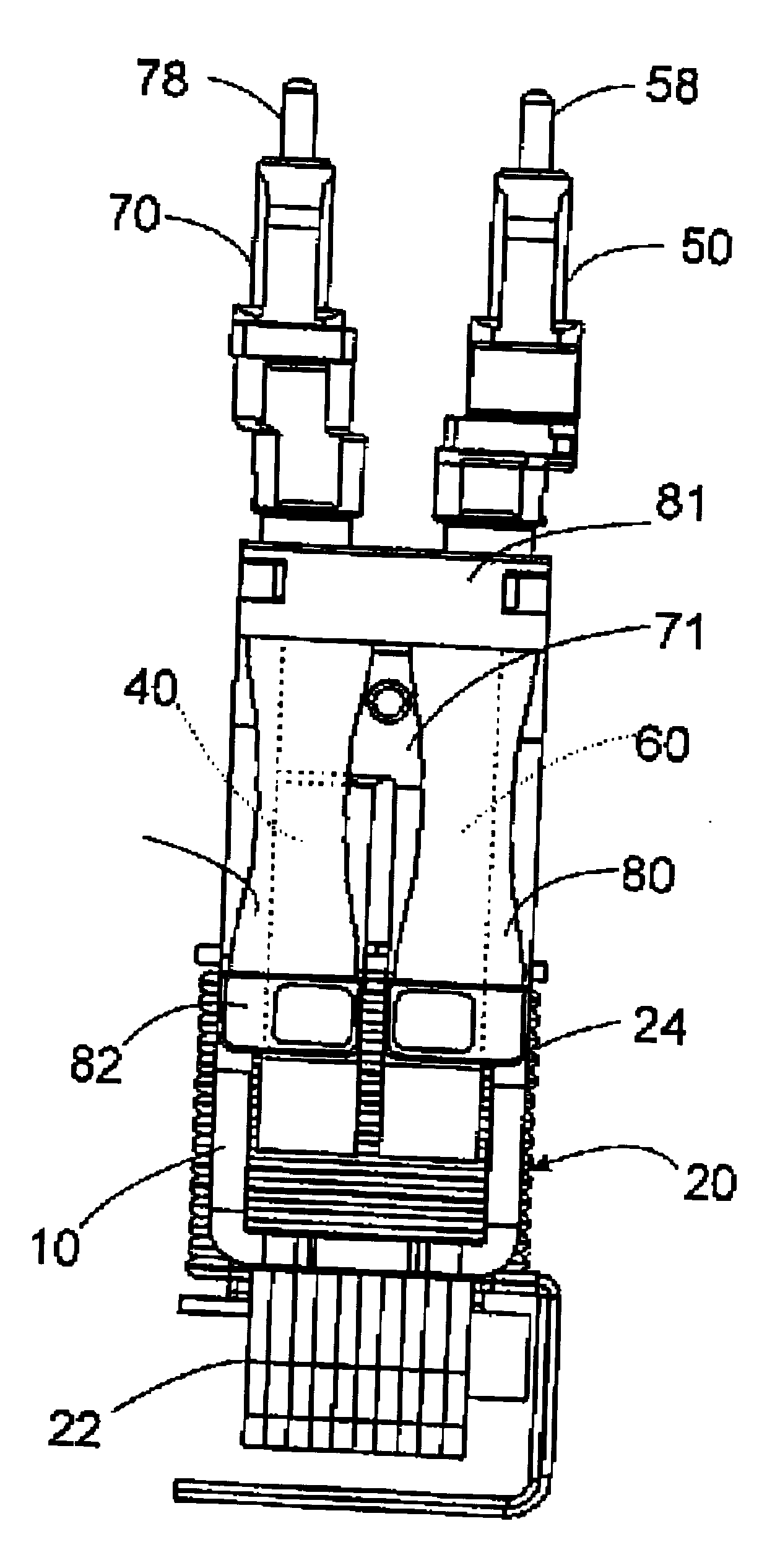
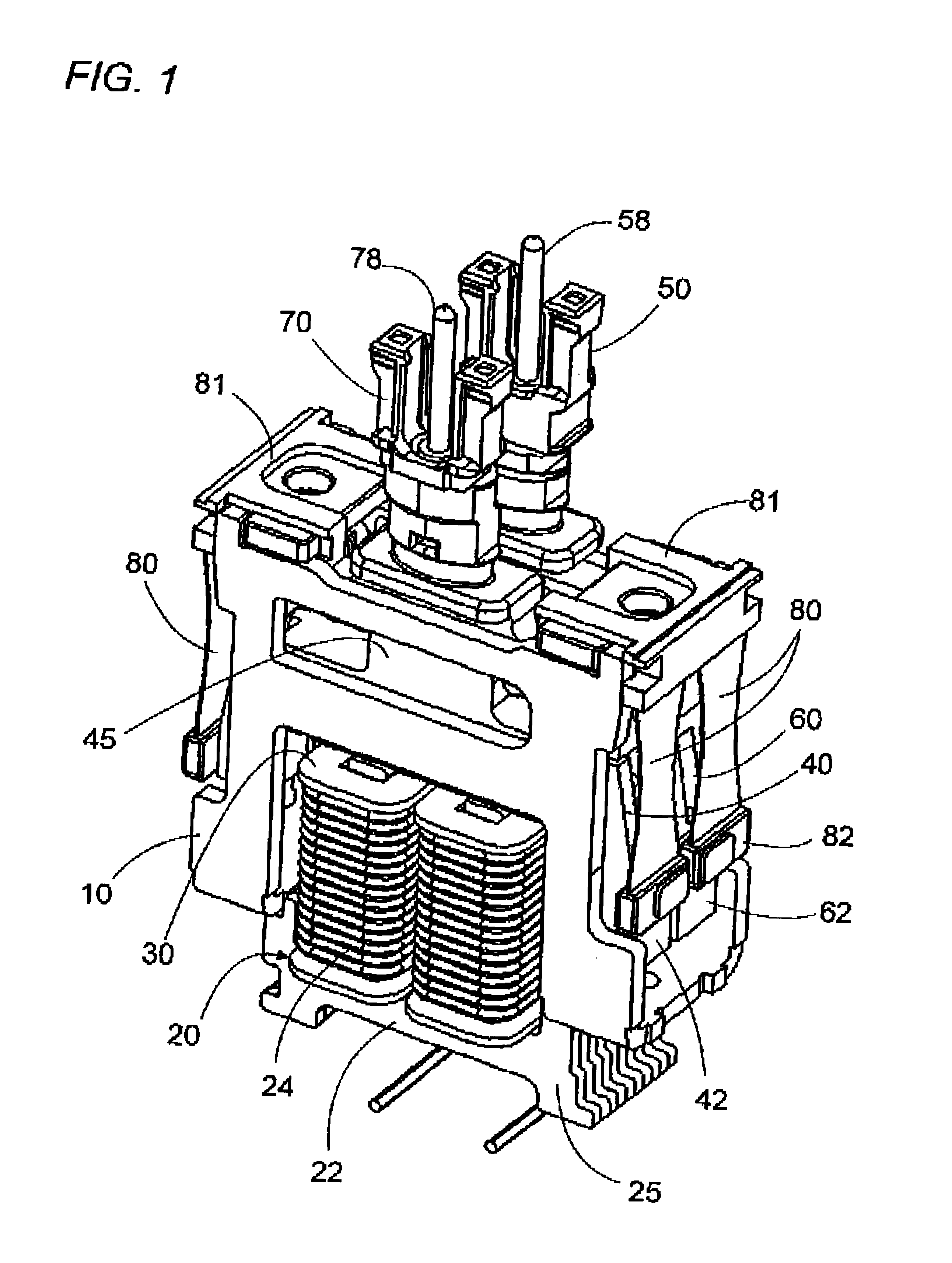
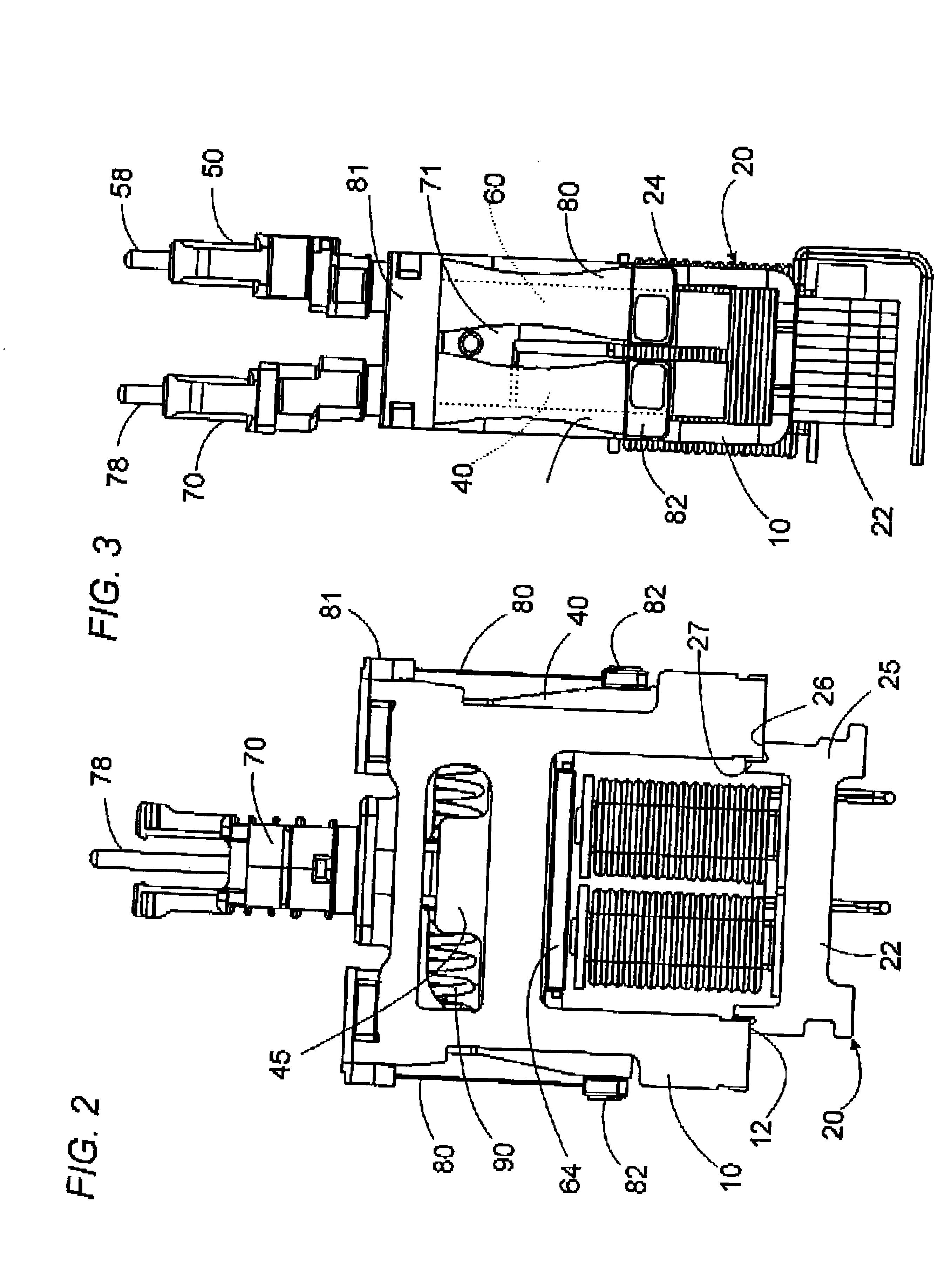
Now referring to FIGS. 1 to 4, there is shown a linear oscillating actuator in accordance with the present invention which is adapted to be incorporated in a dry shaver as a driving source for oscillating a pair of inner cutters respectively in parallel linear paths relative to an outer cutter. The actuator is basically composed of a chassis 10 mounting a stator 20 and a pair of oscillators, i.e., a first oscillator 40 and a second oscillator 60. The stator 20 is realized in the form of an electromagnet composed of a core 22 and a pair of windings 24 disposed respectively around two upright poles 23 of the core 22. The windings 24 are connected in series and supplied with an alternating current to generating a magnetic field of alternating polarity. The first and second oscillators 40 and 60 are suspended from the chassis 10 respectively by means of leaf springs 80 so as to be movable only in the linear paths defined along a horizontal length of the chassis 10. In this connection, t...
PUM
 Login to View More
 Abstract
Description
Claims
Application Information
 Login to View More