
Method and facility for displaying customer activity and value
- Summary
- Abstract
- Description
- Claims
- Application Information
AI Technical Summary
Benefits of technology
Problems solved by technology
Method used
Image

Examples
example
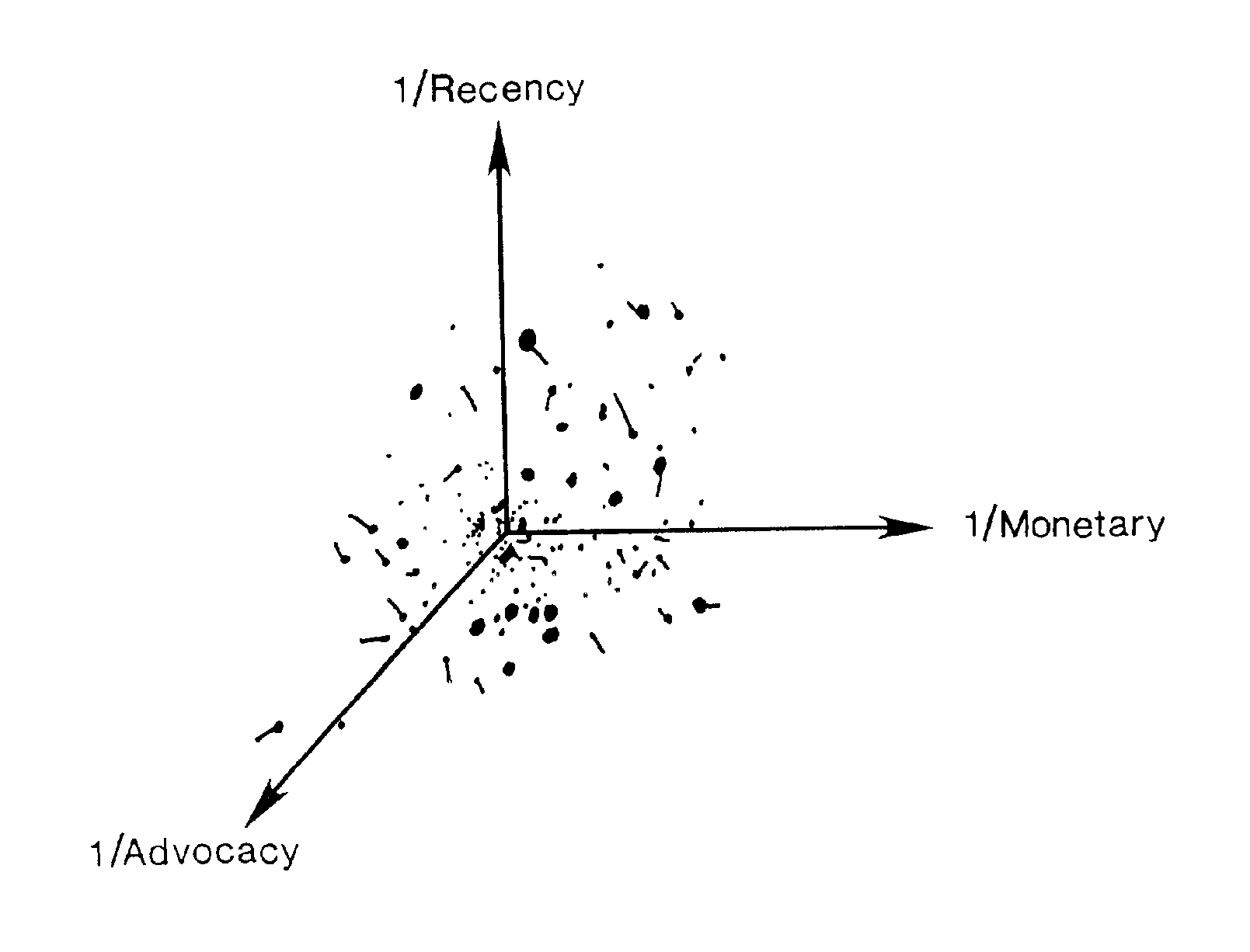
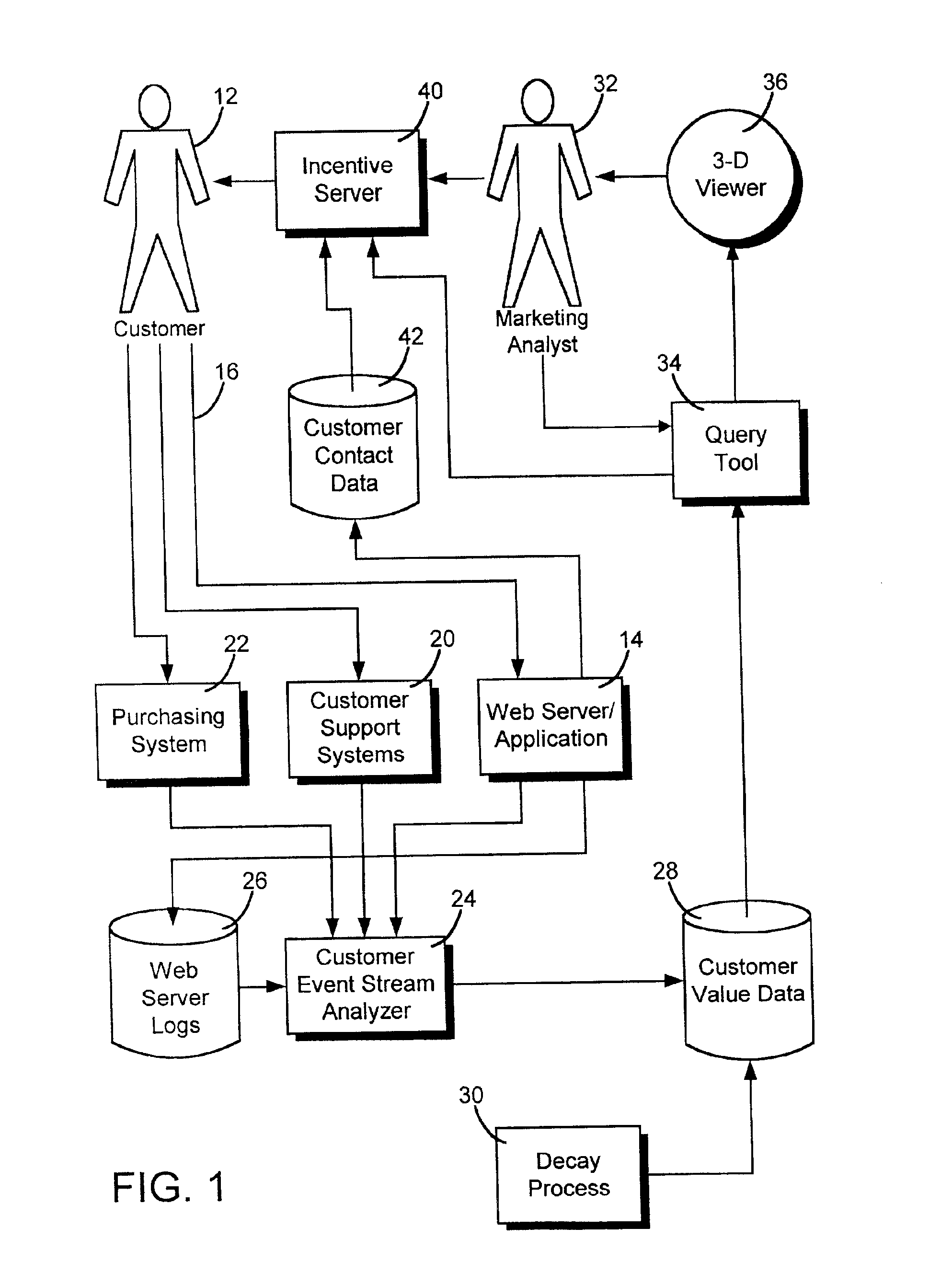
[0029]For displaying data, an interactive 3-D viewer such as X3D (http: / / hpux.csc.liv.ac.uk / hppd / hpux / X11 / Viewers / x3d-2.2 / ) for X-Windows or the Cosmo Player (http: / / www.cosmosoftware.com) for the web may be used to view and interact with the customer space. Other versions may use the Extensible-3D standard (also abbreviated “X3D”-http: / / www.web3d.org / x3d.html).
[0030]Using a 3-D viewer, marketing analysts can graphically define regions of the virtual space for customers in that space to receive certain incentives. If customer position history is stored, each customer's path through the virtual space may be traced to see movement trends.
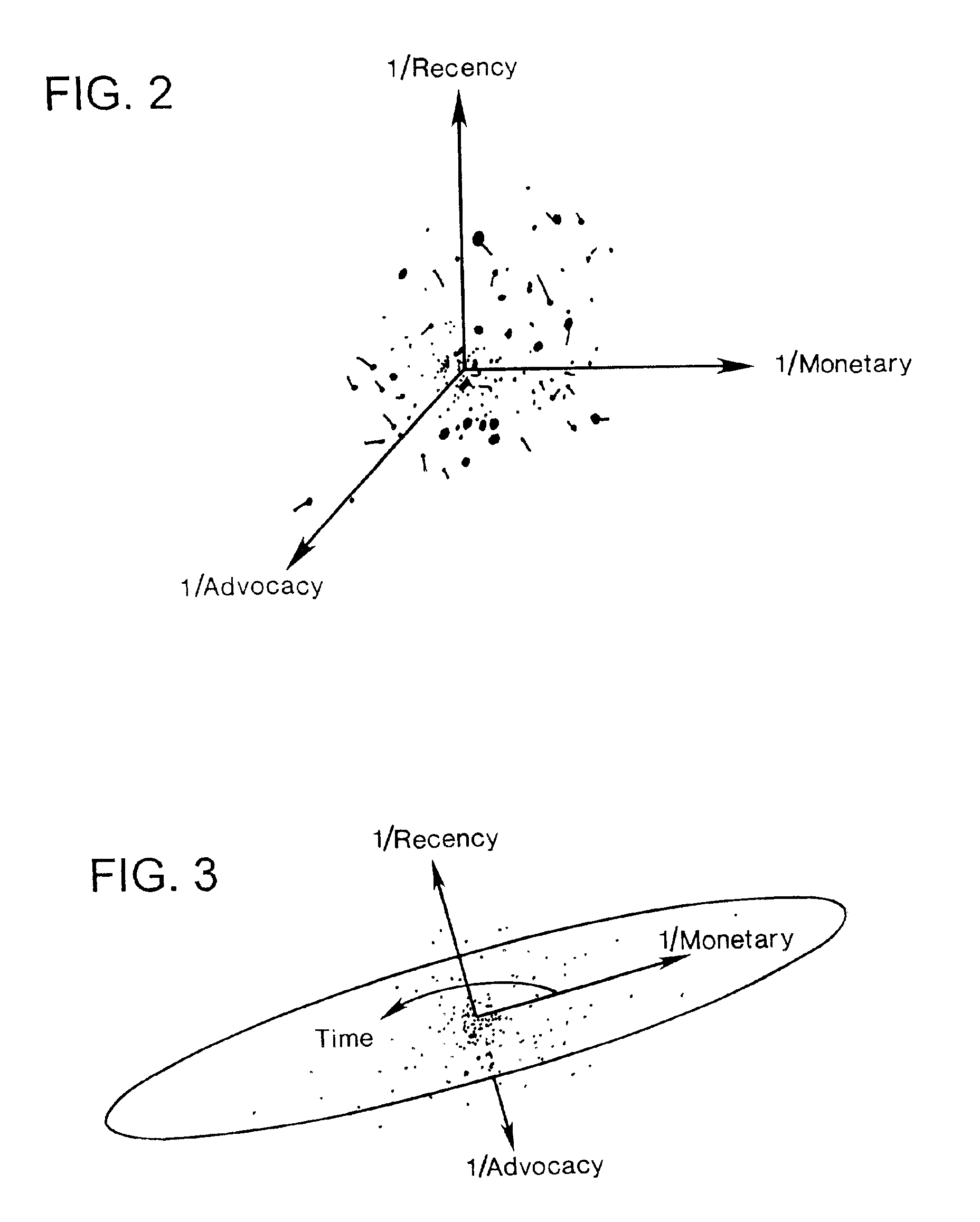
[0031]For each customer, only their current position in the virtual space is stored, plus a “force vector,” which is a factor of the customer's recent event history and the opposing decay force—essentially, the customer's current trajectory in the space. If it is desired to view movement through the space over time, a history of the customer's positio...
PUM
 Login to View More
 Abstract
Description
Claims
Application Information
 Login to View More