Cushion mount with slide device

US6902188B2Inactive Publication Date: 2005-06-07TAKATA RESTRAINT SYST
31 Cites 9 Cited by

Patent Information

Authority / Receiving Office
US · United States
Current Assignee / Owner
Publication Date
2005-06-07
Estimated Expiration
Not applicable · inactive patent

Smart Images

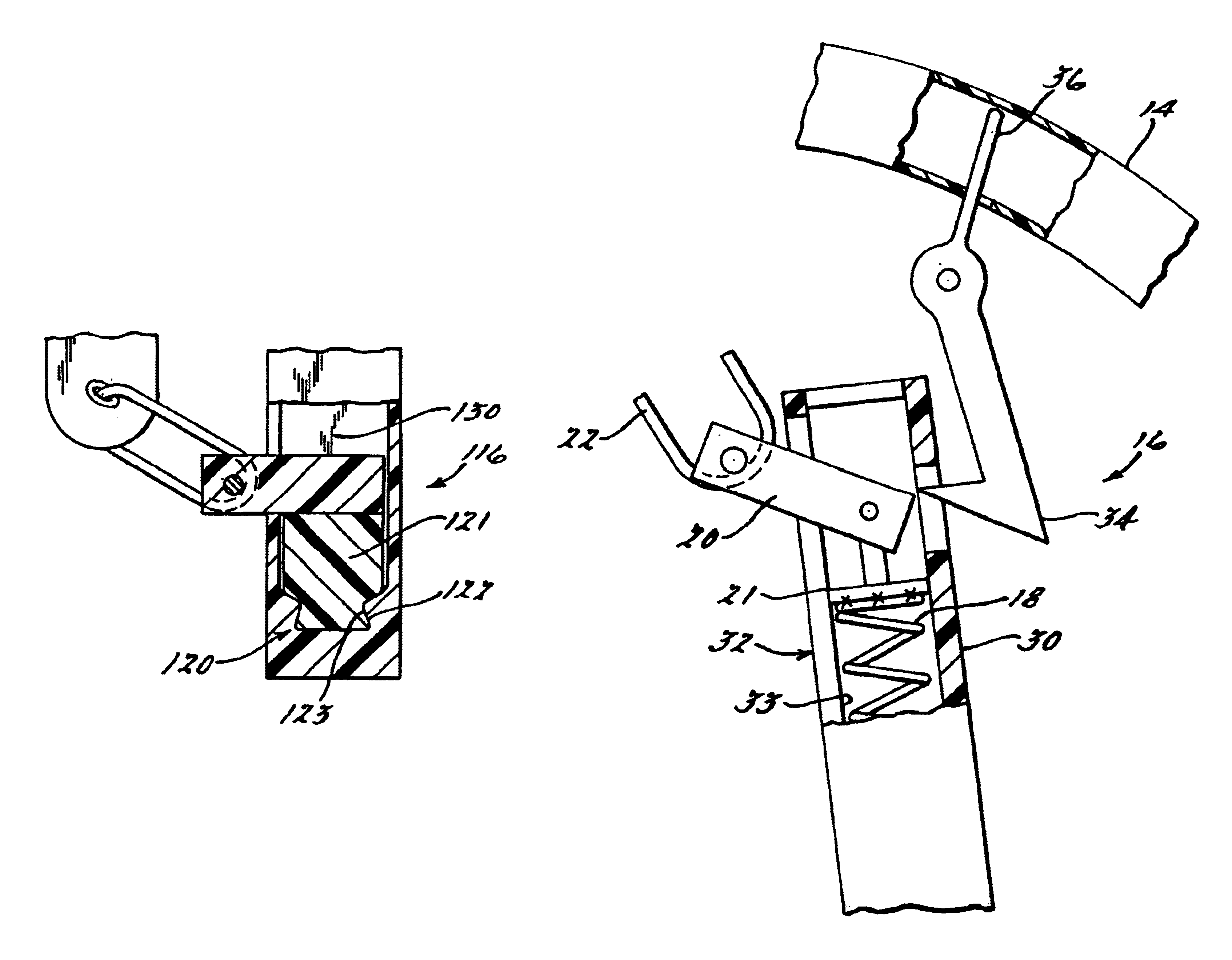
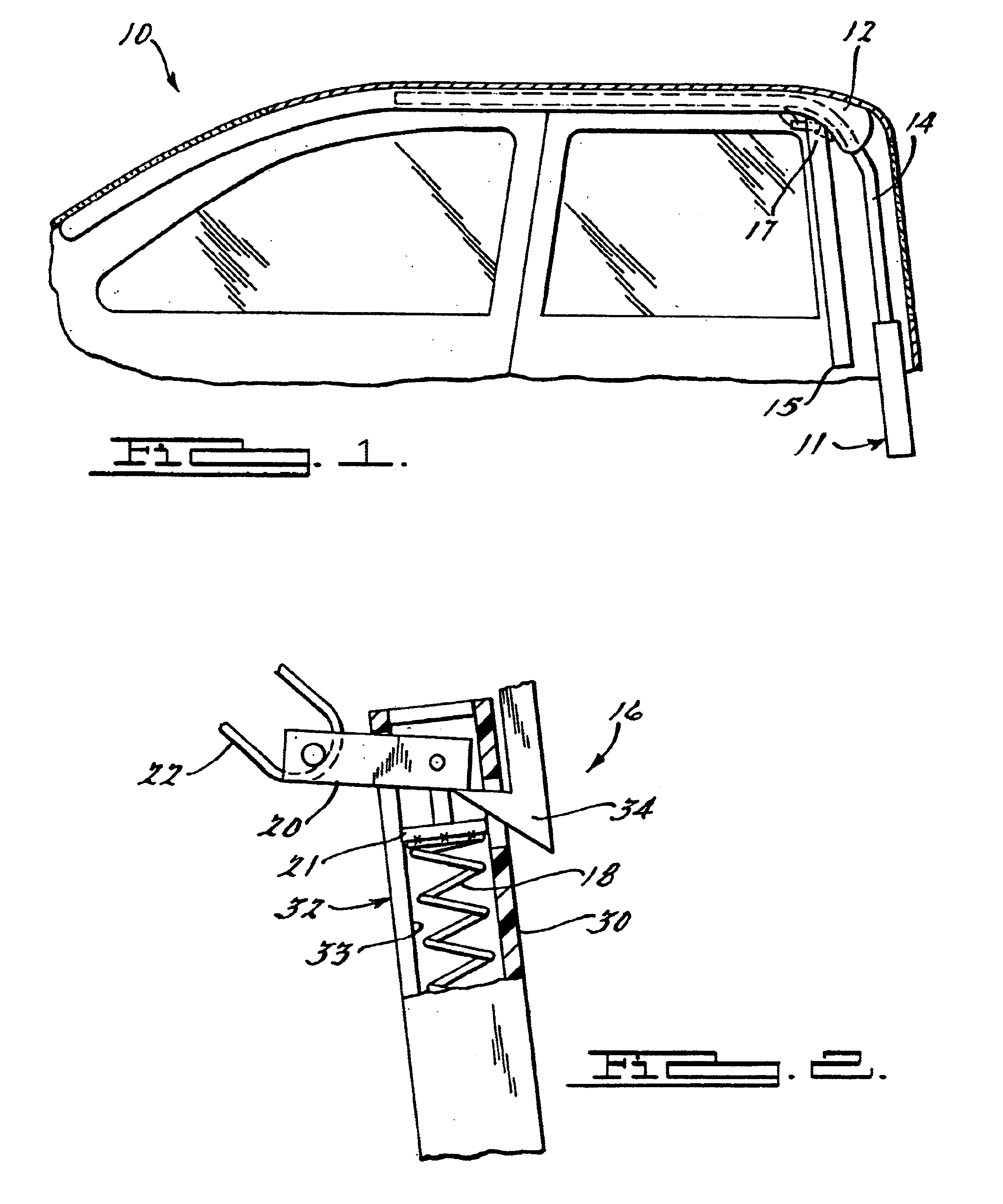
  • Figure 1
    Figure 1
  • Figure 2
    Figure 2
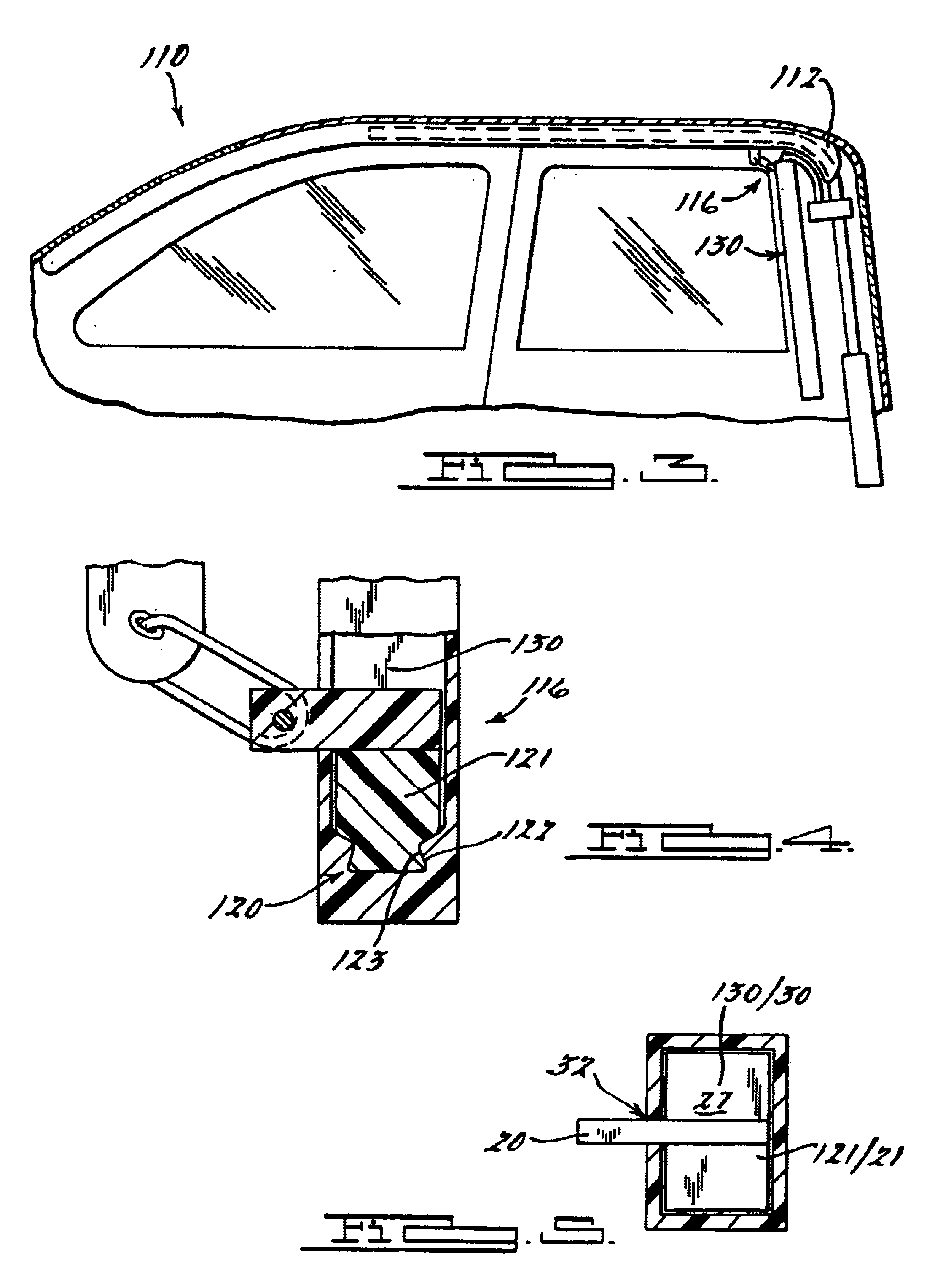
  • Figure 3
    Figure 3
Patent Text Reader

Abstract

A restraint apparatus for protecting a vehicle occupant in a side impact or rollover event. The restraint apparatus includes a deployment guide that includes a housing having a channel with a substantially smoothed interior and longitudinal slot. A guide member is slidably retained in the channel and has an extension protruding from the slotted side of the channel. The extension is attachable to a restraint device deployable laterally of a vehicle occupant. An actuator is provided and is operable to drive the guide member from a first end of the channel toward a second end. A driving of the guide member facilitates deployment of the restraint device and supplies at least a longitudinal tensioning force to the restraint device to provide lateral support thereto.
Need to check novelty before this filing date? Find Prior Art

Description

TECHNICAL FIELD

[0001] The present invention relates generally to side impact restraint devices, and more particularly to such a device having a cushion tethered to an actuatable slide device.BACKGROUND OF THE INVENTION

[0002] Supplemental restraint devices have become commonplace in vehicles in recent years and engineering and design efforts have increasingly focused on such devices deployable along vehicles' interior sides. In the event of a side impact or vehicle rollover event, a curtain or inflatable cushion is rapidly positioned between the vehicle passenger and the window / door of the vehicle. Due to the limited vehicle structure that separates an occupant from a rapidly moving body impacting the side of the vehicle, occupants may sustain much greater injuries in side-impact events than front or rear impacts. The energy absorbed by the vehicle structure tends to be substantially less than the energy which may be absorbed in front-end or rear-end collisions. Moreover, the forces ge...

Examples

Embodiment Construction

[0014]Referring to FIG. 1, there is shown a side view of an occupant protection apparatus 10 according to a preferred embodiment of the present invention. Apparatus 10 is directed to assisting in the deployment and lateral support of a side impact restraint device. Apparatus 10 actively assists the restraint device in rapidly and accurately deploying in a direction away from a vehicle roof rail. Once deployed, the apparatus provides lateral support to the restraint, lessening the likelihood that it will be displaced or forced out through the vehicle window during a crash or rollover event, and likewise reducing the risk of occupant ejection and / or injury. Apparatus 10 includes a restraint device 12, which is preferably a conventional inflatable airbag or cushion, shown in its folded / stored condition, as it would appear in a de-activated state prior to a crash. It should be appreciated that embodiments are contemplated in which a non-inflatable curtain is utilized rather than an airb...