
Reduction of matrix interference for MALDI mass spectrometry analysis
a mass spectrometry and matrix interference technology, applied in the plate field, can solve the problems of difficult detection of small molecule analytes, insufficient utilization of maldi ionization technique, and formation of matrix ions that are detected
- Summary
- Abstract
- Description
- Claims
- Application Information
AI Technical Summary
Benefits of technology
Problems solved by technology
Method used
Image

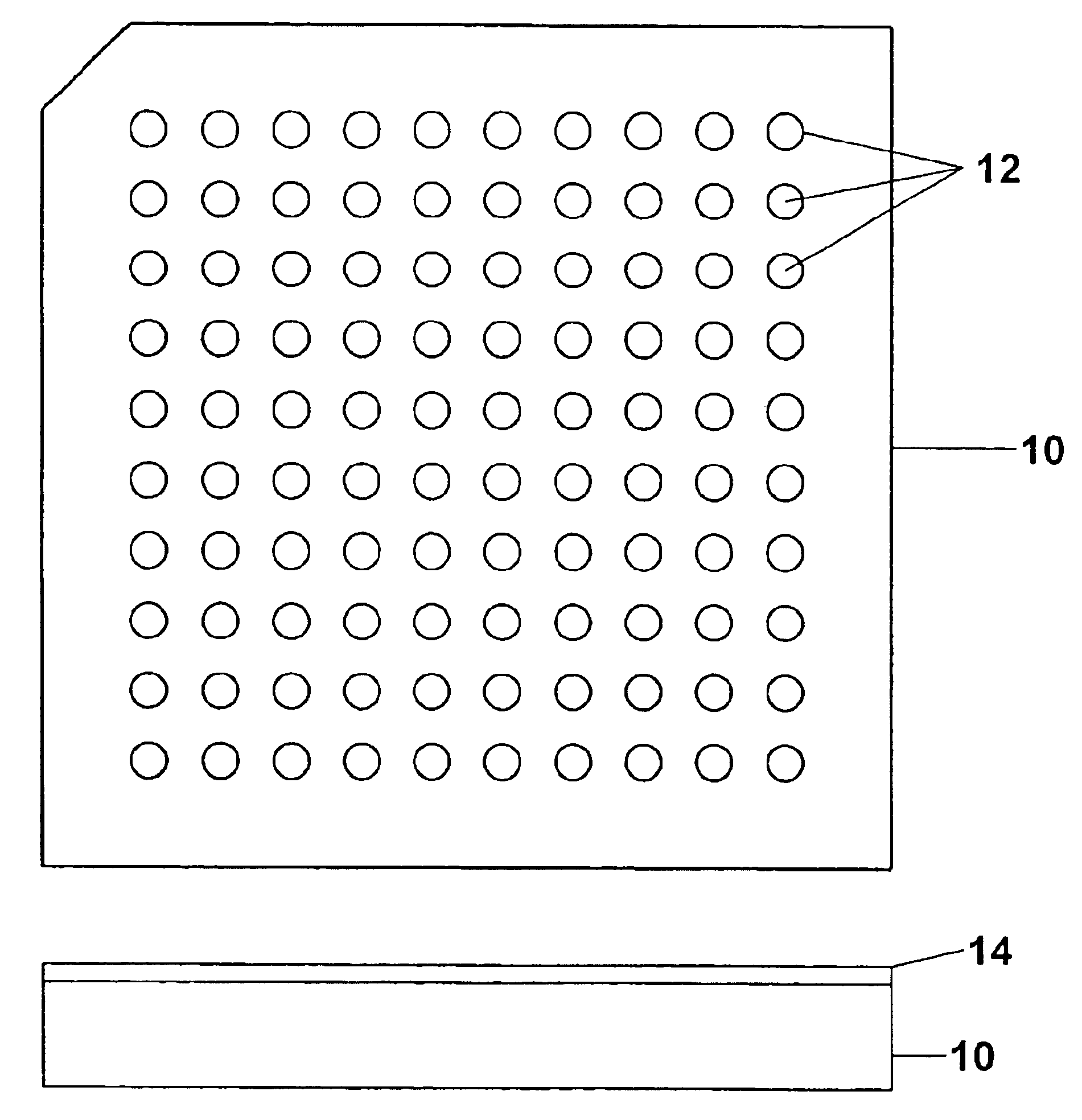
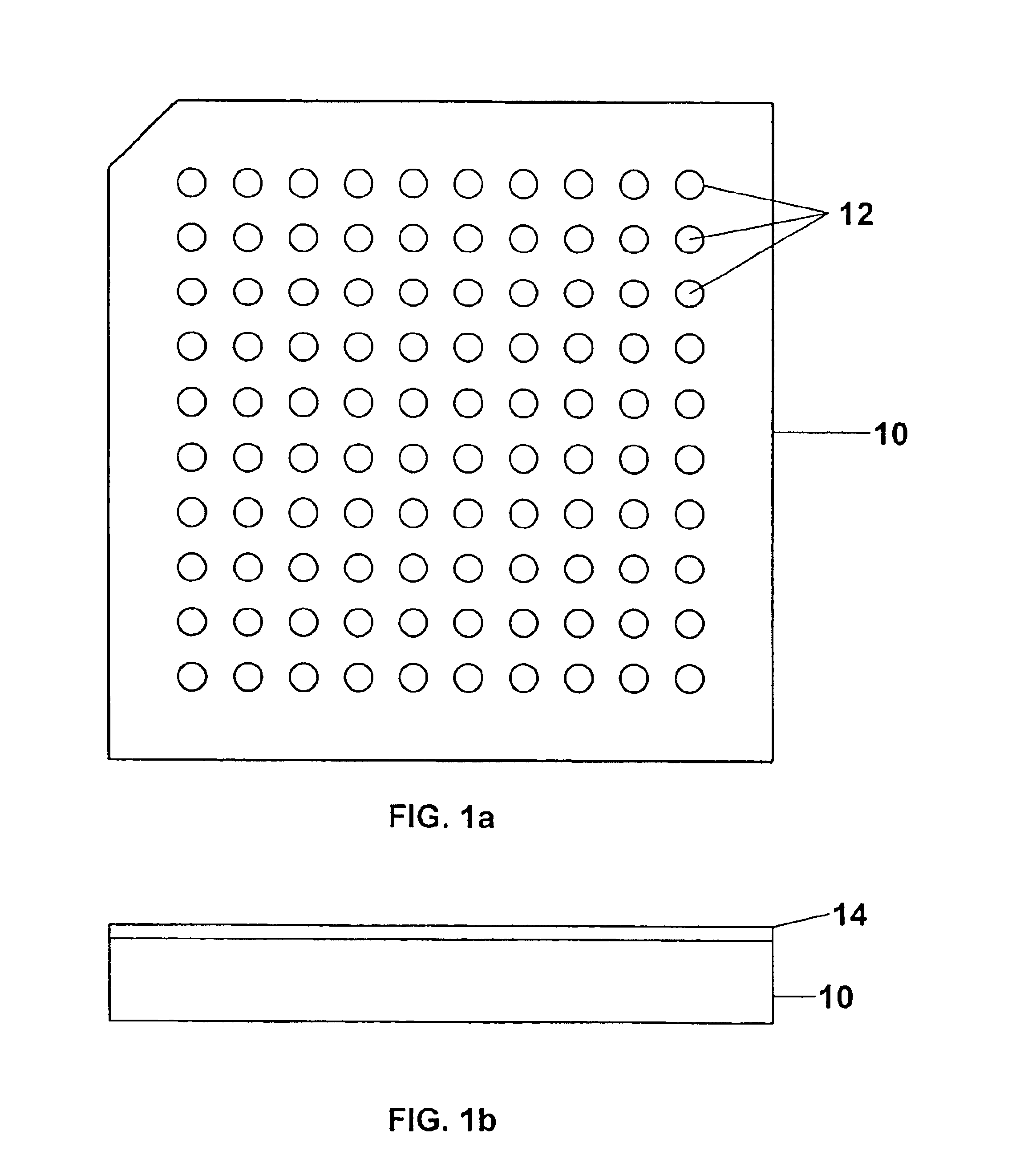
Examples
example 1
Preparation of Matrix Suppressing MALDI Plate
[0033]The target surface of a conventional stainless steel MALDI plate was polished with a commercially available POL metal polish in accordance with the teachings of U.S. patent application Ser. No. 10 / 227,088. On completion of this process in which the metal polish was applied and the MALDI plate was buffed to a shine, components of the metal polish remained on the plate surface to form an integral hydrophobic coating. The polymer / matrix coating solution was prepared by dissolving alpha cyano-4-hydroxy cinnamic acid and nitrocellulose in acetone (approximately 50 mg of each component was weighed into a glass container and solubilized in 50 mL of acetone). The matrix intercalated polymer layer was formed by application of 100 μL of this solution onto the target area of a metal polished MALDI plate. The plate was then immediately spun at 8,000 RPM for 20 seconds, and residual solvent evaporated to produce a thin coating on top of the hydr...
example 2
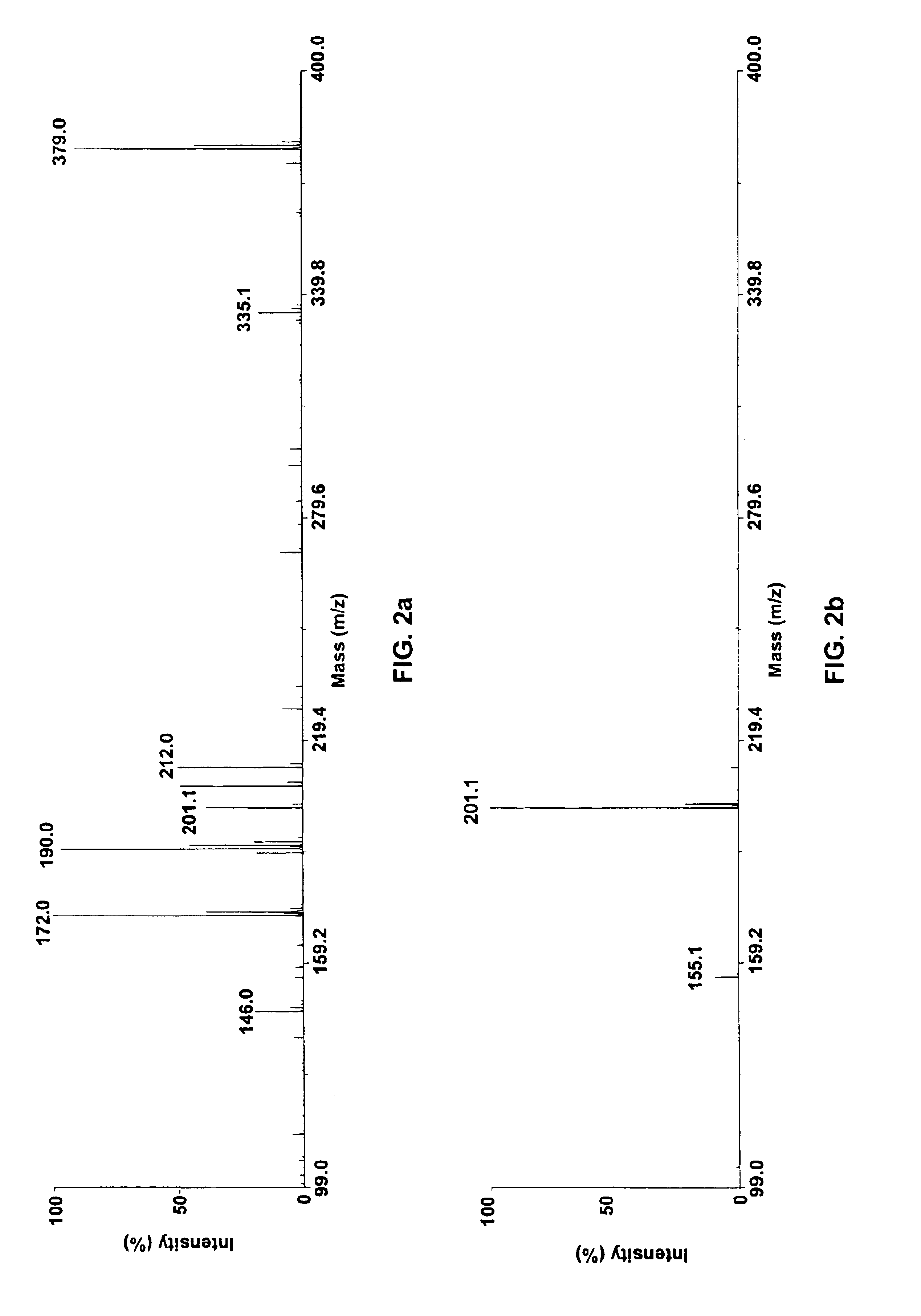
[0034]FIGS. 2a and 2b illustrate how the use of the polymer coated target plate reduces matrix ion interferences. The conventional MALDI dried droplet technique, as described within the teachings of U.S. patent application Ser. No. 10 / 227,088, is represented in FIG. 2a. In this example, a 0.5 μL aliquot of a 100 ng / mL tetrahydrozoline (m / z 201) solution in 60% acetonitrile was applied to a dried droplet of 7 mg / mL α cyano-4-hydroxycinnamic acid and analyzed on a Voyager-DE™ PRO workstation (Applied Biosystems). Matrix ions are the dominant species in this MALDI-TOF-MS spectrum as can be readily observed at m / z 172, 190, 212, 335 and 379. FIG. 2b represents analysis of a further 0.5 μL aliquot from the same sample of tetrahydrozoline applied to a matrix intercalated polymer coated MALDI plate made by the procedure given in Example 1. In this spectrum, most of the matrix signal was eliminated, while the analyte signal at m / z 201 is clearly distinguished.
example 3
[0035]FIGS. 3a and 3b further illustrate the suppression effect observed when a different molecule was analyzed using a matrix intercalated polymer coated MALDI plate prepared as described in Example 1. The conventional MALDI dried droplet technique is represented in FIG. 3a. In this example, a 0.5 μL aliquot of a 100 ng / mL verapamil (m / z 455) solution in 80% acetonitrile was applied to a dried droplet of 7 mg / mL α cyano-4-hydroxycinnamic acid and analyzed on a Voyager-DE™ PRO workstation (Applied Biosystems). Matrix ions observed at m / z 172, 190, 212, 335, 379 and 441 dominate this MALDI-TOF-MS spectrum. FIG. 3b represents a further 0.5 μL aliquot from the same sample of verapamil solution applied to the polymer coated MALDI target plate made by the procedure given in Example 1. In this spectrum, most of the matrix signal was eliminated, while the analyte signal at m / z 455 is clearly distinguished.
PUM
| Property | Measurement | Unit |
|---|---|---|
| concentration | aaaaa | aaaaa |
| concentration | aaaaa | aaaaa |
| molecular mass | aaaaa | aaaaa |
Abstract
Description
Claims
Application Information
 Login to View More