
Offset mold process
a mold and offset technology, applied in the field of casting molten metal, can solve the problems of limiting the application of this technique, requiring scrapping of the entire casting, and causing casting defects
- Summary
- Abstract
- Description
- Claims
- Application Information
AI Technical Summary
Benefits of technology
Problems solved by technology
Method used
Image

Examples
first embodiment
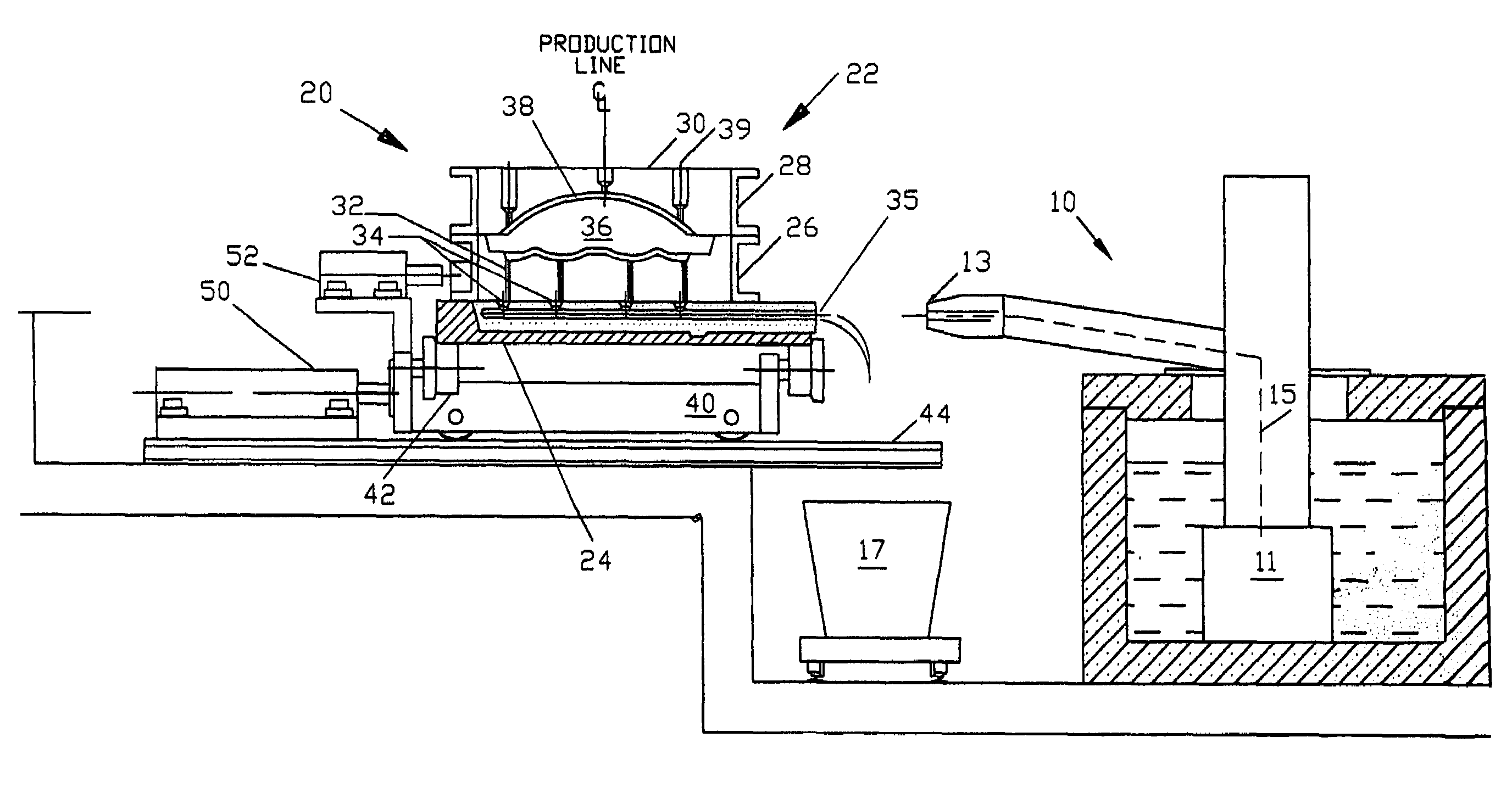
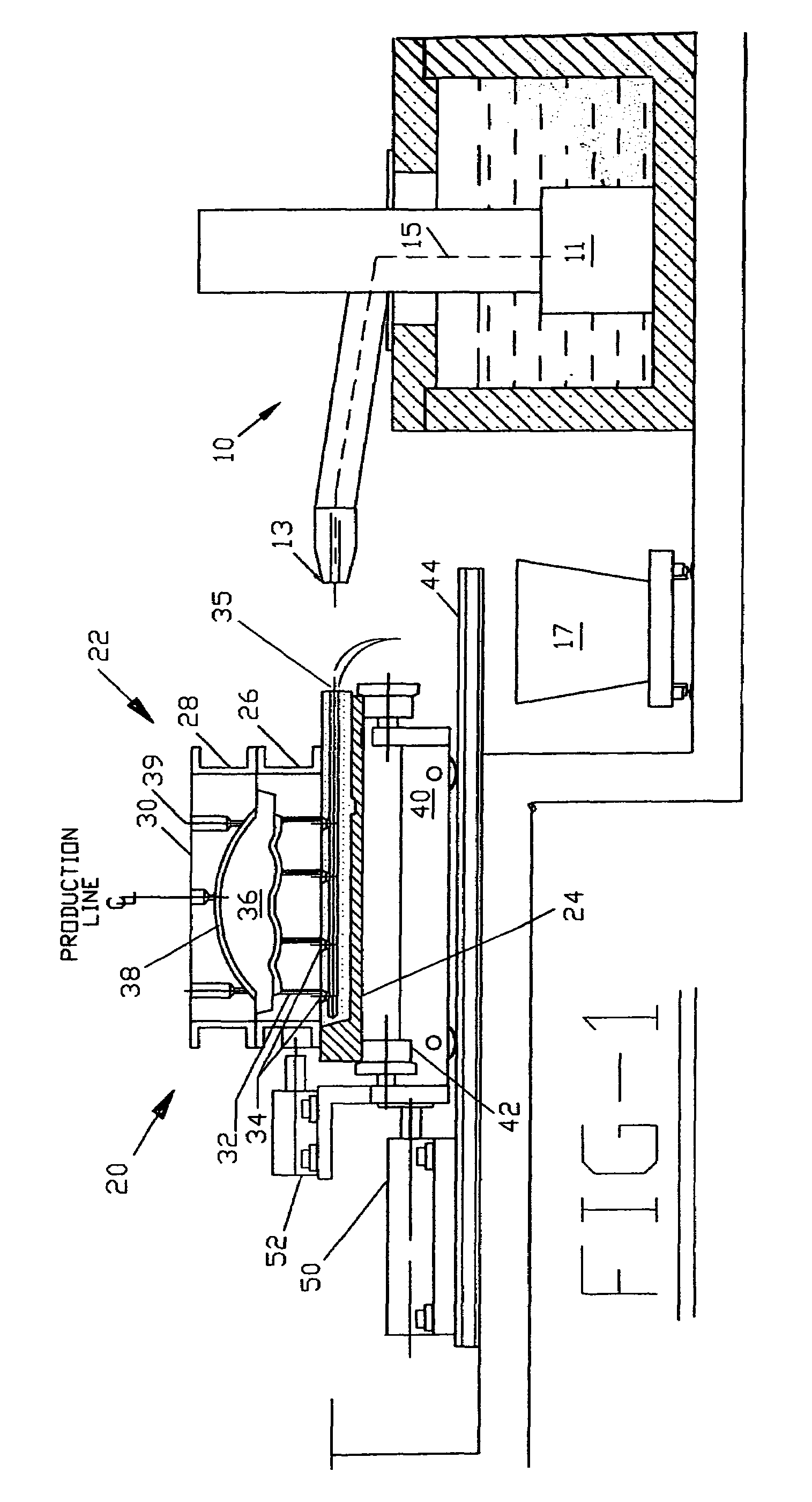
[0013]molding apparatus useful in the offset molding method of the present invention is shown in FIG. 1 generally at 20. In the present method, a mold assembly 22 comprised of a mold bottom board 24, a first mold component, in this case, a drag 26 sitting atop the bottom board 24, with a second mold component, in this case cope 28 sitting atop and pinned to drag 26. It is noted that when drag 26 is originally placed on bottom board 24, it, too, was pinned in place. These pins ensure proper alignment of components as the during the construction of the mold, typically from green sand. However, after the formation of the mold assembly 22 is completed, the pins between the drag 26 and bottom board 24 are removed to permit relative movement there between.
[0014]As seen in FIG. 1, a separate replaceable sand mold 31 positioned in the bottom board 24 will typically be provided with a horizontal runner 34 with entrance port 35. Primary sand mold 30, also made of green sand, is formed with a ...
third embodiment
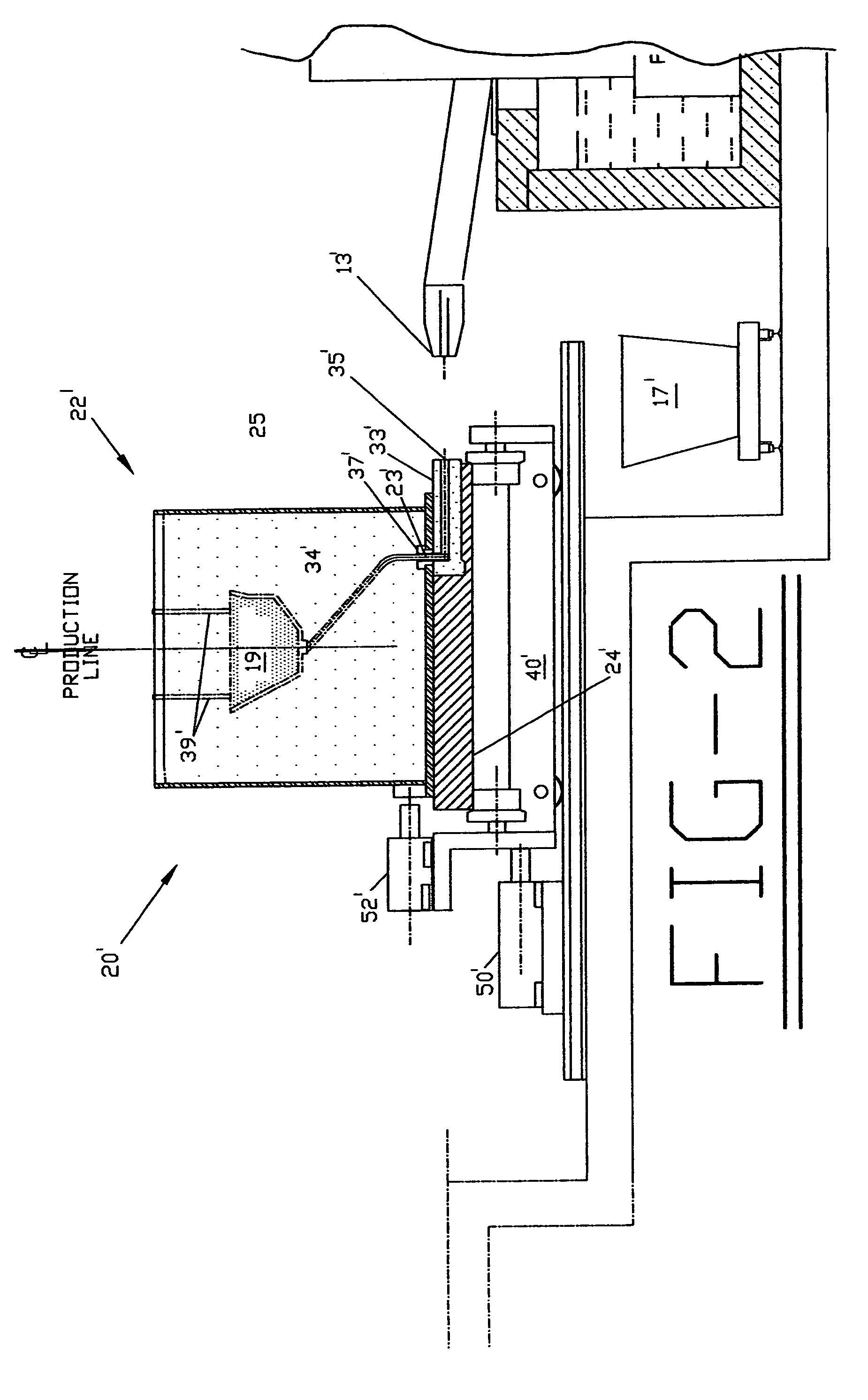
[0017]apparatus useful with the method of the present invention is shown in FIG. 3 generally at 20″. This third structural embodiment is similar to the second, also involving a lost foam casting technique. However, in this embodiment, the flow cutoff apparatus is different. The second hydraulic cylinder 52″ is mounted on the pumping station 10″. When the bottom filling of the mold assembly 22″ is completed, second hydraulic cylinder 22″ is actuated moving a knife-edge plunger 54″ to cutoff flow through runner 34″. As with the previous embodiments, when first hydraulic cylinder 50″ retracts shuttle car 40″, the molten metal remaining in the metal entrance 35″ below the cutoff point will drain into the catch ladle 17″.
PUM
| Property | Measurement | Unit |
|---|---|---|
| Flow rate | aaaaa | aaaaa |
Abstract
Description
Claims
Application Information
 Login to View More