Unlock instant, AI-driven research and patent intelligence for your innovation.

Cumulative neighboring cell list

a neighboring cell and list technology, applied in the field of cumulative neighboring cell list, can solve the problems of excessive overhead due to broadcasting of neighboring cells, no longer suitable cells, and high burden on the system information volum

Active Publication Date: 2012-06-19
LG ELECTRONICS INC
View PDF5 Cites 0 Cited by
  • Summary
  • Abstract
  • Description
  • Claims
  • Application Information

AI Technical Summary

Benefits of technology

This approach reduces the overhead in system information and the number of cells that mobile terminals must measure, thereby decreasing battery consumption and improving network efficiency, particularly in scenarios with multiple frequencies and technologies.

Problems solved by technology

If the reception quality of the cell on which the UE 1 is camping degrades below a certain level the cell is no longer suitable.
However, UEs 1 that are moving quickly will need to reselect cells very frequently due to the much smaller cell size.
Therefore, the burden on the system information volume is very high for the macro cells because there are many more micro cells in the coverage area of a macro cell.
The overhead due to broadcasting of the neighboring cells becomes excessive if there are many different frequencies and technologies that must be listed as neighboring cells.
Furthermore, the impact on the UE 1 consumption when the UE must measure on many cells simultaneously becomes very high.

Method used

the structure of the environmentally friendly knitted fabric provided by the present invention; figure 2 Flow chart of the yarn wrapping machine for environmentally friendly knitted fabrics and storage devices; image 3 Is the parameter map of the yarn covering machine
View more

Image

Smart Image Click on the blue labels to locate them in the text.
Viewing Examples
Smart Image
  • Cumulative neighboring cell list
  • Cumulative neighboring cell list
  • Cumulative neighboring cell list

Examples

Experimental program
Comparison scheme
Effect test

Embodiment Construction

[0054]Reference will now be made in detail to the preferred embodiments of the present invention, examples of which are illustrated in the accompanying drawings. Several possibilities exist for reducing the size of a neighboring cell list.

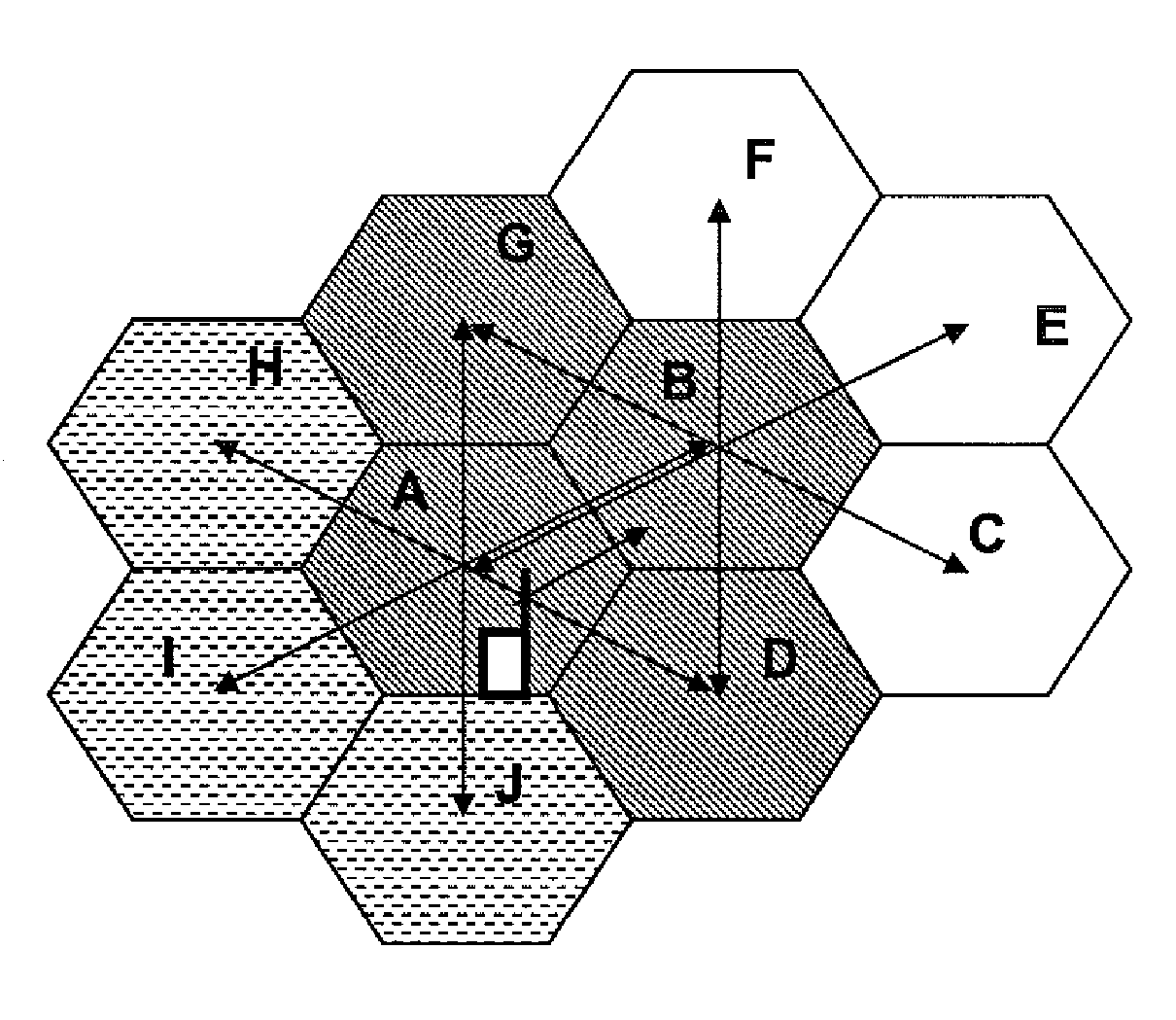
[0055]One possibility for reducing the size of a neighboring cell list is to combine different cell information lists. A UE 1 may combine information from different cells if the UE is able to simultaneously receive system information from the different cells. This can reduce the number of neighboring cells that must be broadcast on one cell.

[0056]Normally, it is possible for a UE 1 to receive system information of the best neighboring cell when the UE is in between two different cells. Therefore, the UE 1 may combine the cell information lists of a neighboring cell with the cell list that the UE has read on the cell on which it is camping.

[0057]FIG. 6 illustrates an example of merging intra-frequency neighboring cell lists. As illustrated in FIG. 6...

the structure of the environmentally friendly knitted fabric provided by the present invention; figure 2 Flow chart of the yarn wrapping machine for environmentally friendly knitted fabrics and storage devices; image 3 Is the parameter map of the yarn covering machine
Login to View More

PUM

No PUM Login to View More

Abstract

A method and apparatus for reducing the number of cells that must be broadcast and the number of cells that a mobile terminal must measure when different frequencies and technologies must be listed as neighboring cells.

Description

CROSS-REFERENCE TO RELATED APPLICATIONS[0001]Pursuant to 35 U.S.C. §119(e), this application claims the benefit of U.S. Provisional Application Ser. No. 60 / 888,742, filed on Feb. 7, 2007.FIELD OF THE INVENTION[0002]The present invention relates to reducing overhead due to broadcasting of neighboring cells when different frequencies and technologies must be listed as neighboring cells and, particularly, to reducing the number of cells that must be broadcast and the number of cells that a mobile terminal must measure.DESCRIPTION OF THE RELATED ART[0003]A universal mobile telecommunication system (UMTS) is a European-type, third generation IMT-2000 mobile communication system that has evolved from a European standard known as Global System for Mobile communications (GSM). UMTS is intended to provide an improved mobile communication service based upon a GSM core network and wideband code division multiple access (W-CDMA) wireless connection technology. In December 1998, a Third Generati...

Claims

the structure of the environmentally friendly knitted fabric provided by the present invention; figure 2 Flow chart of the yarn wrapping machine for environmentally friendly knitted fabrics and storage devices; image 3 Is the parameter map of the yarn covering machine
Login to View More

Application Information

Patent Timeline
no application Login to View More
Patent Type & Authority Patents(United States)
IPC IPC(8): H04W4/00H04B7/00
CPCH04W48/10H04J11/0093H04W48/16
Inventor FISCHER, PATRICK
Owner LG ELECTRONICS INC