
Rotary seal with improved film distribution
a technology of rotary seals and film distribution, applied in the direction of engine seals, mechanical equipment, engine components, etc., can solve the problems of loss of viscosity of lubricant film, increase the cost of lubricant film replacement, etc., to achieve the effect of increasing asperity friction, reducing the value of ewh, and increasing the friction valu
- Summary
- Abstract
- Description
- Claims
- Application Information
AI Technical Summary
Benefits of technology
Problems solved by technology
Method used
Image

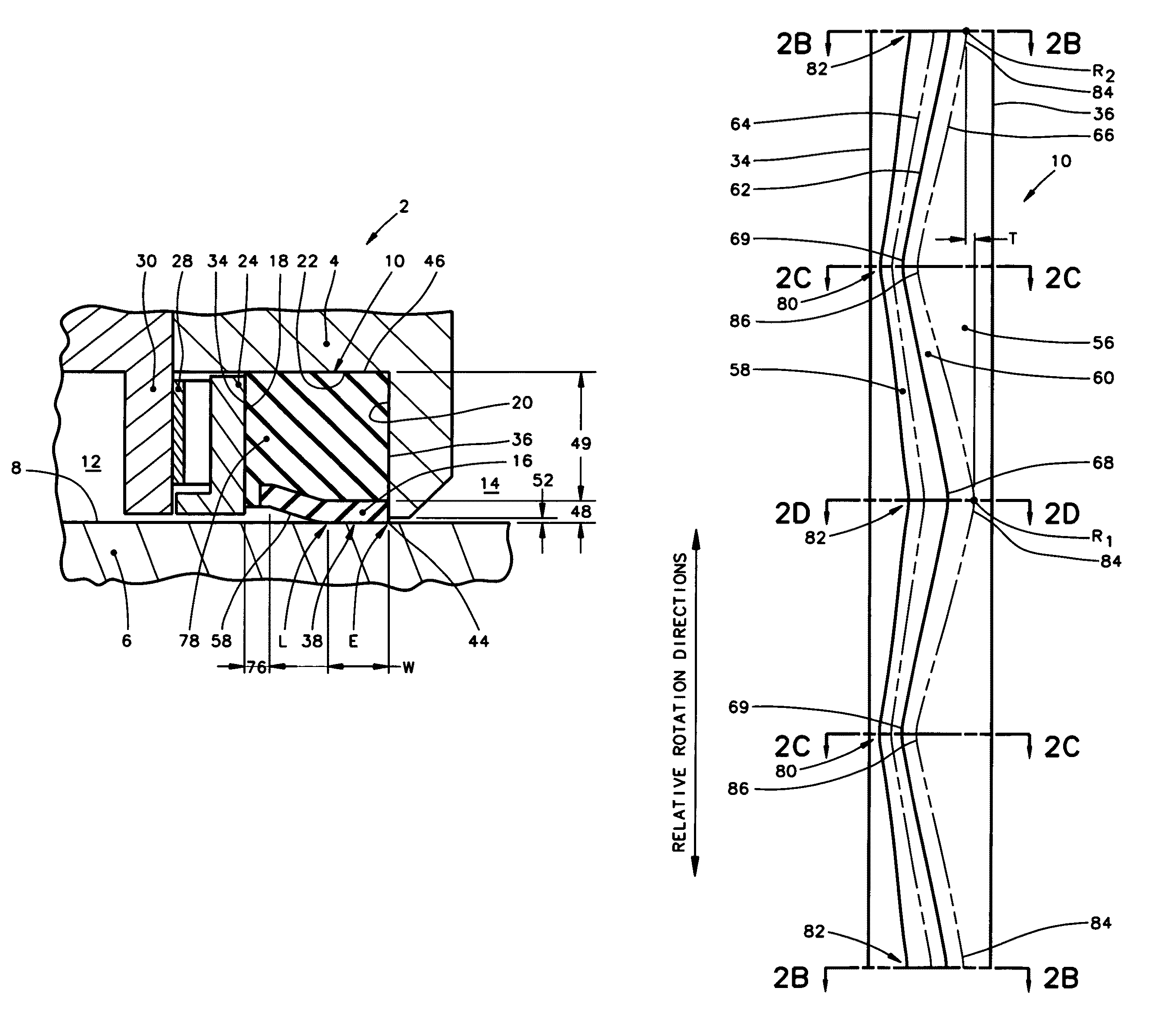
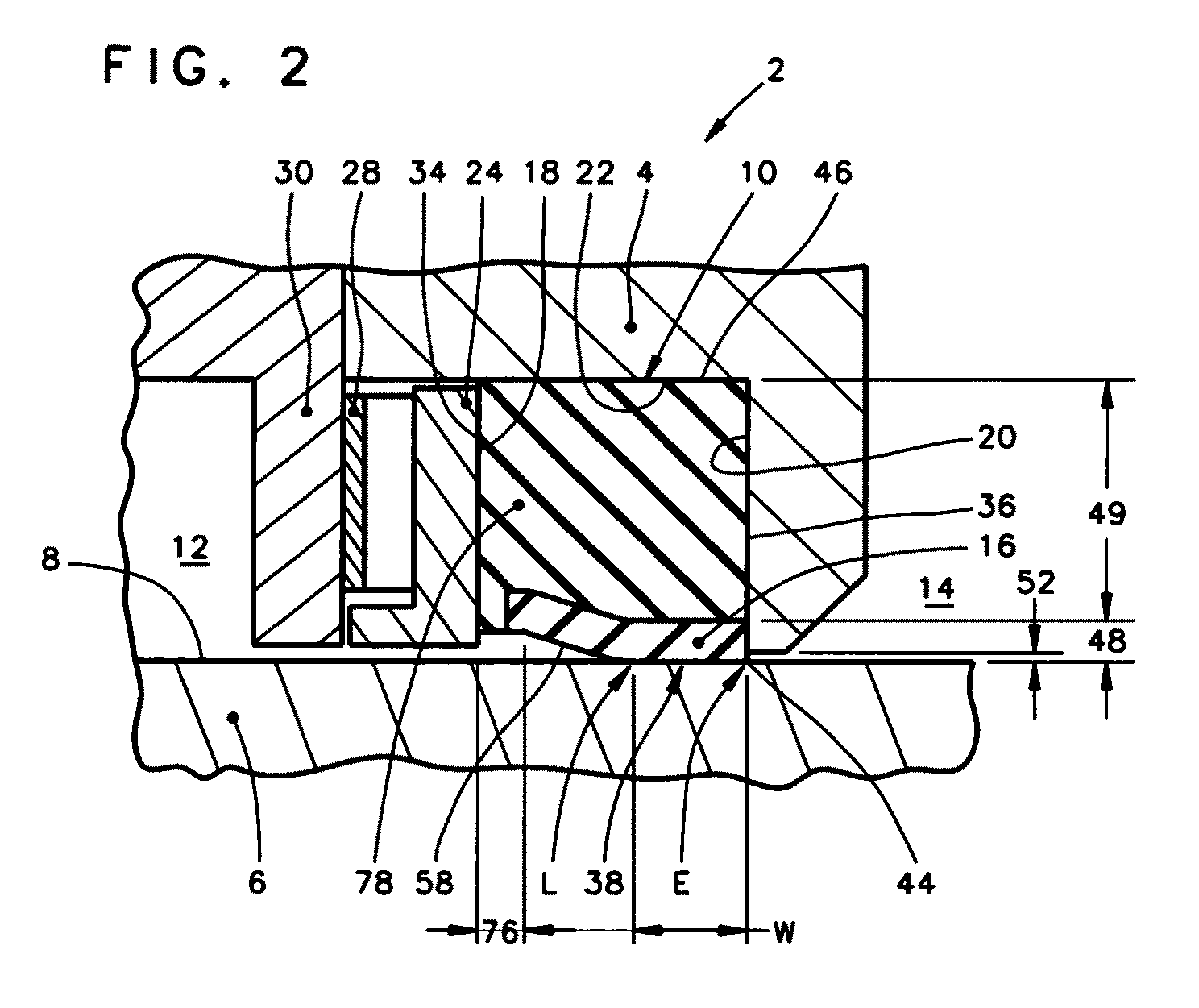
Examples
Embodiment Construction
1. Description of FIG. 1
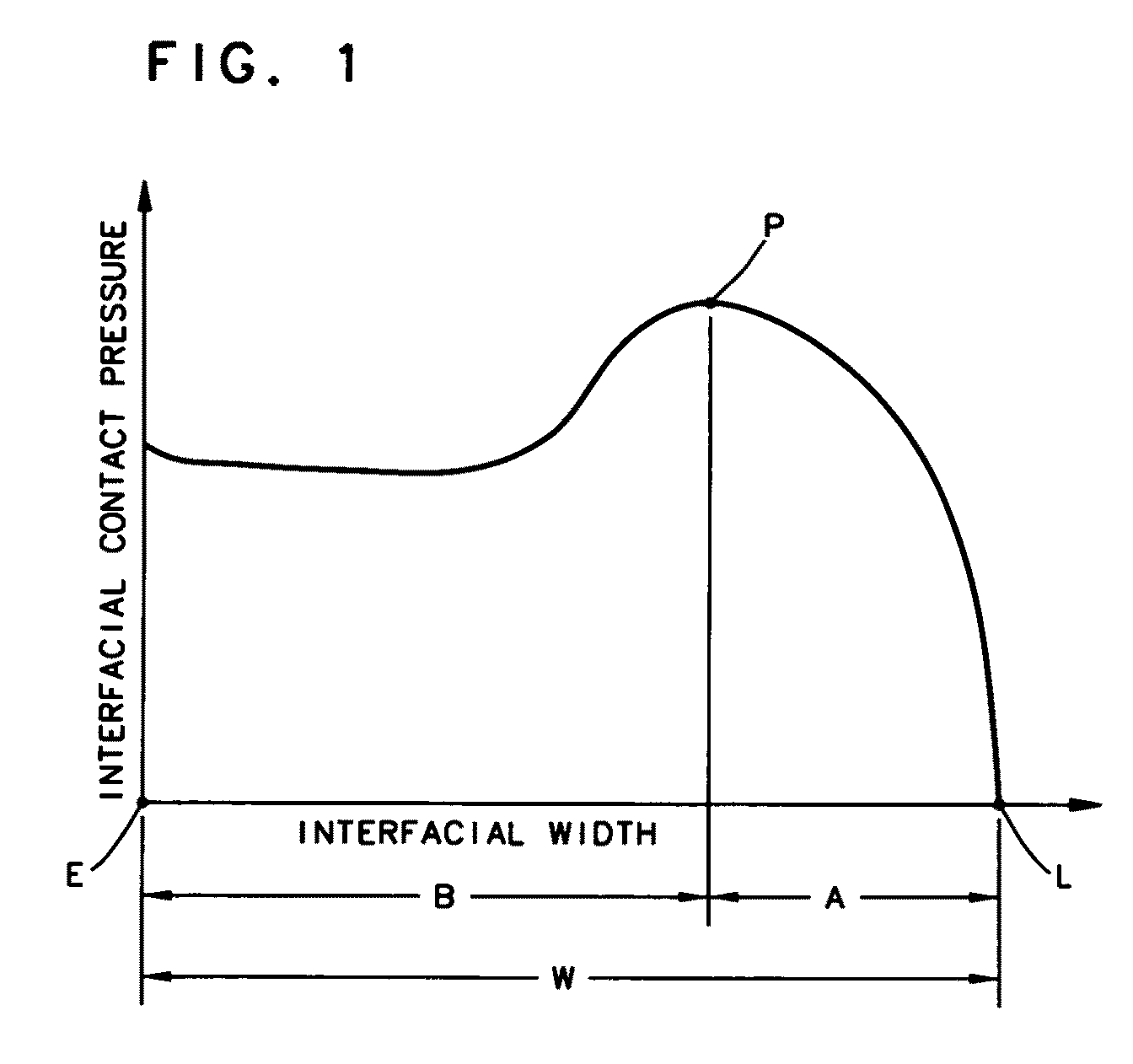
[0052]FIG. 1 is a graph that schematically represents an interfacial contact pressure plot at any circumferential location of a typical seal, for example, manufactured according to one of assignee's U.S. Pat. Nos. 4,610,319, 5,230,520, 6,315,302, 6,382,634, and so forth. The proportions of a contact pressure plot will vary depending on specific seal geometry and analysis constraints, but the general plot characteristics are captured in FIG. 1. The plot has a first footprint edge L and second footprint edge E, which correspond to the lubricant-side and environment-side edges, respectively, of the dynamic sealing interface / footprint. The direction of relative rotation between the seal and the mating relatively rotatable surface is normal (perpendicular) to the axis labeled “interfacial width”, and normal (perpendicular) to the page on which the figure is printed.
[0053]At any given circumferential location of the footprint, the inlet contact pressure rises from ...
PUM
 Login to View More
 Abstract
Description
Claims
Application Information
 Login to View More