
Glenoid implant
a glenoid and implant technology, applied in joint implants, prostheses, medical science, etc., can solve problems such as premature loosening and breakout torqu
- Summary
- Abstract
- Description
- Claims
- Application Information
AI Technical Summary
Benefits of technology
Problems solved by technology
Method used
Image

Examples
Embodiment Construction
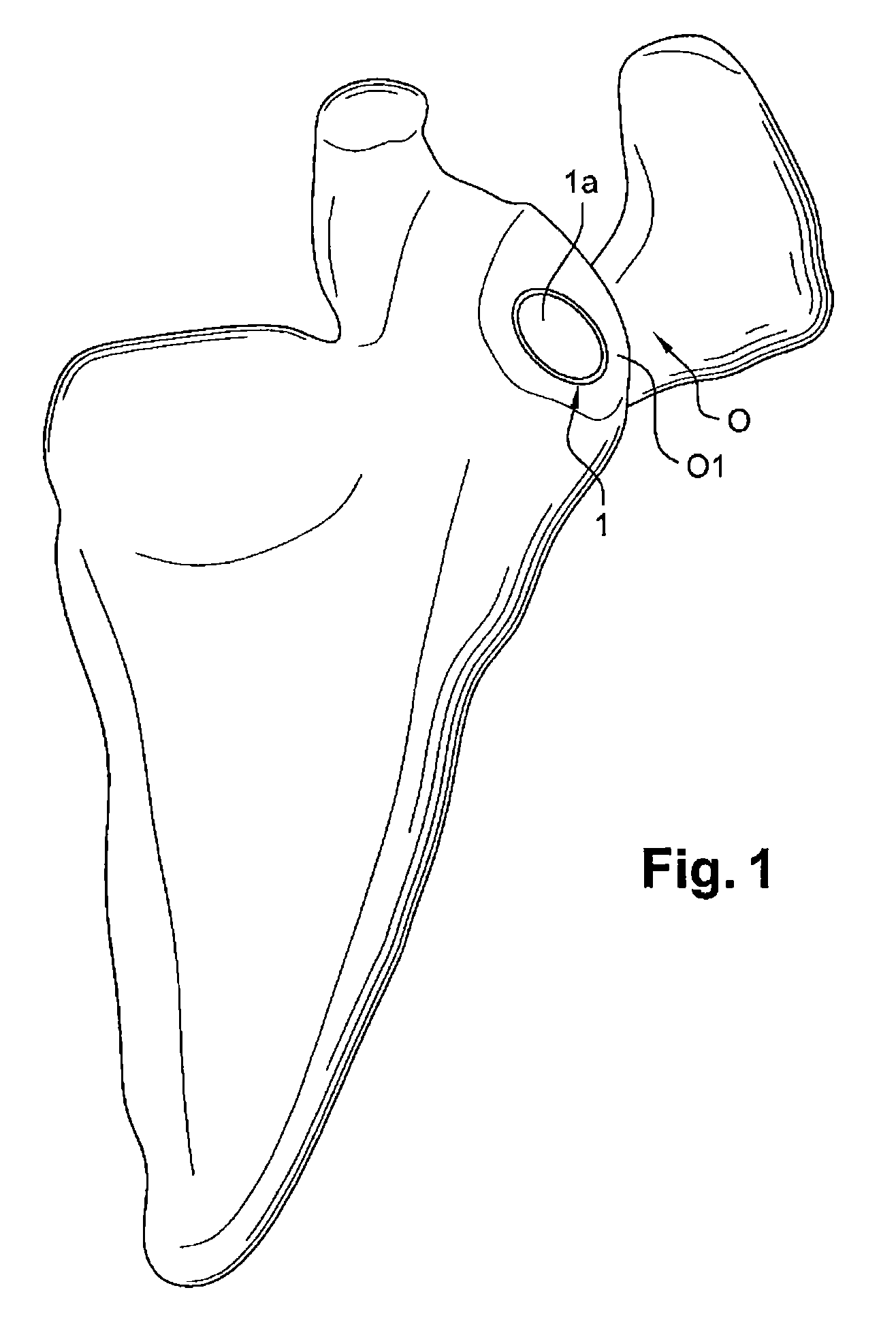
[0018]The scapula, shown in FIG. 1 is labelled as (O), whereas the anatomical glenoid cavity which will receive the implant is labelled as (O1).
[0019]According to a basic characteristic of the invention, the glenoid implant is made to be embedded in the glenoid cavity, with the objective of simply replacing the cartilage, without modifying its biomechanical architecture.
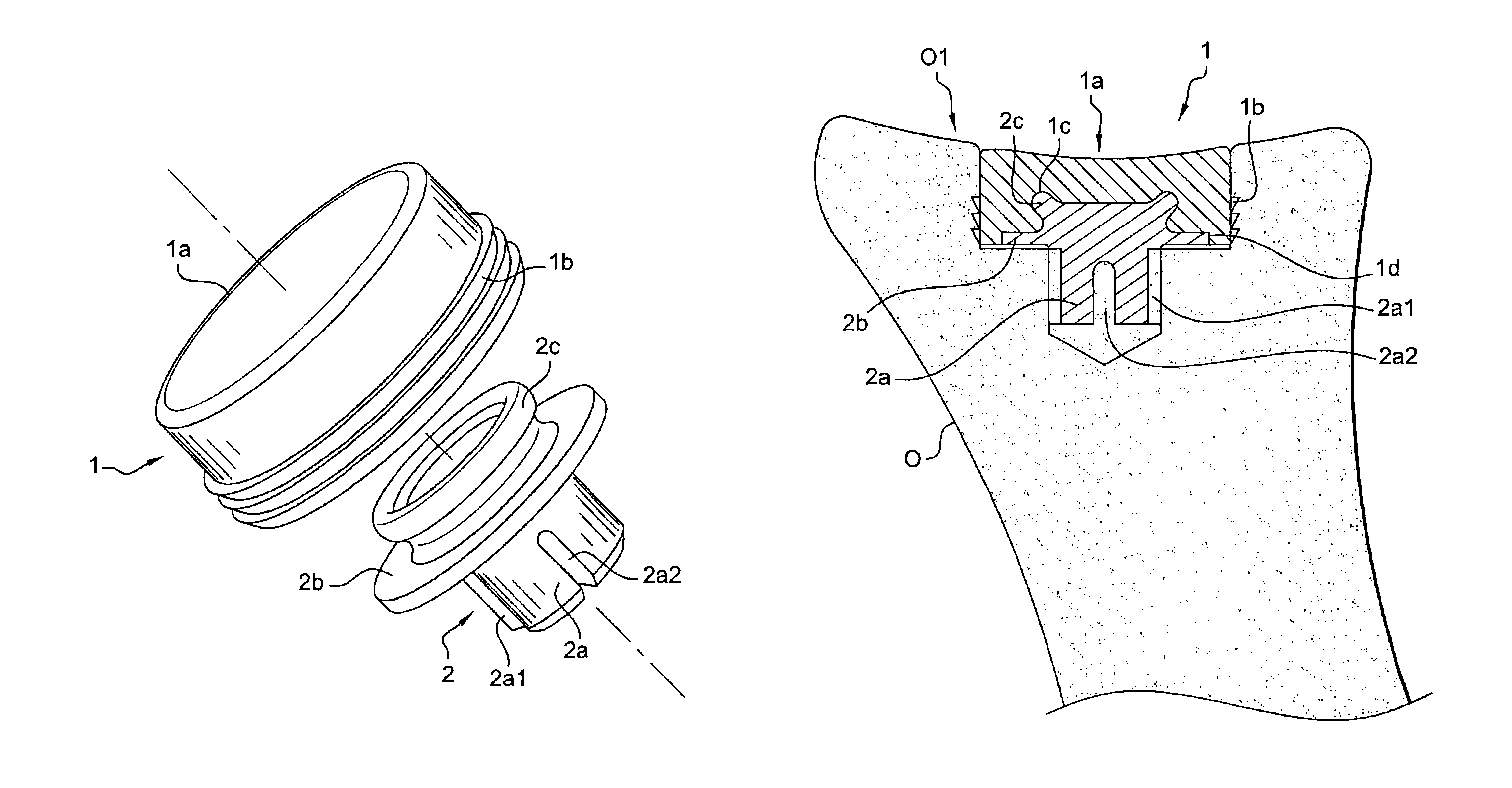
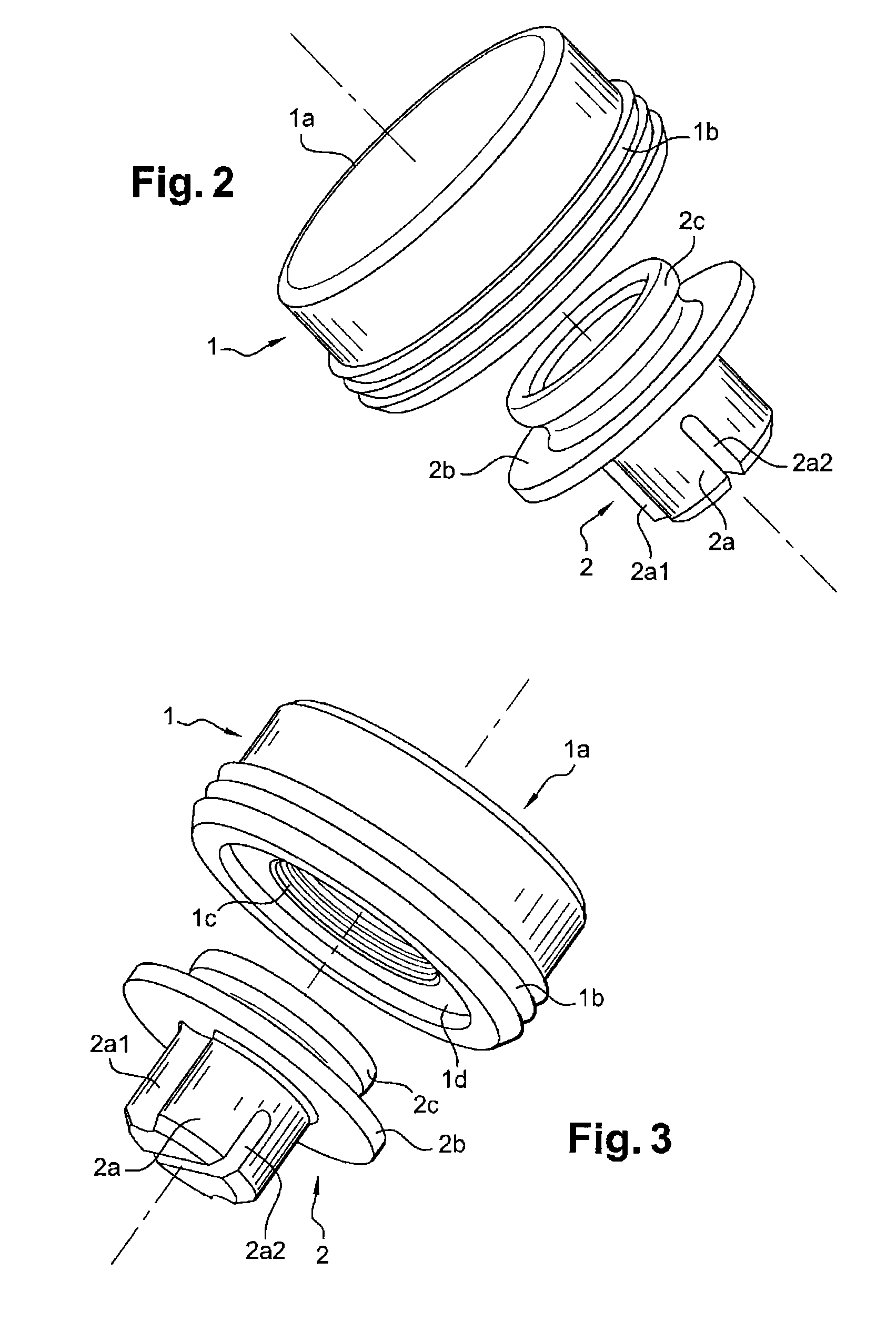
[0020]The implant comprises a polyethylene cup (1) with a concave load-bearing and sliding surface (1a) for the articulation of the prosthetic humeral head (not shown).
[0021]According to the invention, the cup (1) has positioning and fixation devices, e.g., deformable stabilization lamellae (1b), complementary shapes (1c), and / or recess (1d) described below, for it to be embedded in a site of complementary shape made in the spongy bone of the glenoid cavity (O1). After fixation, the load-bearing and sliding surface (1a) of the cup (1), which is generally round in shape, is congruent with the anatomical cavity of the ...
PUM
 Login to View More
 Abstract
Description
Claims
Application Information
 Login to View More