[0019]An
advantage of the present invention is, in addition to standing position dumbbell and barbell exercises, the cage design allows for conventional portable benches, which are common in most gyms, to be easily brought in to accommodate the various seated and
lying position (flat, inclined and declined) versions of these exercises. Many conventional dumbbell tray systems require the user to purchase an expensive, specialized bench in order to interface with their dumbbell trays.
[0020]Another
advantage of the present invention is that the caged design, along with the novel horizontal
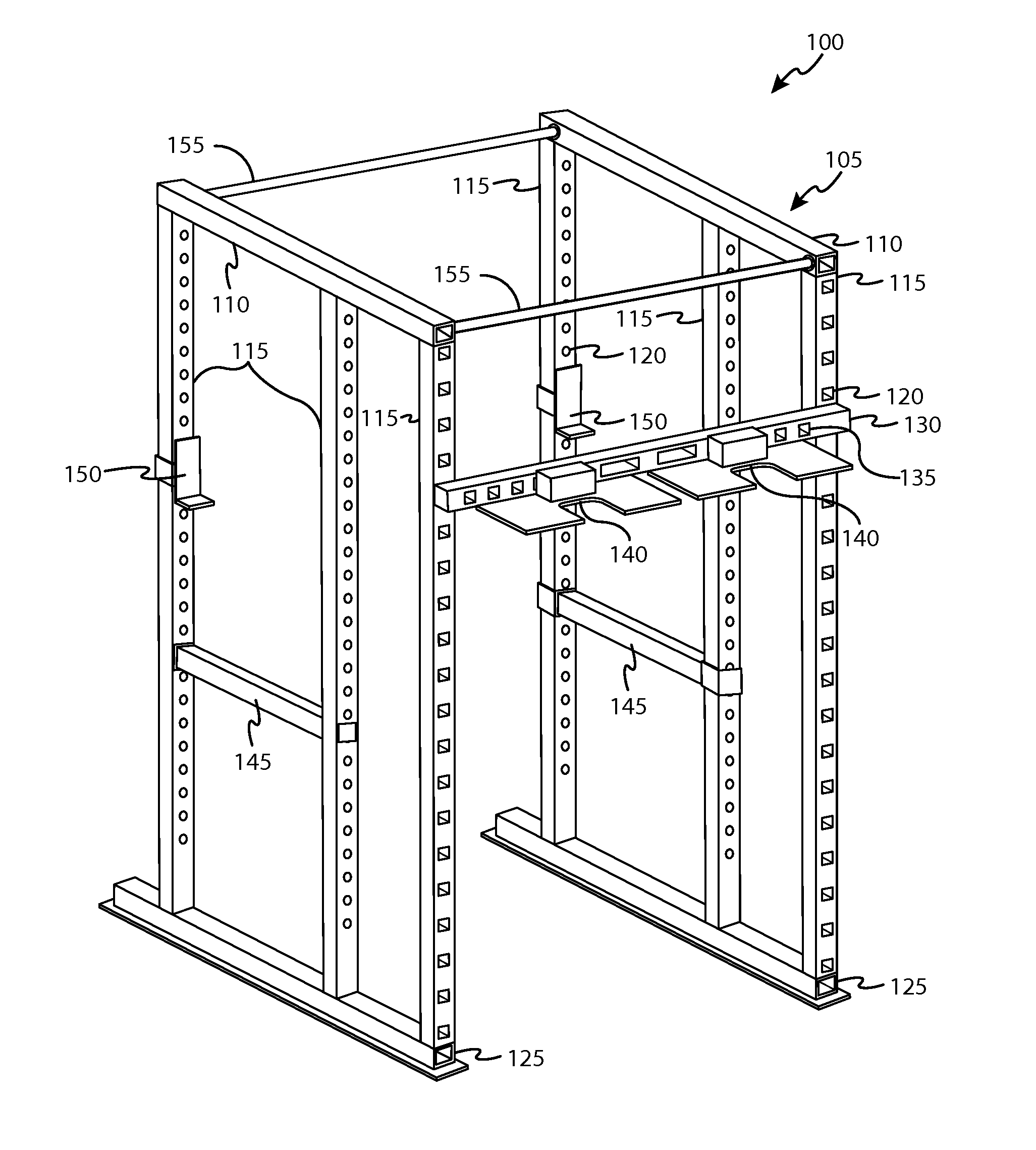
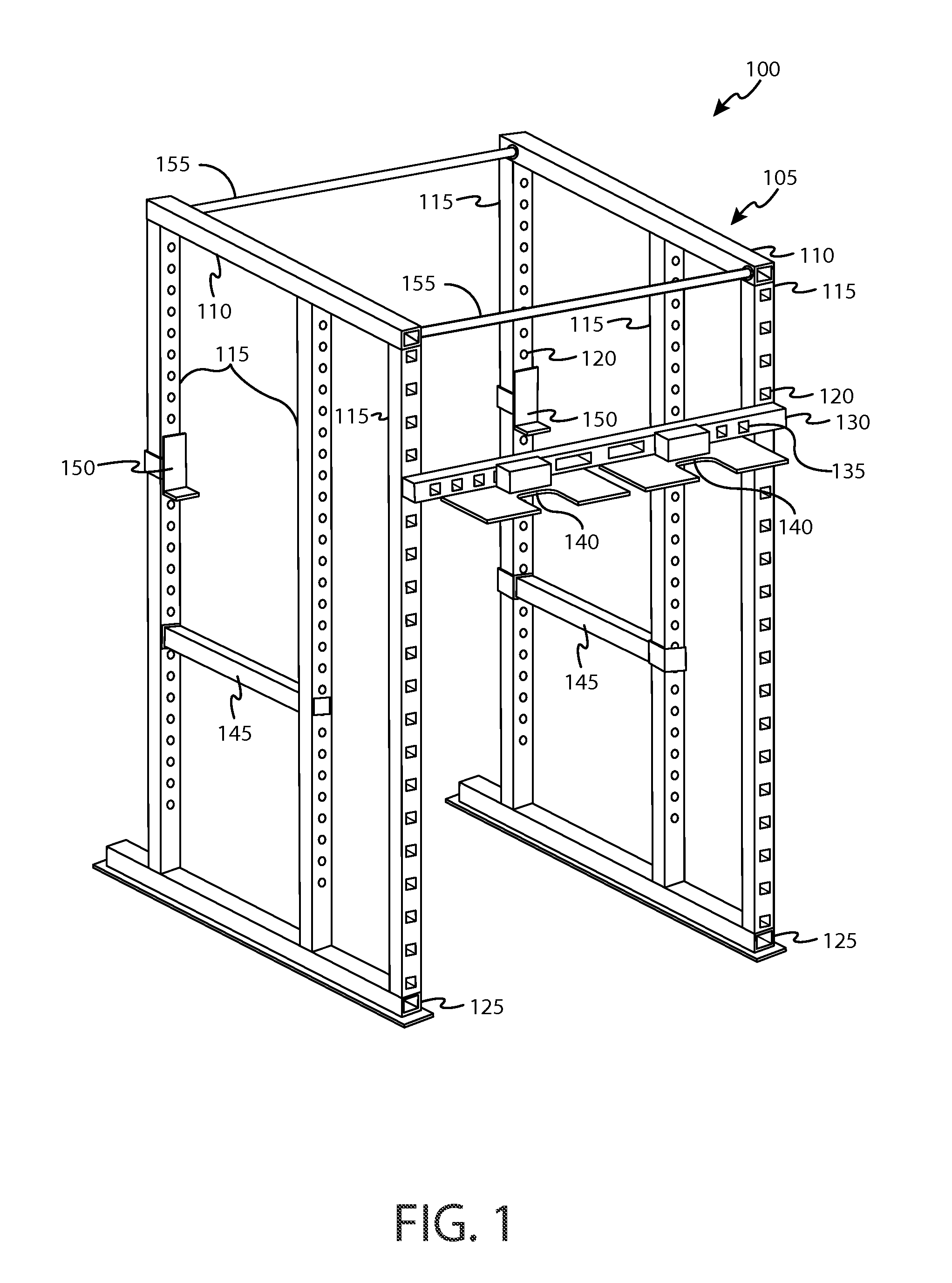
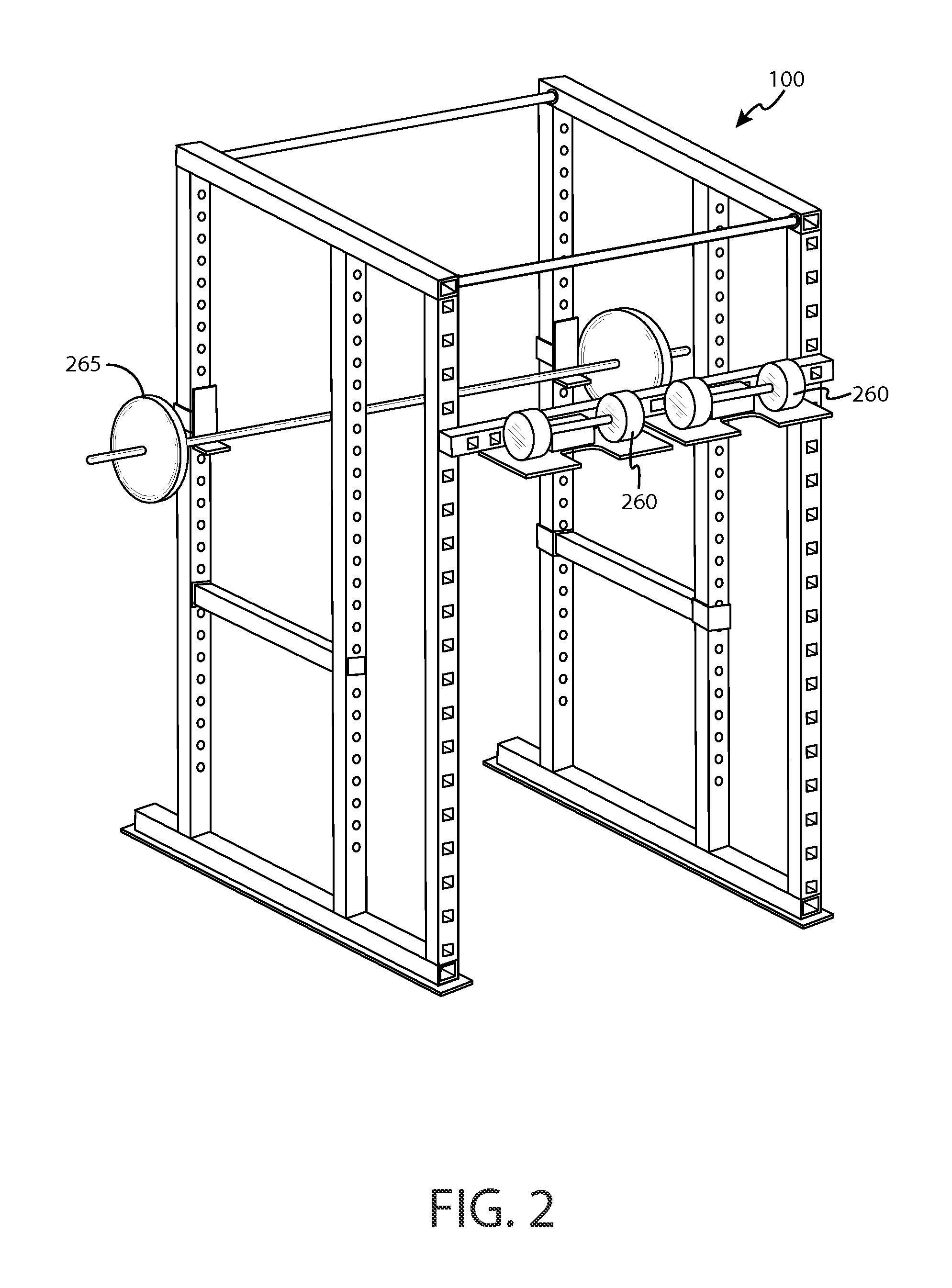
support design and novel dumbbell tray design allows the lifter to use significantly more weight than he could using a conventional dumbbell holder. Heaving heavy dumbbells off the floor or off the conventional dumbbell storage racks in the gym and into the starting position of an exercise is extremely dangerous and has led to countless injuries. The dumbbell trays are designed to hold small five pound dumbbells as well as giant 300 pound dumbbells. Many dumbbell racks use free standing stands or uprights that can be knocked over accidentally which is a safety concern when loaded with heavy dumbbells. Other dumbbell racks are dangerous in that they use ropes or cables to suspend the dumbbells. The very sturdy cage design is superior in this regard.
[0021]Another
advantage of the invention is that the dumbbell trays are manually adjustable both horizontally and vertically. The non-mechanism, pull out and slide in horizontal support and dumbbell trays self-lock under their own weight to provide a simple, fast and robust method for setting the dumbbells at the correct height and width prior to a particular exercise. Often very short and / or narrow framed as well as very tall and / or wide framed
weight lifters complain they cannot comfortably use most
weight lifting apparatuses which are not designed for people of their size. The wide range of
horizontal and vertical adjustments available from the cage design accommodates lifters from four feet tall to seven feet. This allows the lifters of virtually all sizes and dumbbell exercises to
train to failure without a spotter. Further, the simple, non-mechanism design with no dynamic hardware (e.g., motors, pulleys, belts, cables, shafts, gears, springs, pins) that is more subject to wear, overuse, and limited life, eliminates excessive manufacturing, maintenance, repair and replacement parts costs associated with that hardware.
[0022]Another advantage of the cage design is that in the case of the
Dumbbell Power Rack an individual lifter or a pair of lifters can superset dumbbell and
pull up bar exercises all in the same apparatus, within the required few seconds of rest between each exercise, for optimal benefit. And in the case of the
Dumbbell and Barbell Combo Power Rack, an individual lifter or a pair of lifters can superset dumbbell, barbell and
pull up bar exercises all in the same apparatus. Both racks allow the commercial or home gym user to avoid the expense, as well as the loss of critical floor space necessary, to procure the multiple apparatuses needed to allow these exercises and superset scenarios.
[0023]A further advantage is the dumbbell trays shape and inclined angle from horizontal. The shape allows any standard shape dumbbell to be used (e.g., round, hexagon, and square), whereas many dumbbell racks only accommodate one particular shape of dumbbell. The angled, lipless trays allow for the safe return of the dumbbells by a fatigued lifter without danger of him bumping the lip of a conventional non-inclined tray with the dumbbells and losing control of them. The angle, rather than a lip, keeps the dumbbells from later rolling toward the lifter. Also, the angle allows for a more advantageous sharing of the dumbbell weight between the dumbbell supports and the vertical supports, allowing the use of much heavier dumbbells.


 Login to View More
  Login to View More