[0017]The present invention is an improved CFI system and method that provides security from attacks that may result in the hijacking of computer software. According to the improved CFI system and method of the present invention, the CFI instrumentation inserts two tags to effect label identification. The first tag is positioned before any instruction that would result in an indirect control flow transfer and requires the program to execute a check. The second tag is located before the first line of any legitimate transfer destination and when discovered by the tag check allows a program to carry out the indirect transfer. This tag orientation does not prevent transfers to targets other than the origin instruction's specific intended destination but rather limits transfers to only those destinations that begin with the proper label dedication. Although, an incorrect address may be called that will be within the software program's assortment of legitimate indirect transfer targets, and any attempts to exploit or reroute indirect transfers outside of the established control flow are eliminated.
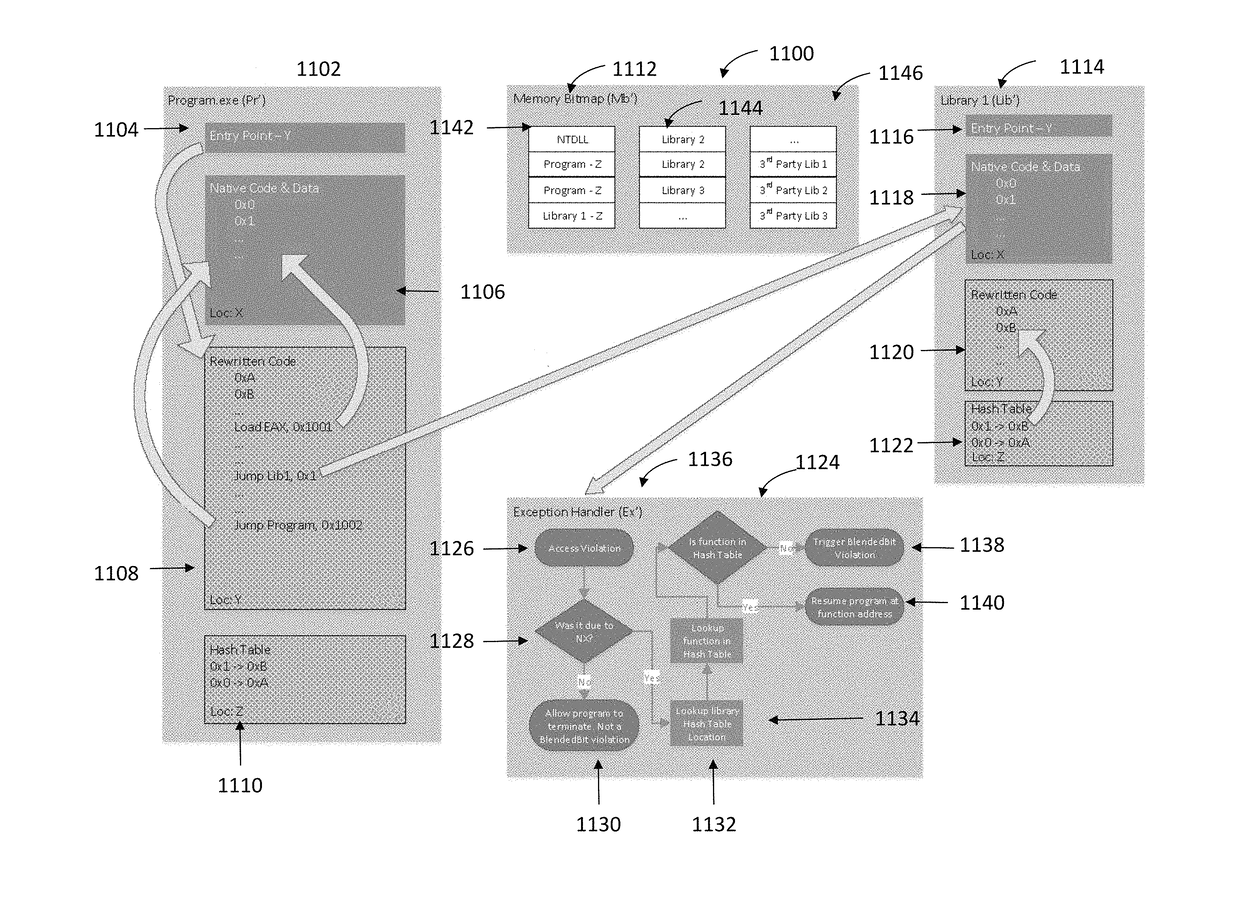
[0021]At least some of benefits of the improved CFI system and method overcome many of the existing limitations of conventional protection systems. For example, the present invention includes novel methods for the modification of, loading of, and execution of modified binaries for operating systems, such as Microsoft's Windows operating system. “Microsoft” and “Windows” are registered trademarks of the Microsoft Corporation. Specifically, for example, with respect to the Windows operating system, the method of the present invention permits static binary rewriting of Windows portable executable (“PE”) files, their libraries, and required Windows system DLLs on 32-bit and 64-bit platforms. The system and method of present invention are capable of applying its rewriting structures to 32-bit and 64-bit applications. The system and method of present invention are also capable of applying any closed-form binary modification structure to Windows PE files, their libraries, and required Windows system DLLs, to include randomization, instruction substitution, and CFI. By making use of the Windows exception handler, the present system and method of invention are capable of resolving more potential failure scenarios, while maintaining system correctness and limiting system overhead.
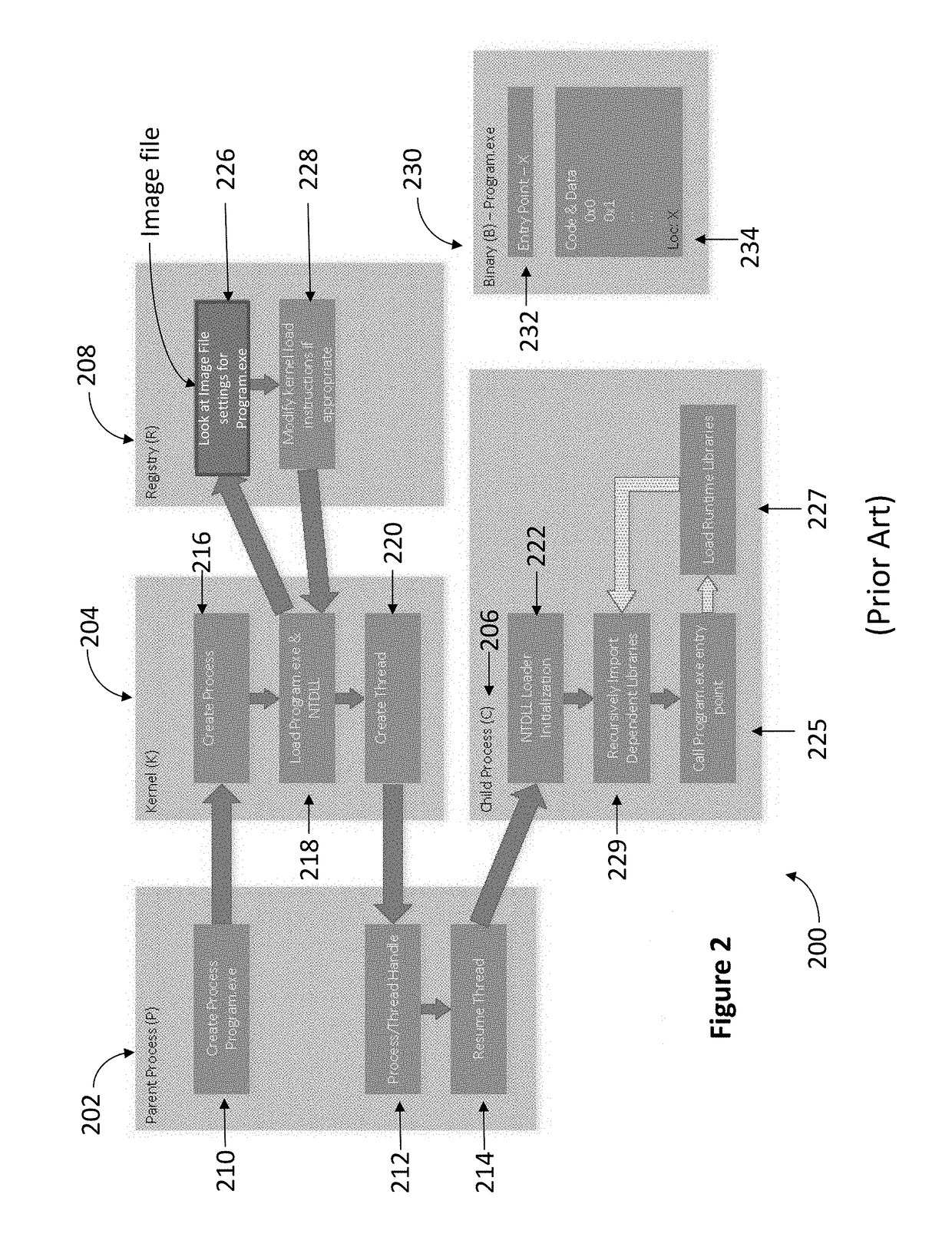
[0022]The improved CFI system and method of present invention, by way of example, modifies the loading structure for Windows PE binaries, libraries, and Windows DLLs, by making use of the Image File Execution Options folder of the Windows registry to streamline the deployment and rewriting processes. The system uses a cache for rewritten binaries, allowing for the inclusion of Windows DLLs, as well as third-party DLLs, allowing for rapid application loading, management of binary-level updates, and rapid removal of the binary rewriting. The modified binary file structure according to the improved CFI system and method of present invention provides for high-confidence, robust resolution of the intermingling of data and code in Windows PE files, without adding a large amount of overhead. The system and method of present invention also robustly integrates with binary code that cannot be rewritten, such as, JIT'd code, obfuscated code, and .NET.



 Login to View More
  Login to View More