
Corrosion reducing minimum contact clamp for supporting and securing tubing
a technology of corrosion reduction and clamping, which is applied in the direction of pipe supports, mechanical devices, pipe/joints/fittings, etc., can solve the problems of disadvantageous economic and efficient implementation of such clamps and the moisture holding of insulation materials, and achieve the effect of reducing electrolysis and corrosion of tubing
- Summary
- Abstract
- Description
- Claims
- Application Information
AI Technical Summary
Benefits of technology
Problems solved by technology
Method used
Image

Examples
Embodiment Construction
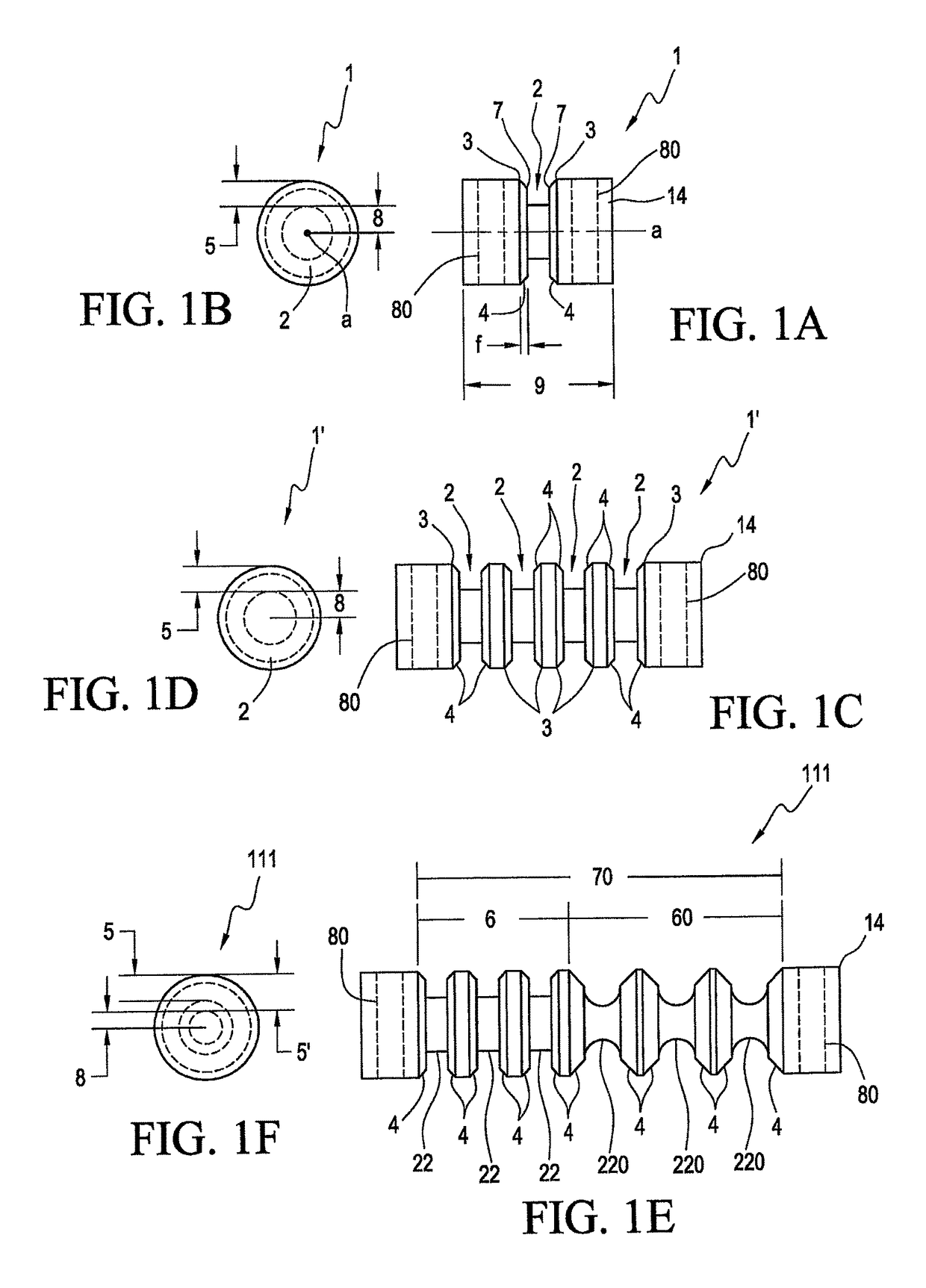
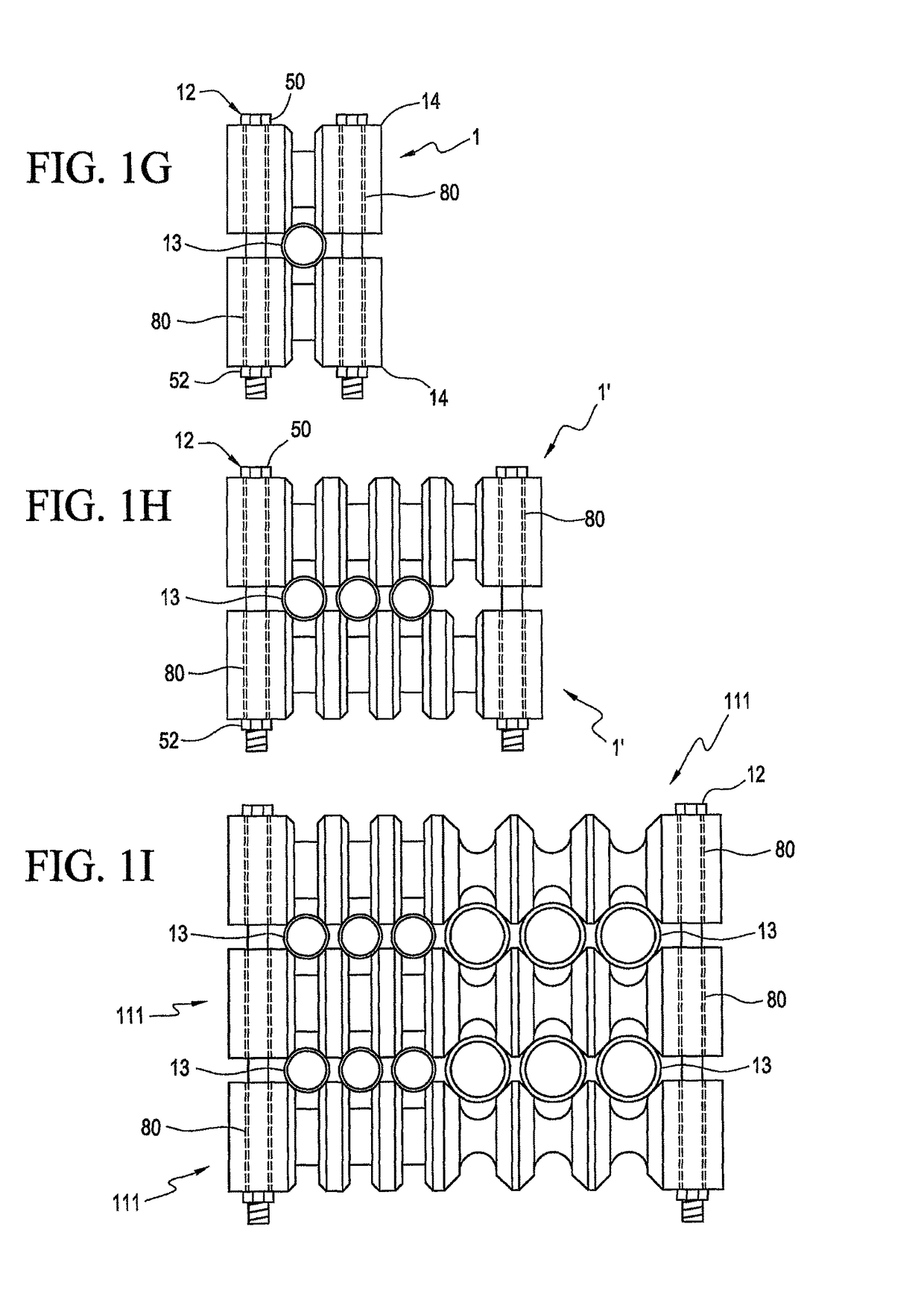
[0043]FIG. 1A shows a first preferred embodiment of a clamp support body of right circular cylindrical shape, generally at 1, and having a single circular groove 2 with features of a wedge and having groove outer edges 3 and groove inner edges 7 which are spaced apart from each other at a radial outer portion of the groove. Each pair of spaced outer and inner groove edges 3; 7 cooperate to form one of two mirrored right conical frustums 4, each such conical frustum 4 having a frustum width “f”. The right conical frustums 4 each formed by the groove edges 3; 7 on one of the two sides of the groove 2 each form a wedge and are the contact surfaces for tubing, when clamped. The wedge shape prevents the tubing from shifting to either side. The conical frustums 4, each formed by one pair of the groove edges 3; 7, are each a truncated conical surface that comes in contact with the tubing, which is typically of circular shape, resulting in a minimal contact area of the clamp and tubing. A g...
PUM
 Login to View More
 Abstract
Description
Claims
Application Information
 Login to View More