
Corrosion reducing minimum contact clamp for supporting and securing tubing
- Summary
- Abstract
- Description
- Claims
- Application Information
AI Technical Summary
Benefits of technology
Problems solved by technology
Method used
Image

Examples
Embodiment Construction
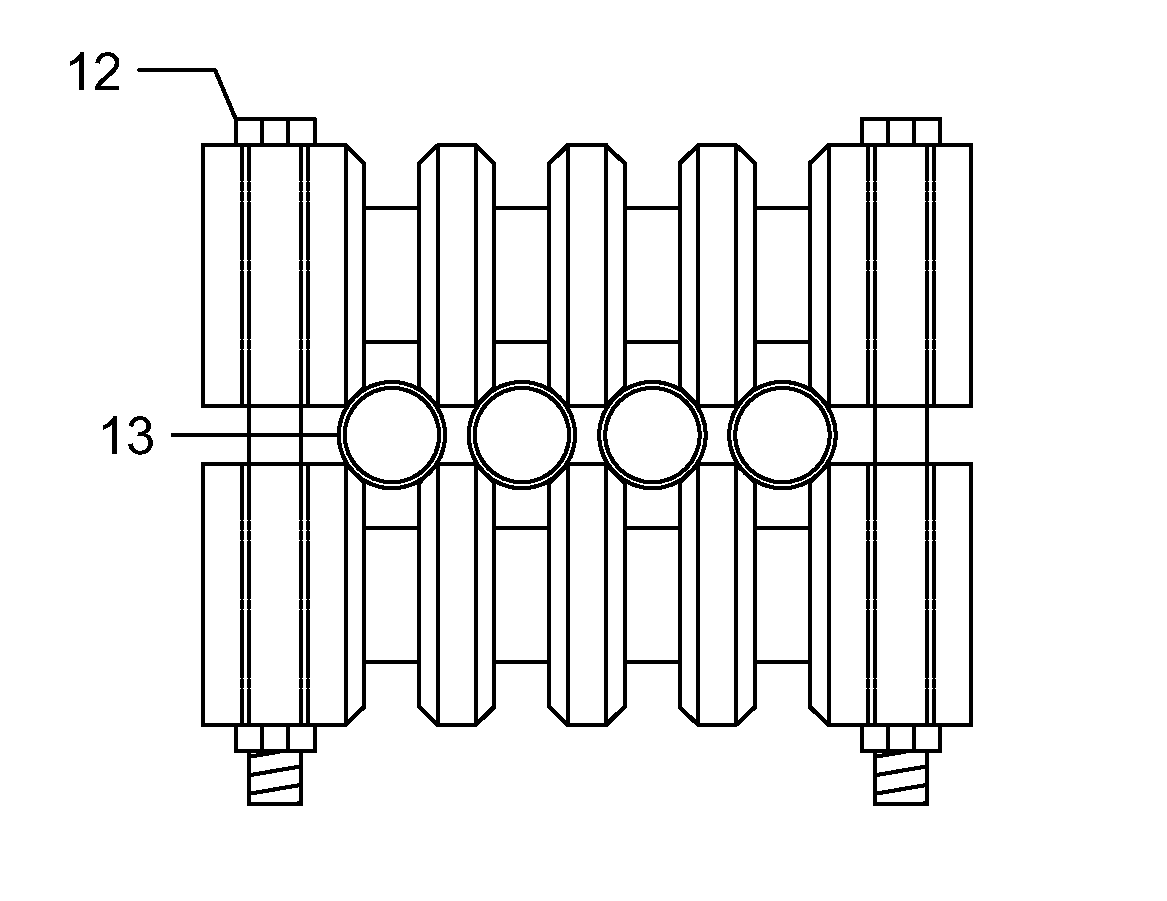
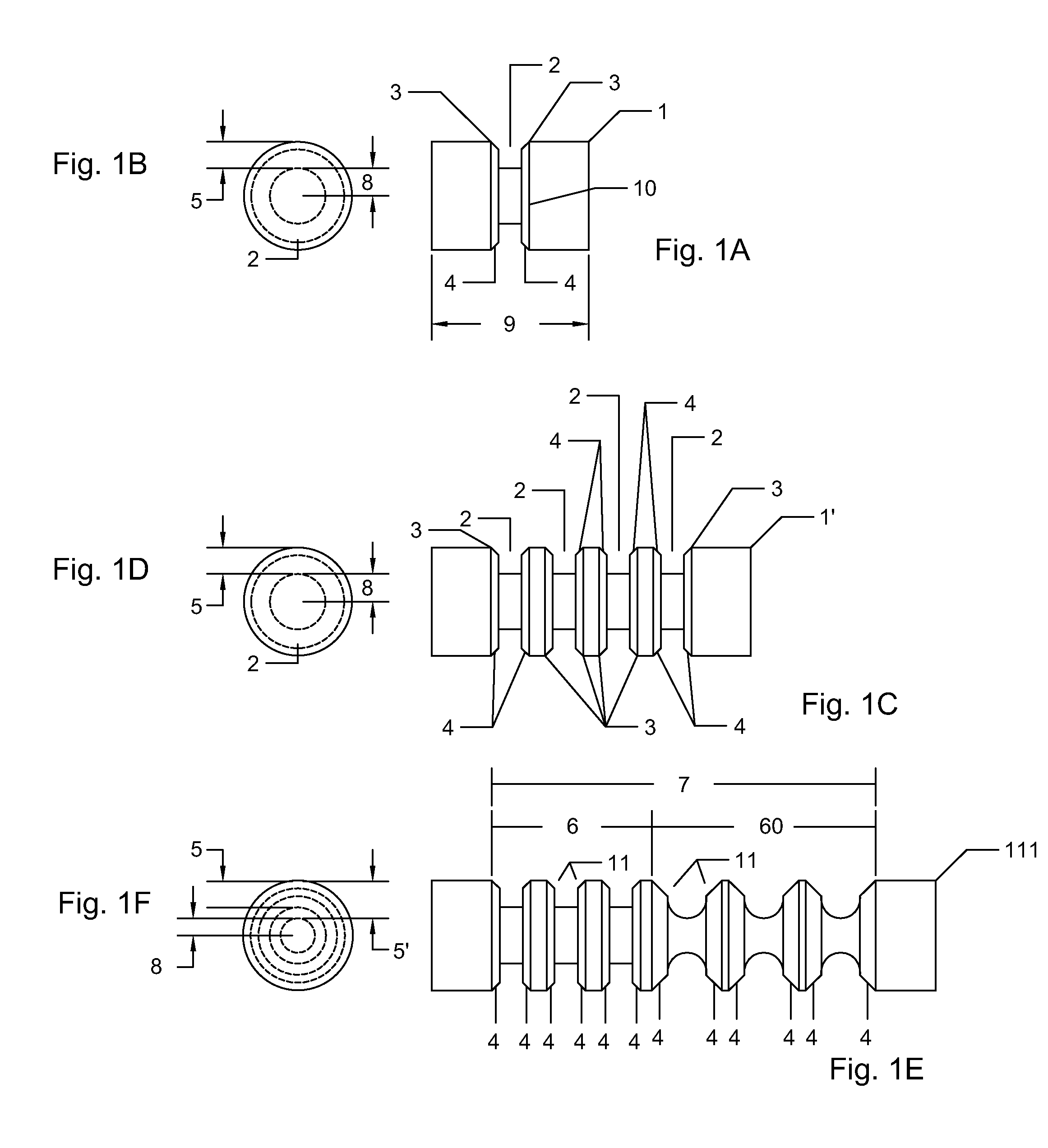
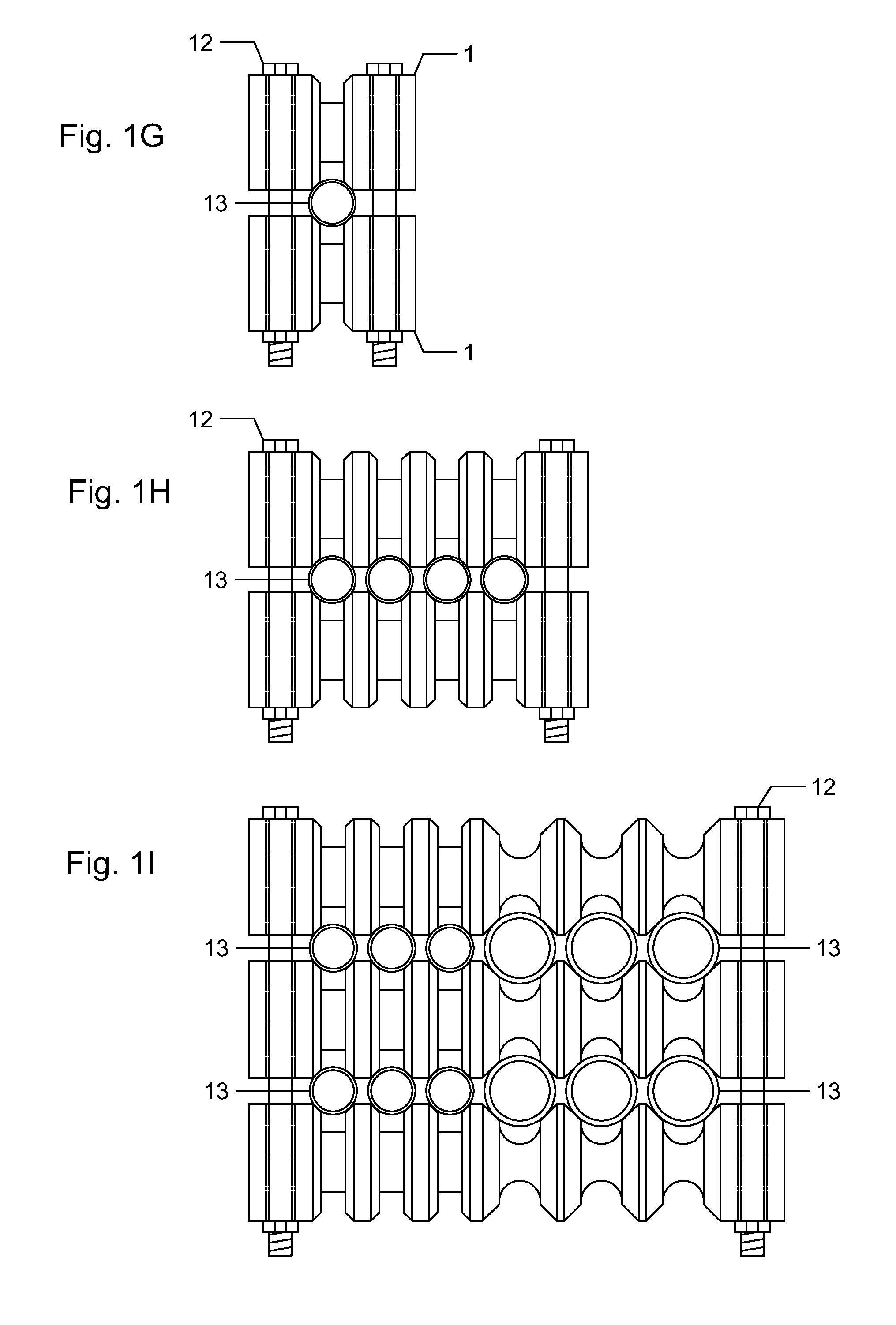
[0023]In FIG. 1, FIG. 1 A shows a clamp support body of right circular cylindrical shape 1 having a single circular groove 2 with features of a wedge and quadrilateral shape and having chamfered edges 3 forming two mirrored right conical frustums 4. The chamfered edges 3 form a wedge and are the contact points for tubing when clamped. The wedge shape prevents the tubing from shifting to either side. The conical frustums 4 formed by the chamfered edge 3 is a circular object that comes in contact with the tubing which is also of circular shape resulting in a minimal contact area of the clamp and tubing. Groove depth 5 provides a space between the surface of the clamp and the tubing. This space is required to allow ventilation for drying any liquids that might be present or accumulate as a result of the installation environment. In one embodiment of the present invention, the distance from the axis of symmetry 8 to the depth of the groove 5 as shown in FIG. 1B is not less than 0.125 in...
PUM
 Login to View More
 Abstract
Description
Claims
Application Information
 Login to View More