

One-way clutch apparatus
Patent Information
- Authority / Receiving Office
- US · United States
- Current Assignee / Owner
- Publication Date
- 2004-04-20
- Estimated Expiration
- Not applicable · inactive patent
Smart Images
Figure 1 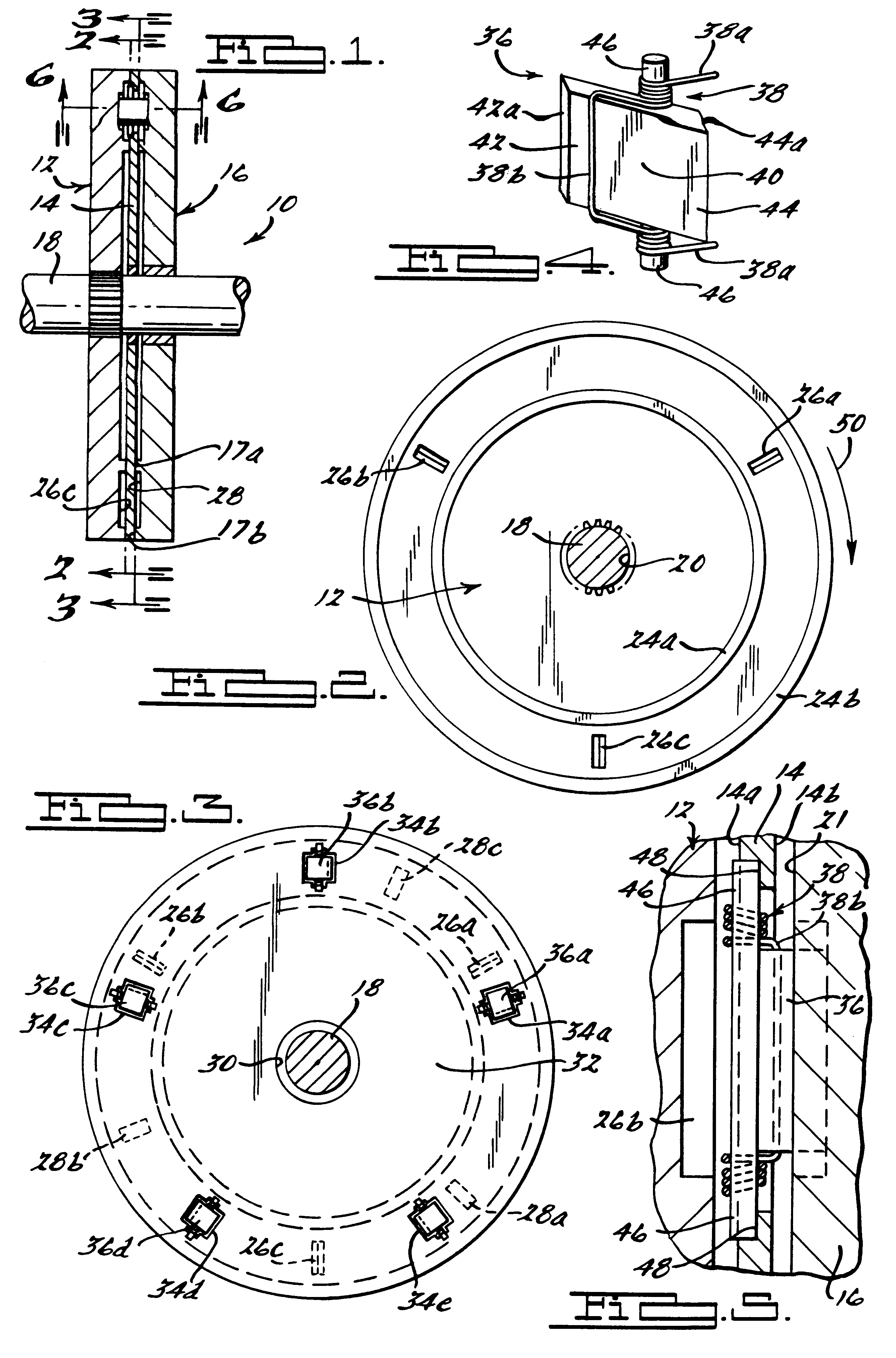
Figure 2 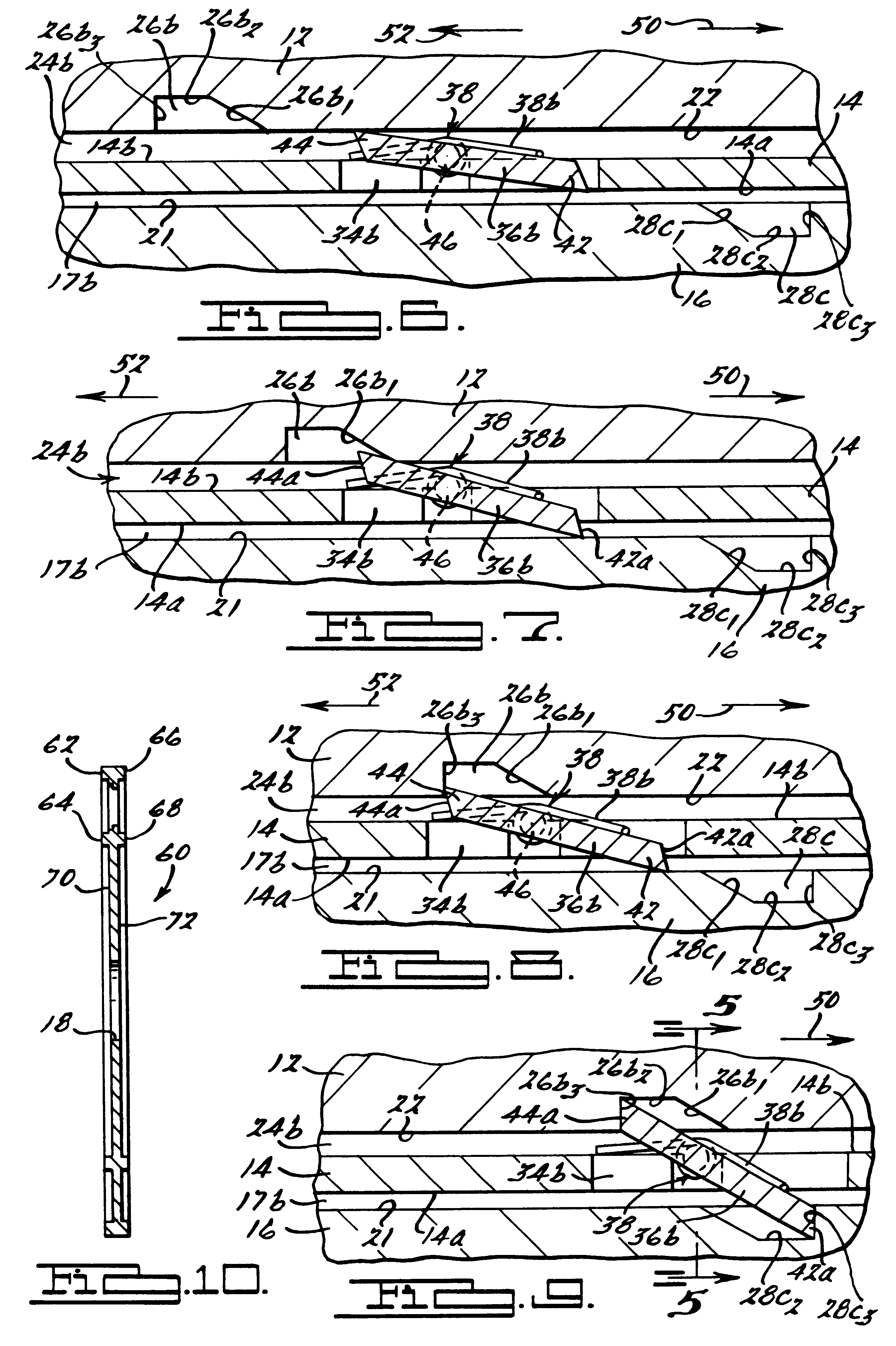
Figure 3
Abstract
Description
TECHNICAL FIELDThis invention relates to clutches, and more particularly to a one-way clutch apparatus.DISCUSSIONClutches are used in a wide variety of applications to selectively couple power from an input member, such as a driving disk or plate, to a second independently rotatable member such as a driven plate or disk. In some applications, it is further desirable to incorporate a clutch which allows for rotational movement of the driving member in a second rotational direction in which no clutch engagement occurs, and therefore in which no rotation of the driven member occurs. Such clutches are commonly referred to as "one-way" clutches. With a one-way clutch, when a driving member is rotated in a first direction, the clutch causes engagement of the driving member with an external driven member. When the driving member is rotated in a second rotational direction opposite to that of the first rotational direction, the clutch releases the driven member from engagement with the driv...
Examples
Embodiment Construction
Referring to FIG. 1, there is shown a one-way clutch apparatus 10 in accordance with a preferred embodiment of the present invention. The apparatus 10 generally includes a driving member 12 in the form of a drive plate or disk, a carrier plate 14 in the form of a plate or disc, and a driven member 16 in the form of a driven plate or disk. For purposes of illustration, the driving plate 12 is shown splined to a drive shaft 18 such that rotational movement of the drive shaft 18 causes a corresponding rotational movement of the driving member 12. Also for purposes of illustration, the carrier plate 14 and driven member 16 are shown concentrically disposed about the drive shaft 18 such that each is free to remain stationary when the one-way clutch 10 is not engaged. It will be appreciated that the driving member 12 and driven member 16 could just as easily be switched such that member 16 imparts a motive force to member 12. Furthermore, it should be appreciated that one or the other of ...