Supercharge Your Innovation With Domain-Expert AI Agents!

Data packet processing method, system and apparatus in semi-continuous scheduling

A semi-persistent scheduling and persistent scheduling technology, applied in the field of wireless transmission

Active Publication Date: 2012-12-26
DATANG MOBILE COMM EQUIP CO LTD
View PDF3 Cites 0 Cited by
  • Summary
  • Abstract
  • Description
  • Claims
  • Application Information

AI Technical Summary

Problems solved by technology

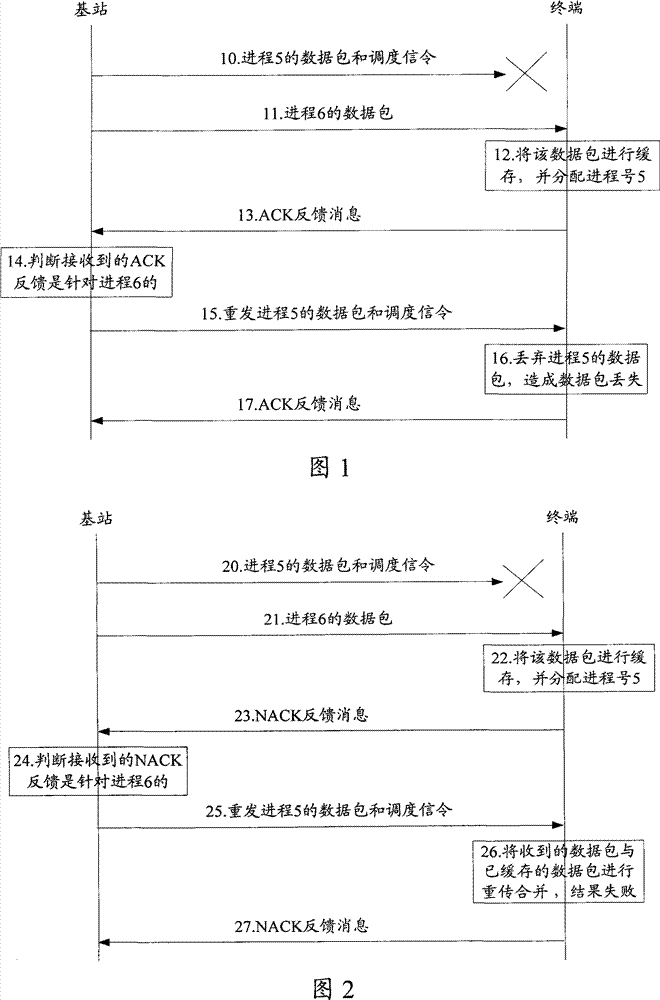
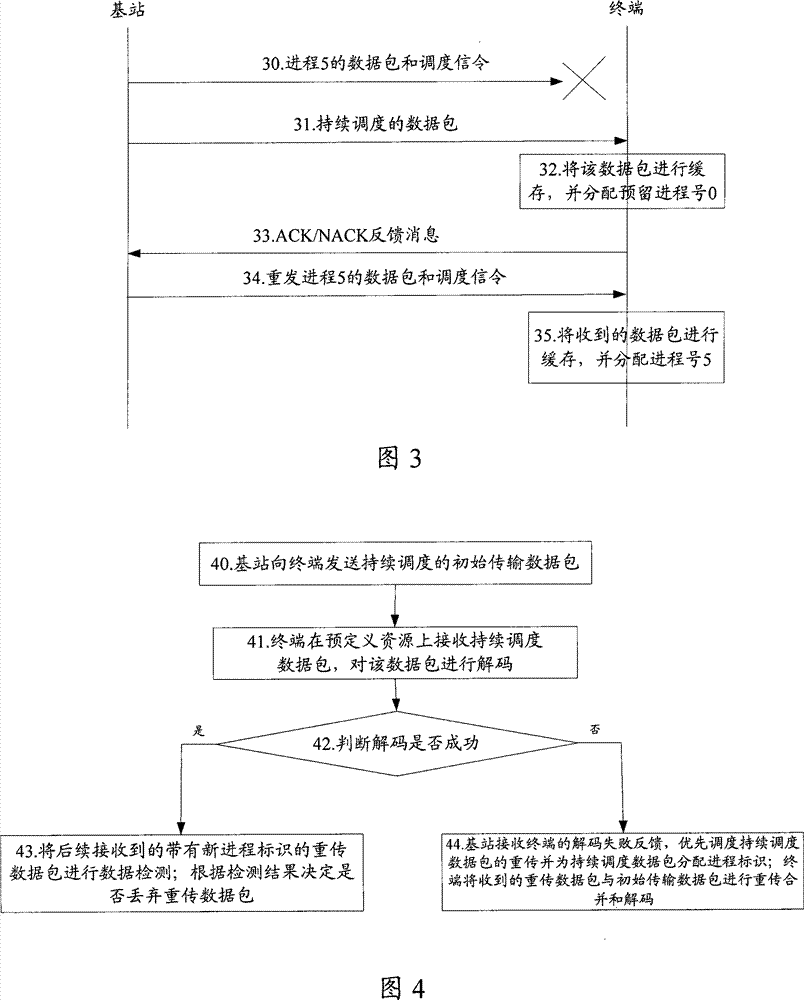
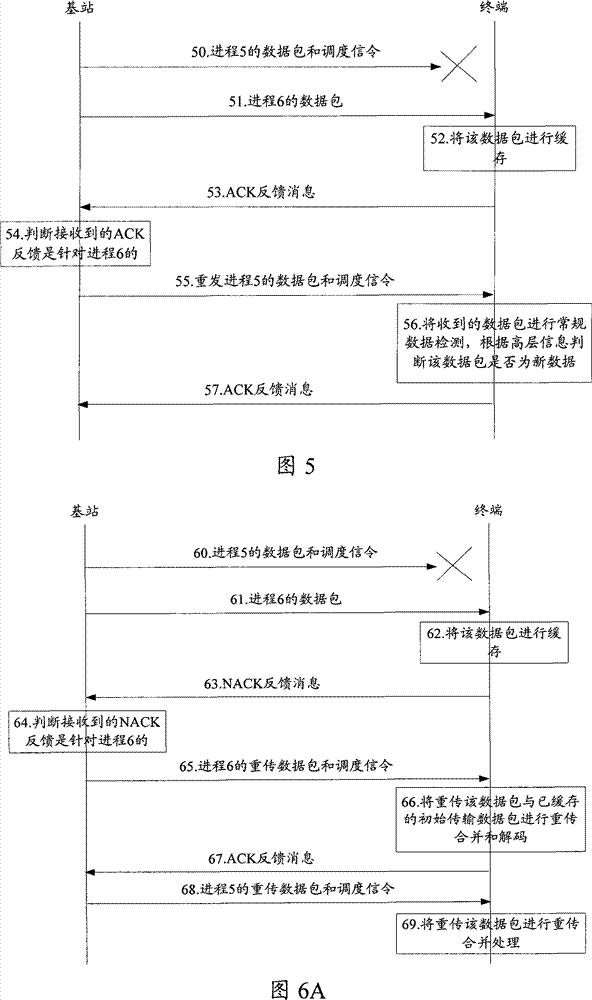
[0034] The embodiment of the present invention provides a method, system and device for processing data packets in semi-persistent scheduling to solve the problem of data packet loss and receive confusing questions

Method used

the structure of the environmentally friendly knitted fabric provided by the present invention; figure 2 Flow chart of the yarn wrapping machine for environmentally friendly knitted fabrics and storage devices; image 3 Is the parameter map of the yarn covering machine
View more

Image

Smart Image Click on the blue labels to locate them in the text.
Viewing Examples
Smart Image
  • Data packet processing method, system and apparatus in semi-continuous scheduling
  • Data packet processing method, system and apparatus in semi-continuous scheduling
  • Data packet processing method, system and apparatus in semi-continuous scheduling

Examples

Experimental program
Comparison scheme
Effect test

Embodiment 1

[0095] like Figure 5 As shown, in this embodiment, process 5 (process5) is a data packet that adopts dynamic scheduling for initial transmission and retransmission, and process 6 (process6) is a data packet that adopts continuous scheduling for initial transmission and dynamic scheduling for retransmission. as follows:

[0096] Step 50: the base station sends the scheduling signaling and the corresponding data packet including the process number 5 to the terminal, and the scheduling signaling and the data packet are lost;

[0097] Step 51: the base station sends the data packet of process 6 to the terminal;

[0098] Step 52: the terminal puts the data packet of process 6 received on the predefined resource into the cache;

[0099] Step 53: The terminal correctly decodes the data packet, and sends an ACK feedback message to the base station;

[0100] Step 54: The base station judges that the received ACK feedback is for process 6 of persistent scheduling;

[0101] Step 55...

Embodiment 2

[0110] like Figure 6A As shown, in this embodiment, process 5 (process5) is a data packet that adopts dynamic scheduling for initial transmission and retransmission, and process 6 (process6) is a data packet that adopts continuous scheduling for initial transmission and dynamic scheduling for retransmission. as follows:

[0111] Step 60: the base station sends the scheduling signaling with process number 5 and the corresponding data packet to the terminal, and the scheduling signaling and data packet are lost;

[0112] Step 61: the base station sends the data packet of process 6 to the terminal;

[0113] Step 62: The terminal puts the data packet received on the predefined resource into the cache, and the cache corresponds to the process number process temp;

[0114] Step 63: The terminal fails to decode the data packet, and sends a NACK feedback message to the base station;

[0115] Step 64: The base station judges that the received NACK feedback is for process 6 of pers...

Embodiment 3

[0123] like Figure 6B As shown, this embodiment is an embodiment in which the base station performs retransmission scheduling when there are multiple persistently scheduled data packets that need to be retransmitted, and the details are as follows:

[0124] Step 601: the base station sends the initial transmission data packet of persistent scheduling 1 to the terminal;

[0125] Step 602: the base station sends the initial transmission data packet 2 of persistent scheduling 2 to the terminal;

[0126] Step 603: The terminal fails to decode the data packet of persistent scheduling 1, and sends a NACK feedback message to the base station;

[0127] Step 604: The terminal fails to decode the data packet of persistent scheduling 2, and sends a NACK feedback message to the base station;

[0128] Step 605: The base station first schedules the retransmission of persistent scheduling 1 according to the order of initial transmission, and sends the retransmission data packet and schedu...

the structure of the environmentally friendly knitted fabric provided by the present invention; figure 2 Flow chart of the yarn wrapping machine for environmentally friendly knitted fabrics and storage devices; image 3 Is the parameter map of the yarn covering machine
Login to View More

PUM

No PUM Login to View More

Abstract

The embodiment of the invention discloses a method for processing data packets in semi-persistent scheduling. The method comprises the following steps: a terminal receives an initial transmitted data packet that is continuously scheduled by a base station, and judges whether the decoding of the persistently-scheduled data packet is successful; and if the decoding of the persistently-scheduled data packet is successful, the data detection is carried out to a sequentially-received retransmitted data packet with new process identifier; whether the retransmitted data packet is the retransmission error of the persistently-scheduled data packet is judged according to the detection result, if the retransmitted data packet is the retransmission error of the persistently-scheduled data packet, the retransmitted data packet is discarded; if the decoding of the persistently-scheduled data packet is not successful, a decoding failure feedback is transmitted to a base station; the base station receives the failure feedback, performs the priority scheduling of retransmission of the persistently-scheduled data packet in priority scheduling and allocates the process identifier to the persistently-scheduled data packet in the scheduling signaling; and the terminal performs the retransmission, mergence and decoding of the received retransmitted data packet with the allocated process identifier and the initial transmitted data packet. The embodiment of the invention also discloses a system and a device for processing data packets in semi-persistent scheduling. The method solves the problems of data packet loss and reception confusion in semi-persistent scheduling.

Description

technical field [0001] The invention relates to the field of wireless transmission, in particular to a method, system and device for processing data packets in semi-persistent scheduling. Background technique [0002] In the Long Term Evolution (LTE) system, a semi-persistent scheduling mechanism for data packets is introduced. The so-called semi-persistent scheduling refers to the combination of persistent scheduling and dynamic scheduling for the transmission of specific service data packets. For example, in the Voice over IP (VOIP) service, the initial transmission of voice data packets adopts continuous scheduling, the retransmission adopts dynamic scheduling, and the initial transmission and retransmission of noise data packets adopts dynamic scheduling. [0003] The persistent scheduling means that the base station allocates fixed resources (including events, frequencies, code channels, etc.) A packet is received on a scheduled resource. The dynamic scheduling refer...

Claims

the structure of the environmentally friendly knitted fabric provided by the present invention; figure 2 Flow chart of the yarn wrapping machine for environmentally friendly knitted fabrics and storage devices; image 3 Is the parameter map of the yarn covering machine
Login to View More

Application Information

Patent Timeline
no application Login to View More
Patent Type & Authority Patents(China)
IPC IPC(8): H04L1/18
Inventor 谌丽李国庆毕海洲
Owner DATANG MOBILE COMM EQUIP CO LTD
Features
  • R&D
  • Intellectual Property
  • Life Sciences
  • Materials
  • Tech Scout
Why Patsnap Eureka
  • Unparalleled Data Quality
  • Higher Quality Content
  • 60% Fewer Hallucinations
Social media
Patsnap Eureka Blog
Learn More