
Preparation method of bensulfuron methyl molecularly imprinted polymer and application thereof
A technology of bensulfuron-methyl molecule and imprinted polymer, which is applied in the field of polymer synthesis, can solve the problems of complicated purification and enrichment steps and low efficiency, and achieve the effect of simple and fast pretreatment steps
- Summary
- Abstract
- Description
- Claims
- Application Information
AI Technical Summary
Problems solved by technology
Method used
Image

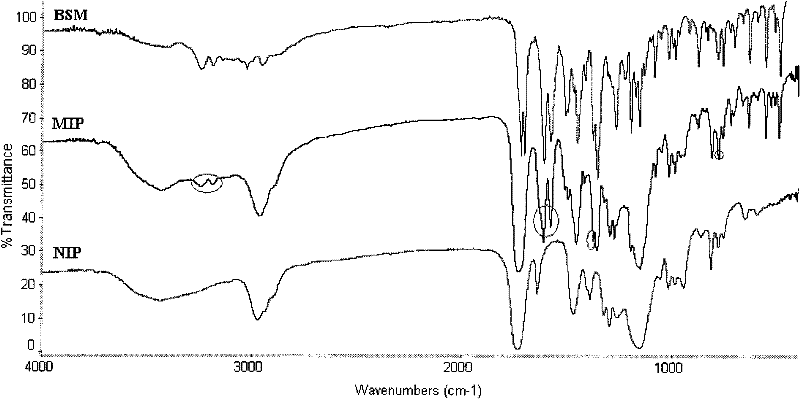
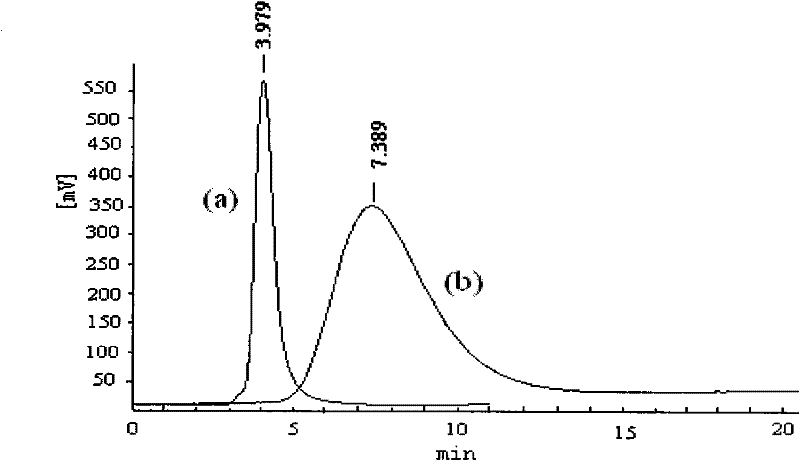
Examples
Embodiment 1
[0078] Preparation of Bensulfuron-methyl Molecularly Imprinted Polymer
[0079] The preparation method is described as follows:
[0080] (1) Polymerization steps:
[0081] 0.4071 g of bensulfuron-methyl and 500 μL of methacrylic acid were dissolved in 50 mL of dichloromethane, and the mixture was degassed by ultrasonic wave for 3 min. Mix overnight at a temperature of 10°C;
[0082] Then above-mentioned mixture is transferred in the three-necked bottle, add 1.1704g trimethylolpropane trimethacrylate crosslinking agent, 0.2090g 2,2-dimethoxy-2-phenylacetophenone photoinitiator respectively and 0.1127g dichloromethane, then ultrasonically mix to dissolve completely, fill with N 2 Protection, at a stirring speed of 60r / min and at room temperature, the polymerization reaction was carried out under the initiation of ultraviolet light for 24h. After the polymerization reaction, it was repeatedly washed with acetone several times to remove fine particles and unreacted substances,...
Embodiment 2
[0093] (1) Preparation of MISPE column:
[0094] Weigh 200 mg of the bensulfuron-methyl molecularly imprinted polymer prepared in Example 1, fill it into a 3ml solid-phase extraction empty column, and place 0.45 μm sieve plates at the upper and lower ends of the column to obtain the bensulfuron-methyl molecularly imprinted solid-phase extraction column MISPE; MISPE column should be activated with 5ml of dichloromethane before use;
[0095] (2) MISPE-HPLC determination of Taihu Lake rice samples:
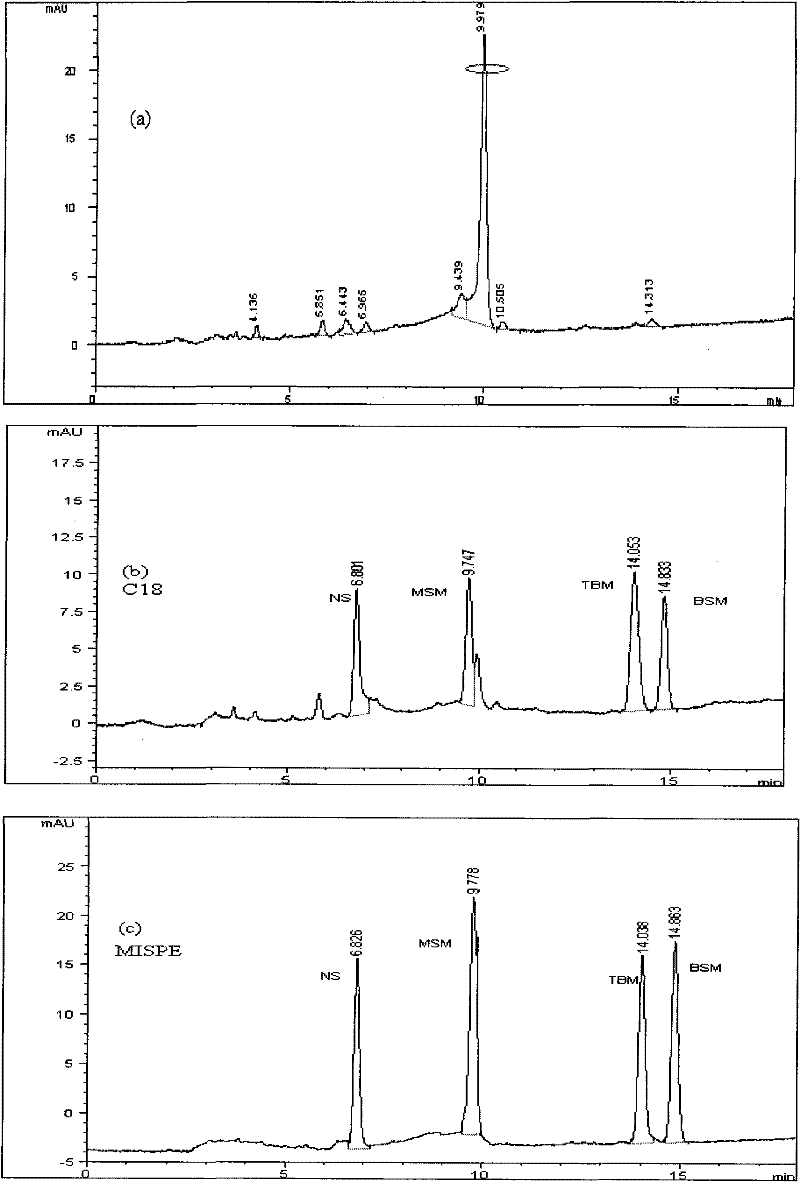
[0096] In order to compare MISPE column with ENVI TM The purification effect of 18-SPE column, using MISPE column and ENVI TM The 18-SPE column was used to determine the recovery rate of the enrichment and purification effect of rice samples added with standard substances BSM, MSM, NS and TBM. BSM, MSM, NS and TBM are all prepared as a mixed standard acetonitrile solution of about 2.5 μg / mL.
[0097] Rice sample extraction pretreatment: Weigh about 5g of rice sample that has been...
Embodiment 3
[0106] The embodiment of this example is the same as Example 2, except that the MISPE-HPLC determination of soybean samples is carried out.
[0107] Soybean samples were spiked with BSM, MSM, NS and TBM at concentrations of 20ng / g and 40ng / g, MISPE column and ENVI TM The 18-SPE column eluate was concentrated 10 times before HPLC analysis, using MISPE and ENVI TM The high performance liquid chromatogram of the soybean sample pretreated by the 18-SPE column is shown in the appendix Figure 4 . Table 5 shows the spiked soybean samples using MISPE and ENVI respectively TM The recovery rate after 18-SPE column pretreatment, as can be seen from Table 5 results, adopts the BSM recovery rate of MISPE column pretreatment to be the highest, and the recovery rate of 20ng / g and 40ng / g to the standard addition concentration all reaches 100%, higher than ENVI TM The recovery rate of 18-SPE column, but the recovery rate of TBM pretreated by MISPE column is lower than that of ENVI TM 18-...
PUM
| Property | Measurement | Unit |
|---|---|---|
| diameter | aaaaa | aaaaa |
| correlation coefficient | aaaaa | aaaaa |
Abstract
Description
Claims
Application Information
 Login to View More