
Adhesive sheet for manufacturing semiconductor device, and semiconductor device manufacturing method using the sheet
A semiconductor and adhesive sheet technology, which is applied in the manufacture of semiconductor/solid-state devices, semiconductor devices, and components of semiconductor/solid-state devices, etc., can solve problems such as breakage and displacement of the mounting position of semiconductor wafers, so as to suppress the reduction of yield, Achieve bond precision, achieve downtime effects
- Summary
- Abstract
- Description
- Claims
- Application Information
AI Technical Summary
Problems solved by technology
Method used
Image

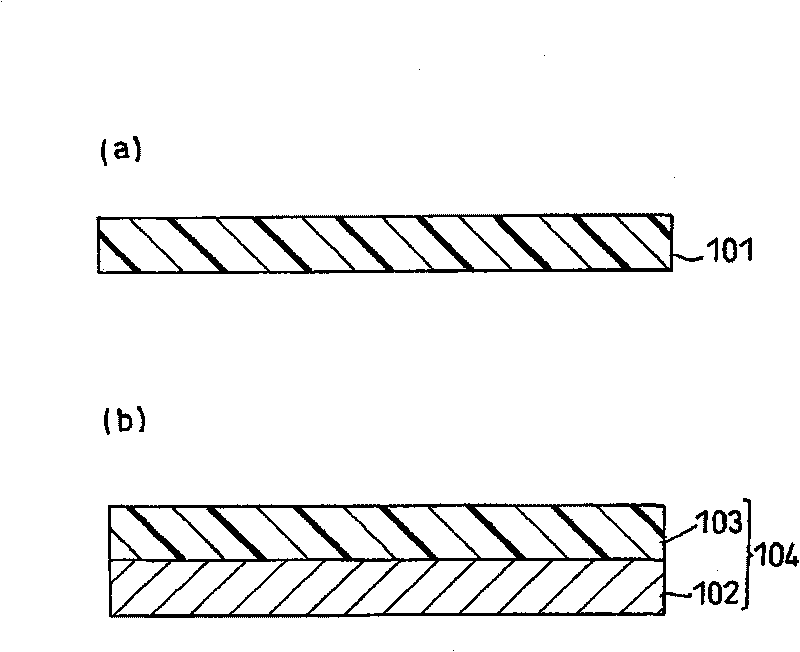
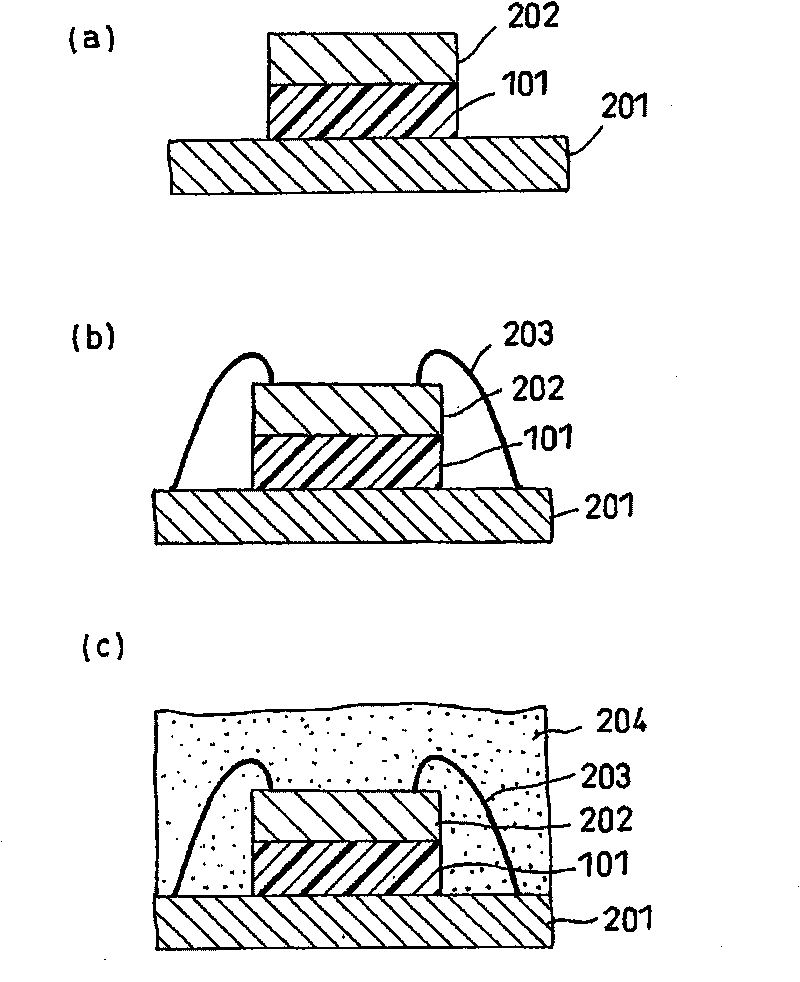
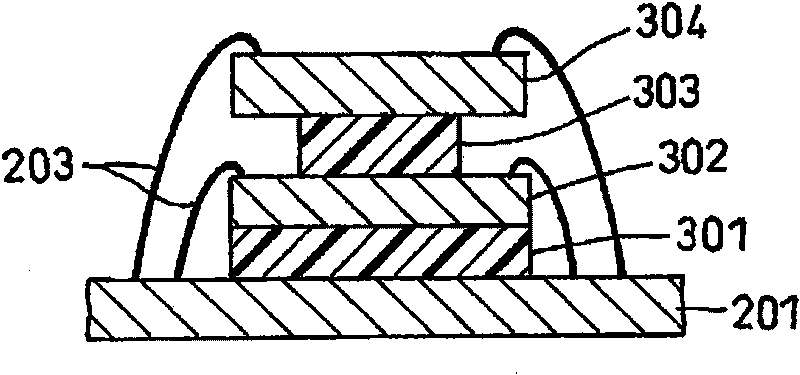
Examples
Embodiment 1
[0093] First, an isocyanate-based crosslinking agent (Nippon Polyurethane Co., Ltd., trade name; Coronate HX) 3 parts, epoxy resin (made by Japan Epoxy Resin Co., Ltd., trade name; Epikote 1003) 33 parts, phenolic resin (Arakawa Chemical Co., Ltd., trade name; P-180) 22 parts and as pigment Dissolve 0.2 parts of ultrafine titanium oxide (manufactured by Titanium Industry Co., Ltd., trade name; STT-4D, average particle diameter: 0.15 μm) in methyl ethyl ketone, and stir to prepare a solution of an adhesive composition with a concentration of 15% by weight. .
[0094] The solution of the adhesive composition was ground and dispersed by a three-roll mill, centrifuged at 400 ppm, and filtered through a 0.7 μm glass filter.
[0095] Next, the filtered solution of the adhesive composition was applied to a release-treated film (core material) containing a polyethylene terephthalate film (thickness 50 μm) that had been subjected to a silicone release treatment, and then the It was d...
Embodiment 2
[0097] An acrylic adhesive composition in which 3 parts of an isocyanate crosslinking agent (manufactured by Nippon Polyurethane Co., Ltd., trade name: Coronate H X) was added to 100 parts of the acrylic adhesive was prepared. In addition, the above-mentioned acrylic adhesive is prepared as follows: 70 parts of 2-ethylhexyl acrylate, 25 parts of n-butyl acrylate and 5 parts of acrylic acid are mixed to prepare an acrylic copolymer using them as constituent monomers, Then, 1 part of the acrylic copolymer and Fastogen Blue GNPS (manufactured by Dainippon Ink Chemical Co., Ltd., blue pigment: copper phthalocyanine pigment, average particle diameter 0.1 μm) as a pigment was dissolved in methyl ethyl ketone. , adjust the concentration to 15%.
[0098] Next, centrifugation was performed in the same manner as in Example 1 above, followed by filtration to produce an adhesive sheet in which an adhesive layer having a thickness of 7 μm was laminated on a release-treated film.
PUM
| Property | Measurement | Unit |
|---|---|---|
| particle size | aaaaa | aaaaa |
| particle size | aaaaa | aaaaa |
| viscosity | aaaaa | aaaaa |
Abstract
Description
Claims
Application Information
 Login to View More