
Application of thiospirolactone in intracellular hypochloric acid detection
A technology of hypochlorous acid and cells, which is applied in the field of fluorescence detection, can solve problems such as poor water solubility, inability to use biological systems, and harsh operating conditions, and achieve the effects of high selectivity, strong photobleaching resistance, and high sensitivity
Inactive Publication Date: 2010-10-27
XIAMEN UNIV
View PDF0 Cites 11 Cited by
- Summary
- Abstract
- Description
- Claims
- Application Information
AI Technical Summary
Problems solved by technology
Among the other reported HClO probes, some need harsh operating conditions at pH 12 (document: H.M.Ma, Chem.Eur.J.2008, 14, 4719.), or poor water solubility (document: W.Tan, et al, Chem.Eur.J.2009, 15, 2305.), cannot really be applied in biological systems
Method used
the structure of the environmentally friendly knitted fabric provided by the present invention; figure 2 Flow chart of the yarn wrapping machine for environmentally friendly knitted fabrics and storage devices; image 3 Is the parameter map of the yarn covering machine
View moreImage
Smart Image Click on the blue labels to locate them in the text.
Smart ImageViewing Examples

Examples
Experimental program
Comparison scheme
Effect test
Embodiment Construction
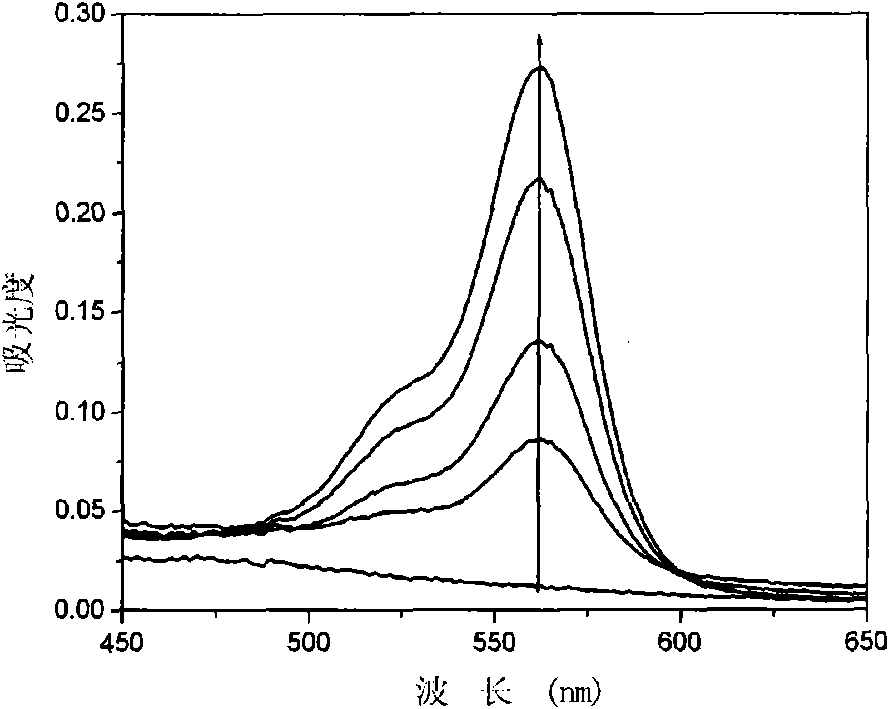
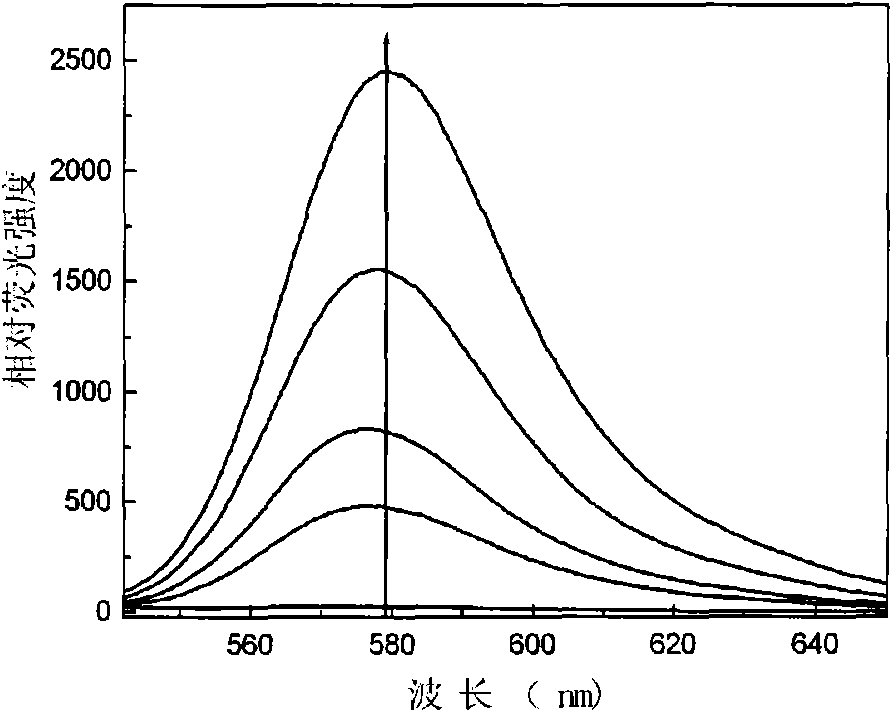
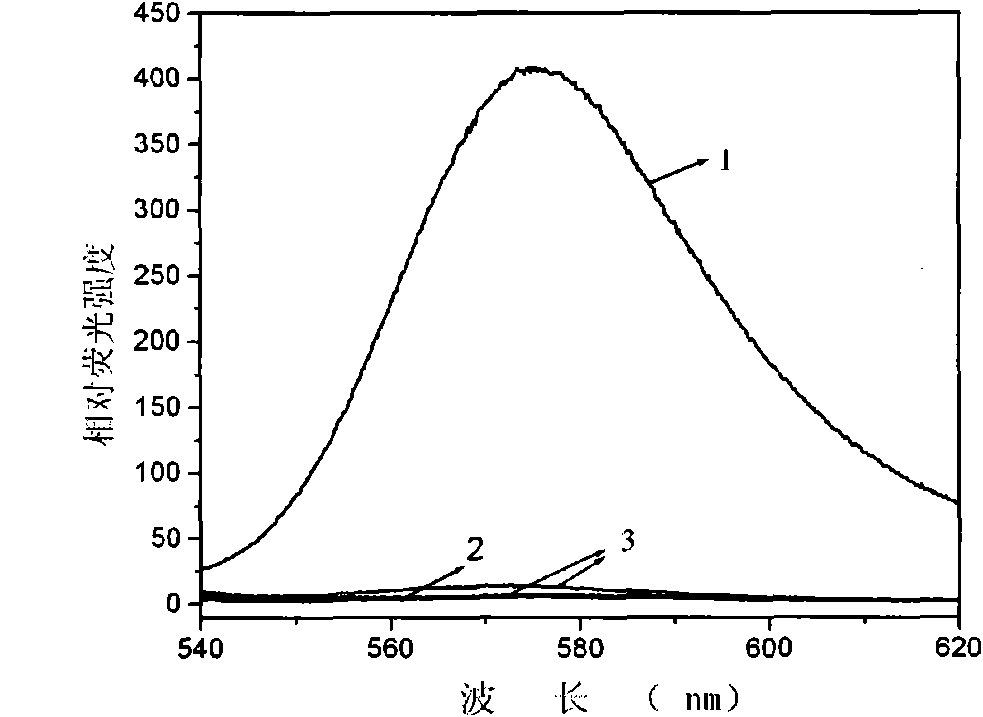
[0035] The chemical properties of the fluorescent probe for detecting intracellular hypochlorous acid described in the present invention are described as follows.
[0036] 1. Chemical performance test of fluorescent probe in aqueous solution in vitro:
the structure of the environmentally friendly knitted fabric provided by the present invention; figure 2 Flow chart of the yarn wrapping machine for environmentally friendly knitted fabrics and storage devices; image 3 Is the parameter map of the yarn covering machine
Login to View More PUM
 Login to View More
 Abstract
The invention relates to a fluorescence detection method and provides a fluorescent probe which has high sensitivity and high selectivity and is used for detecting intracellular hypochloric acid and an application of thiospirolactone in intracellular hypochloric acid detection. The structure of the fluorescent probe for detecting the intracellular hypochloric acid is a triphenylmethane fluorescent probe with a Xanthone ring parent structure; and the fluorescent probes of the thiospirolactone all adopt corresponding spirolactones as raw materials. The thiospirolactone has high-sensitivity fluorescent response characteristics on hypochloric acid, and when being used in the fluorescent probe for detecting the intracellular hypochloric acid, the selectivity is high. The probe has strong lightstability, no illumination self oxidation, rapid response to an aimed compound, good cell permeability and no strong cytotoxicity, and a product formed by combining the fluorescent probe and the aimed compound has strong photobleaching resistance. The thiospirolactone used for detecting the hypochloric acid of the aimed compound has high sensitivity and strong specificity and other active oxygen in cells has no interference on the detection.
Description
technical field [0001] The invention relates to a fluorescence detection method, in particular to a method for using thiospirolide as a fluorescent probe to detect hypochlorous acid (HClO), an active oxygen species produced in cells. Background technique [0002] Active oxygen is a general term for a series of oxygen-containing substances with active chemical properties and strong oxidizing ability produced by organisms. Active oxygen includes not only some free radicals, such as hydroxyl radical (OH), superoxide anion (O 2 - ), peroxyl radicals (ROO ), etc., also include some non-free radicals, such as hydrogen peroxide (H 2 o 2 ), singlet oxygen ( 1 o 2 ) and hypochlorous acid (HOCl), etc. [0003] The appropriate amount of reactive oxygen species spontaneously produced by organisms plays an important positive role in various life activities such as signal conversion, neurotransmission, immune system control, and synthesis and metabolism of important physiologically ...
Claims
the structure of the environmentally friendly knitted fabric provided by the present invention; figure 2 Flow chart of the yarn wrapping machine for environmentally friendly knitted fabrics and storage devices; image 3 Is the parameter map of the yarn covering machine
Login to View More Application Information
Patent Timeline
 Login to View More
 Patent Type & AuthorityApplications(China)
IPC IPC(8): C09K11/06G01N21/64C07D495/10
Inventor詹心琪郑洪许金钩
OwnerXIAMEN UNIV