
Supercritical water treatment reactor for organic wastes
A supercritical water and reactor technology, which is used in the removal of solid waste, multi-stage water/sewage treatment, water/sludge/sewage treatment, etc., can solve problems such as reducing the corrosion rate of the reactor and reducing the deactivation rate of the catalyst. , to reduce the cost, avoid blockage, and reduce heat loss
- Summary
- Abstract
- Description
- Claims
- Application Information
AI Technical Summary
Problems solved by technology
Method used
Image

Examples
Embodiment Construction
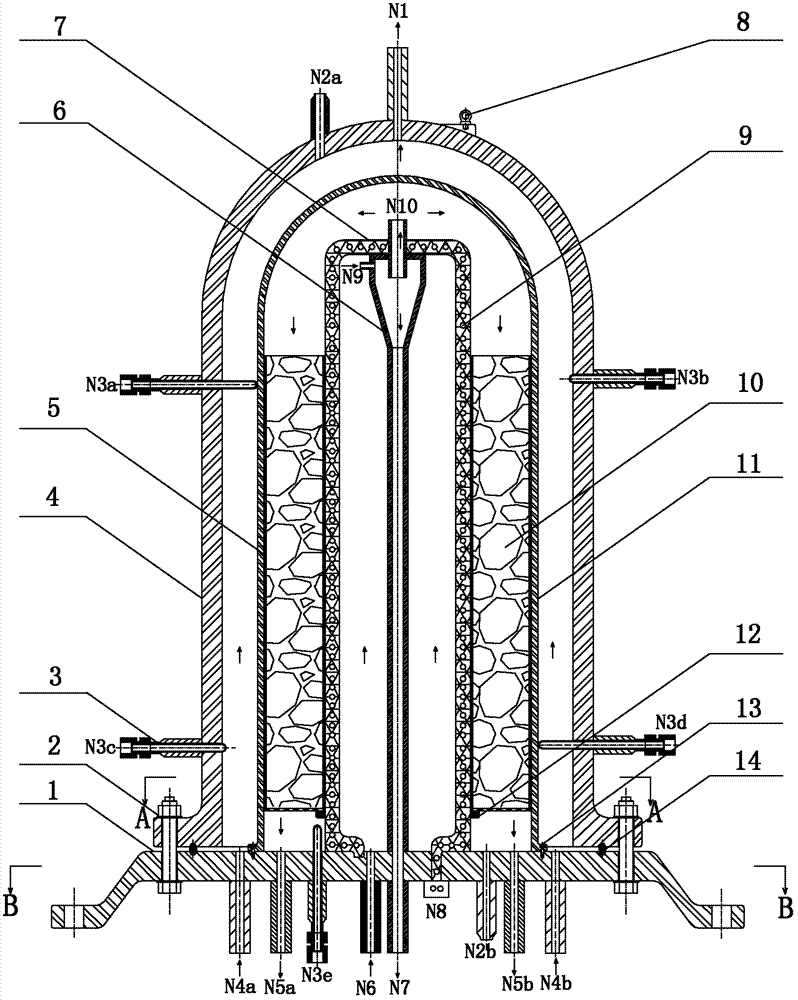
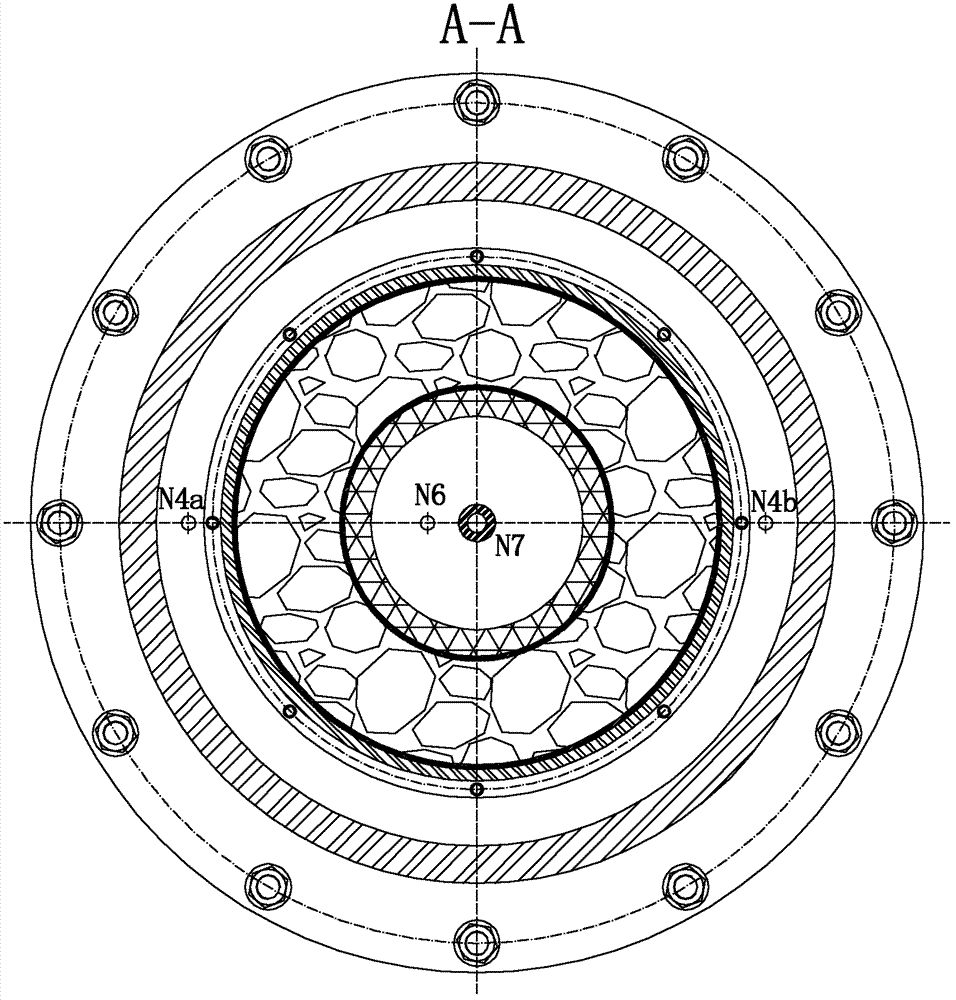
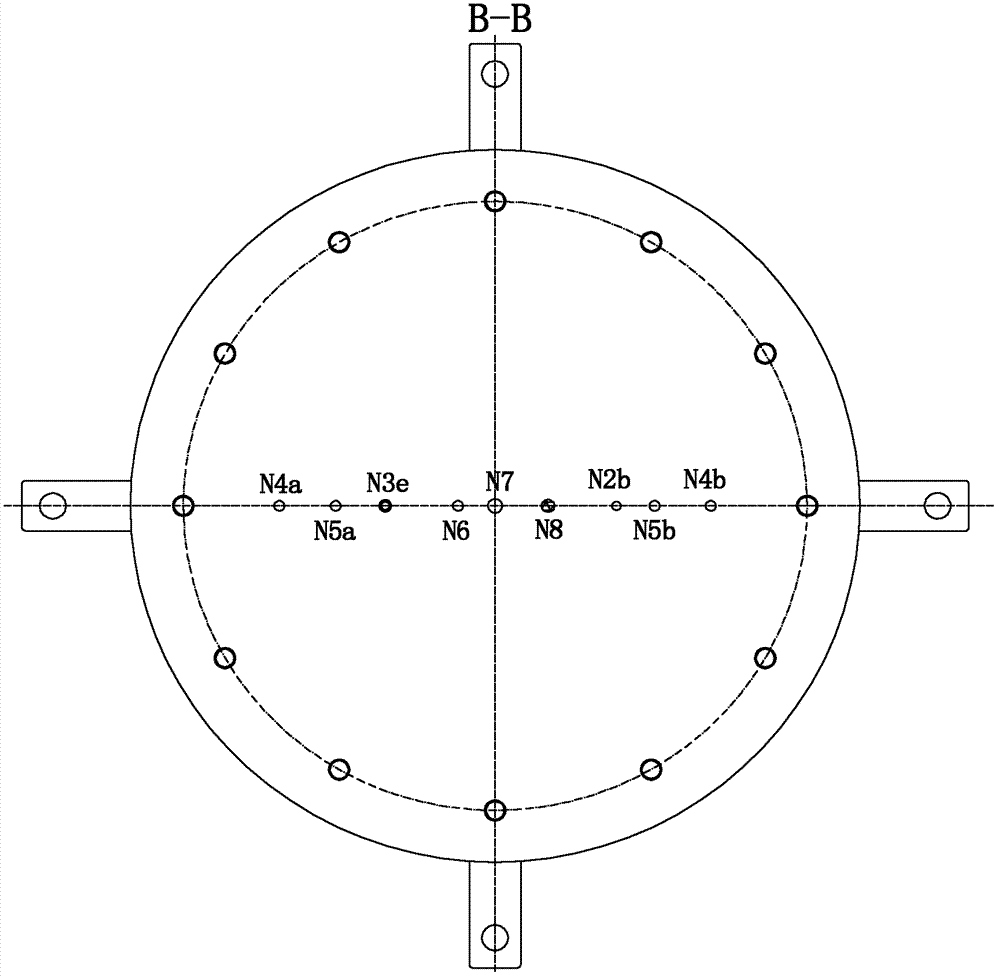
[0020] refer to figure 1 , figure 2 and image 3 , the reactor for the supercritical water treatment of waste organic matter, including the pressure-bearing wall 4 on the base 1 connected by the bolt assembly 2 (octagonal gasket 14 seal), the insulating heat-conducting wall 7 with the electric heating wire 9 inside, and the heat-conducting wall 7 by the screw 13 A corrosion-resistant wall 11 fixed on the base 1, a hydrocyclone 6 for salt separation, a catalyst case 5 for loading catalyst, a support ring 12 for supporting the catalyst case 5 on the insulating heat-conducting wall 7, a bearing The thermocouple interfaces N3a, N3b, N3c, N3d, N3e on the pressure wall and base for measuring temperature distribution, the pressure gauge and safety valve interfaces N2a, N2b on the pressure wall and base, and the pressure gauge and safety valve on the base. The inlets N4a and N4b for clean cooling water, the outlet N1 for flowing clean cooling water at the top of the pressure-bearin...
PUM
 Login to View More
 Abstract
Description
Claims
Application Information
 Login to View More