
Method for preparing GAPDH (reduced glyceradehyde-phosphate dehydrogenase) transgenic cotton
A cotton, coding gene technology, applied in the fields of botany equipment and methods, biochemical equipment and methods, genetic engineering, etc., can solve the problems of undiscovered genes and complex mechanisms, and achieve the effect of improving the ability of salt and alkali tolerance
- Summary
- Abstract
- Description
- Claims
- Application Information
AI Technical Summary
Problems solved by technology
Method used
Image

Examples
Embodiment 1
[0036] Embodiment 1, the construction of GAPDH overexpression vector
[0037] 1. Design PCR primers
[0038] The primer sequences are as follows:
[0039] GAPDH-F: 5'-ATGGCTACATCAATGGCGAAGAC-3';
[0040] GAPDH-R: 5'-TTAGGCGGCCCACCTCTGGGCG-3'.
[0041] 2. PCR amplification
[0042] (1) Extract the RNA of Dunaliella salina and reverse transcribe it into cDNA.
[0043] (2) Using cDNA as a template, PCR amplification of GAPDH gene was carried out with primer pair GAPDH-F / GAPDH-R.
[0044] The PCR amplification system is:
[0045]
[0046] The PCR reaction procedure is as follows:
[0047] 94°C for 3min; 94°C for 30s, 58°C for 30s, 72°C for 90s, 35 cycles; 72°C for 10min; 4°C+∞.
[0048] The nucleotide sequence of the GAPDH gene is shown in SEQ ID No.1.
[0049] The amino acid sequence of GAPDH protein is shown in SEQ ID No.2.
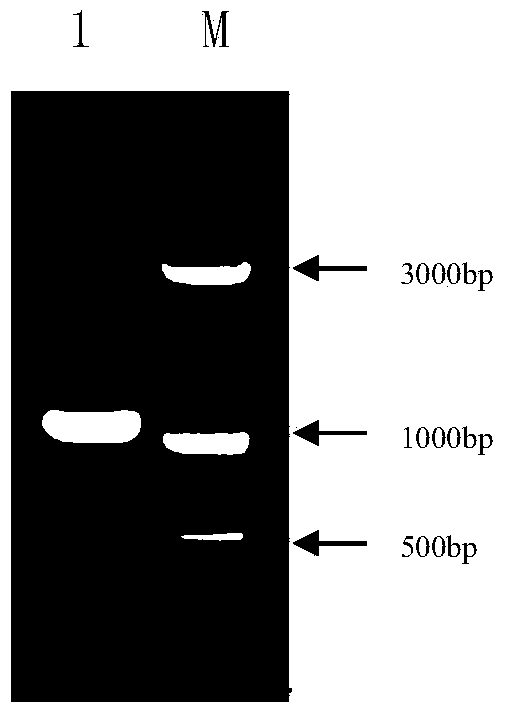
[0050] 3. Agarose gel electrophoresis to detect and recover PCR amplified fragments.
[0051] The results of agarose gel electrophoresis figu...
Embodiment 2
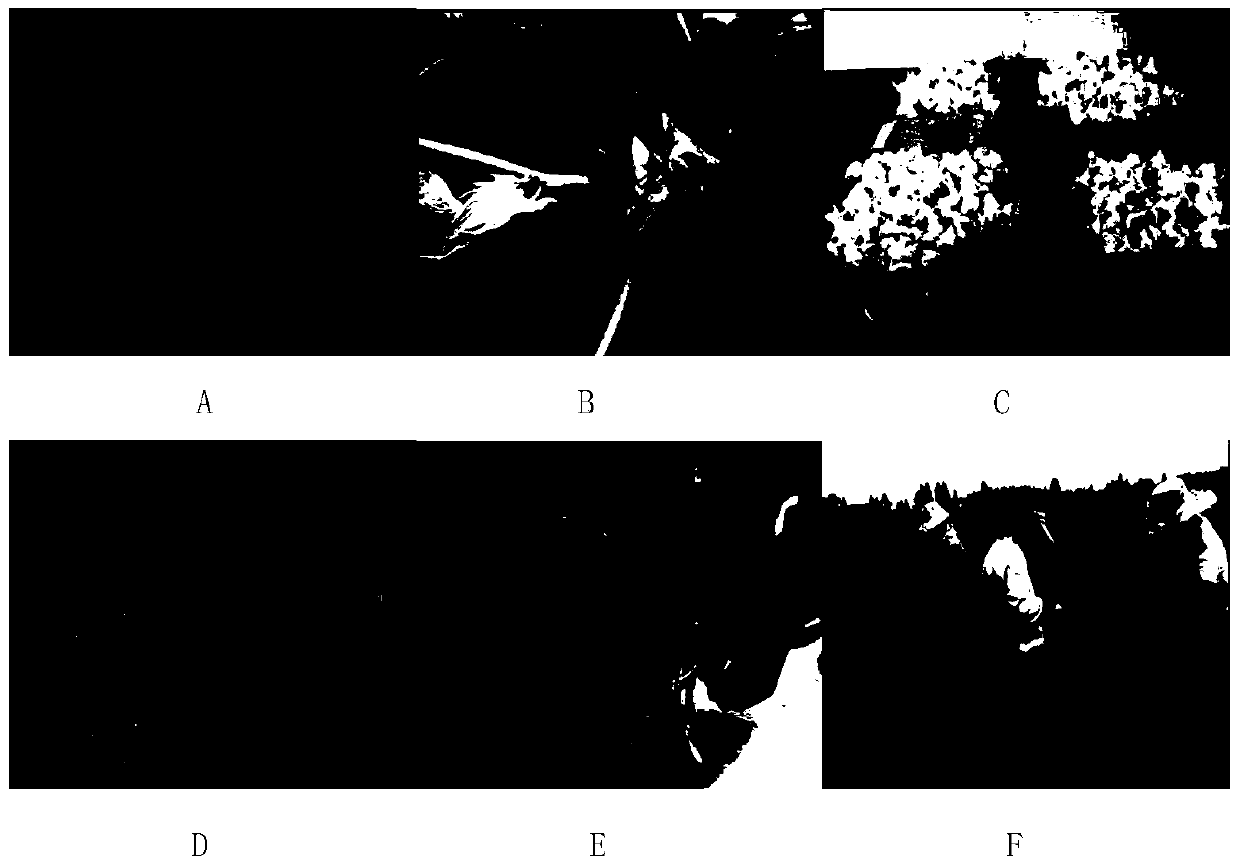
[0063] Embodiment 2, biolistic live transformation cotton
[0064] 1. Extract pBI121-GAPDH plasmid.
[0065] 2. The transformation recipient material is: non-insect-resistant cotton material Shanghai 749513. The transformation time is set from mid-July to mid-August during the full flowering period of cotton, and Shanghai 749513 is self-crossed.
[0066] 3. Collect the flowers of each recipient material on the afternoon of the first day of transformation, and then place the flowers on the test bench at room temperature (the flowers of each material should be marked), and the flowers whose stamens have been removed must cover the stigma with a wax tube .
[0067] 4. Start collecting pollen at around 9:00-10:00 the next morning. Put the collected pollen in a clean petri dish and mark it.
[0068] 5. Take 10 μl of gold powder and plasmid suspension and add it to the hole of the gene gun GDS-80, and gently tap the vicinity of the sample hole of the gun twice with your hand to m...
Embodiment 3
[0075] Example 3, Molecular detection of transgenic cotton T0 generation seeds
[0076] 1. Extract the DNA of the germination material of the transgenic non-insect-resistant cotton material Shanghai 749513T0 generation plant.
[0077] 2. Using the DNA of each plant as a template, two pairs of primers of the GAPDH gene are used to amplify and detect. The detection primers are listed in Table 1.
[0078] Table 1 detection primers
[0079]
[0080] GAPDH-F1 and GAPDH-R1 are a pair of primers, and GAPDH-F2 and GAPDH-R2 are a pair of primers.
[0081] Three, 1% agarose gel electrophoresis detection.
[0082] The result is as Figure 4 and Figure 5 shown.
[0083] Figure 4 It is the result of molecular detection of GAPDH gene (using GAPDH-F1 and GAPDH-R1 as primers).
[0084] Figure 4 Middle, M: Marker DL2000; 1-6 are Shanghai 749513T0 generation plants.
[0085] Figure 4 It shows that with GAPDH-F1 and GAPDH-R1 as primer amplification, the plants numbered 1, 2, 3,...
PUM
 Login to View More
 Abstract
Description
Claims
Application Information
 Login to View More