A zero-speed detection method for personal autonomous navigation system based on hmm

An autonomous navigation system and detection method technology, applied in the field of inertia, can solve the problems of large amount of calculation, low accuracy, difficult to meet the accuracy and reliability of personal navigation, etc., to achieve the effect of improving accuracy and overcoming poor theory.

CN103630147BInactive Publication Date: 2017-11-14HARBIN ENG UNIV
3 Cites 0 Cited by

Patent Information

Authority / Receiving Office
CN · China
Patent Type
Patents(China)
Current Assignee / Owner
Publication Date
2017-11-14
Estimated Expiration
Not applicable · inactive patent

Smart Images

  • Figure 1
    Figure 1
  • Figure 2
    Figure 2
  • Figure 3
    Figure 3
Patent Text Reader

Abstract

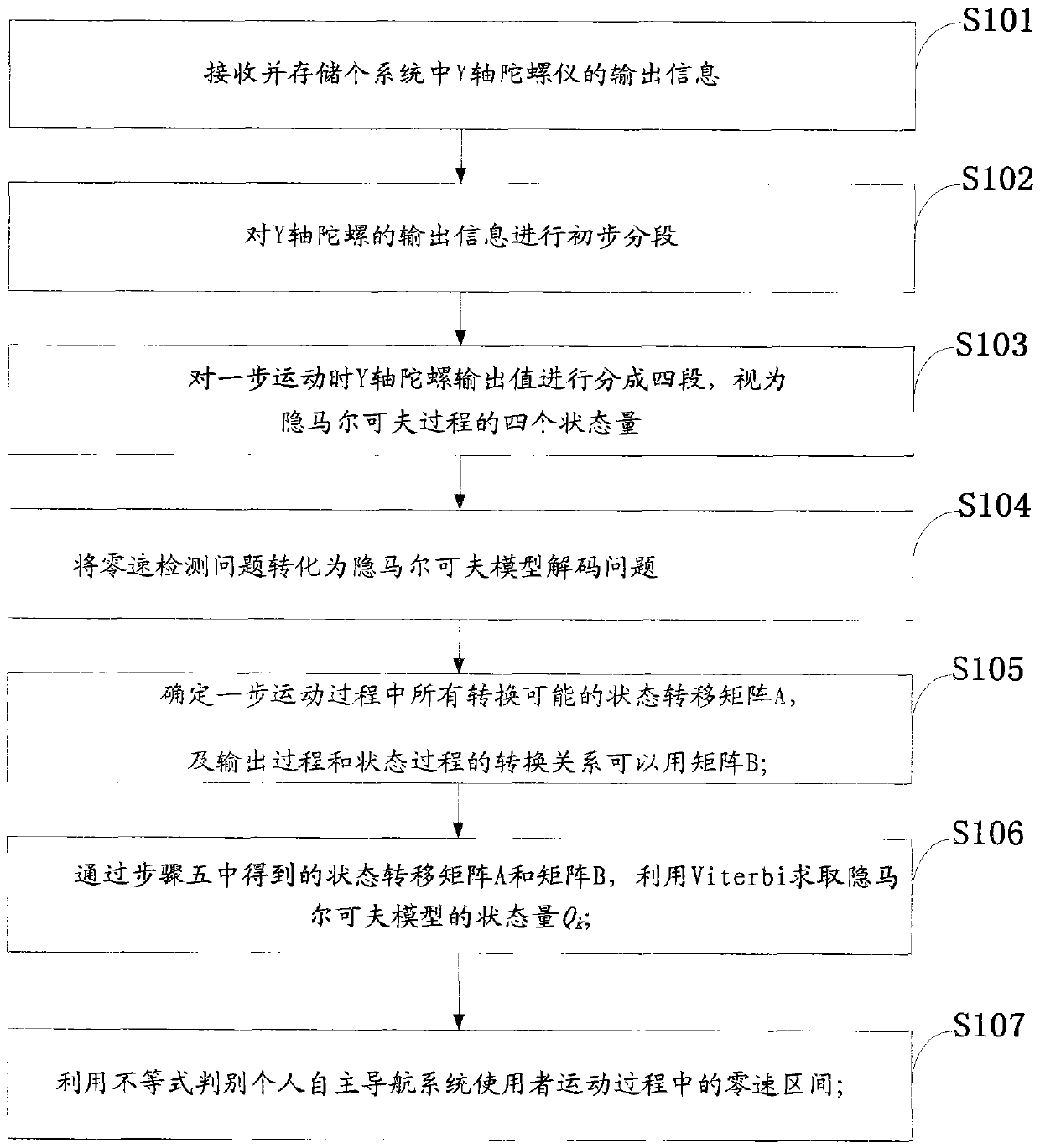
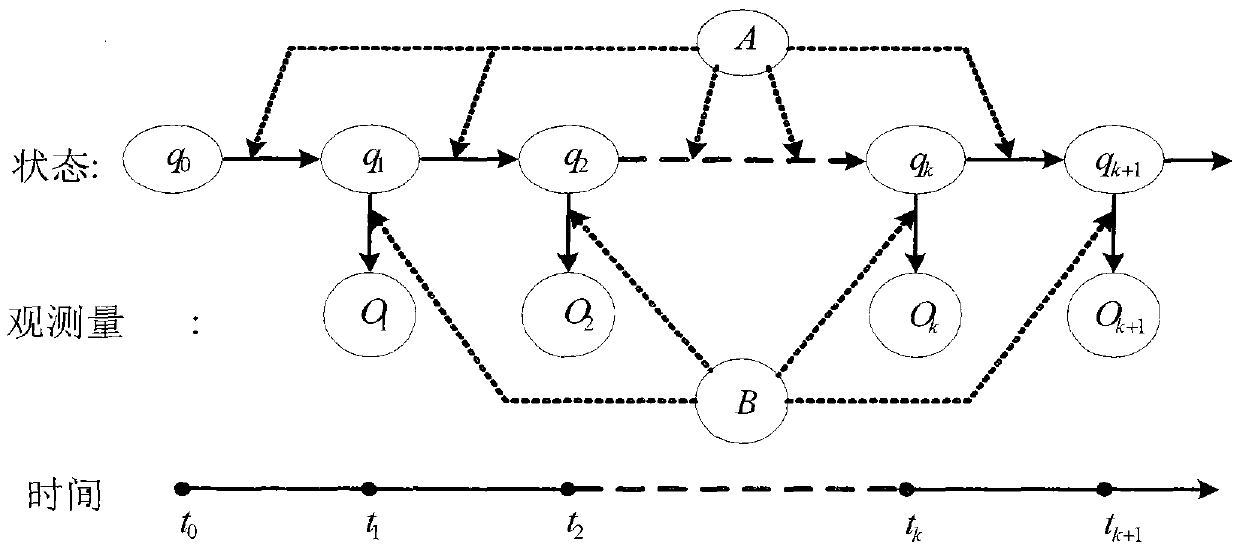
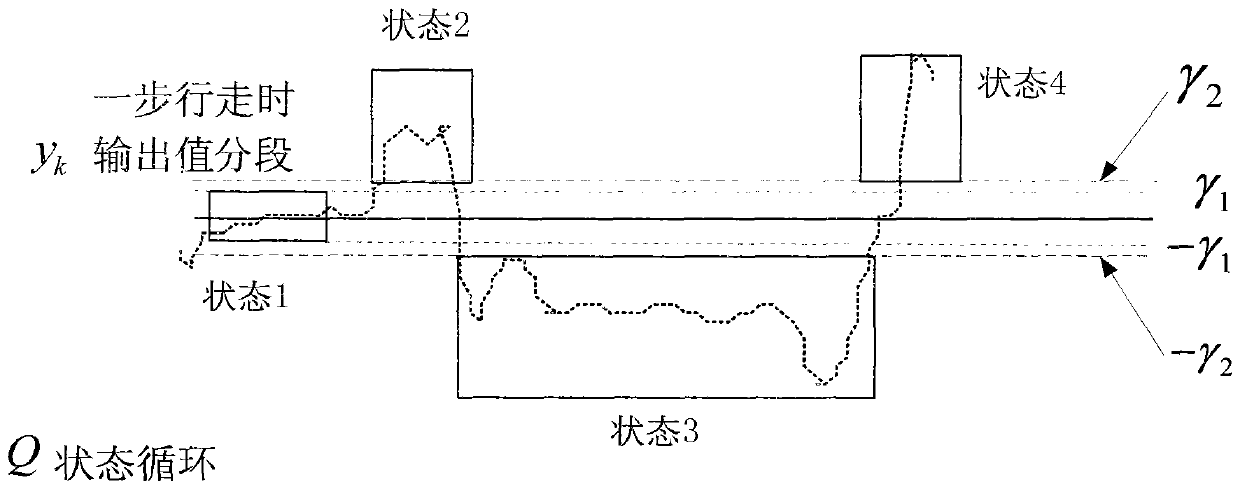
The invention discloses a zero-speed detection method for an individually autonomous navigation system based on a hidden Markov model (HMM). The method comprises the following steps: acquiring the output information of a Y-axis gyroscope in a micro inertial measurement unit of the individually autonomous navigation system; preliminarily sectioning the output information of the Y-axis gyroscope according to a function, and performing range division on the sectioned output values of the Y-axis gyroscope; sectioning the output values of the Y-axis gyroscope during the one-step movement of a user, naming the sections, and taking the sections as the state quantities of an HMM process; taking an output range as the output of the HMM to convert a zero-speed detection problem into an HMM decoding problem; acquiring a state transfer matrix A and a matrix B representative of a conversion relationship between an output process and a state process in a one-step movement process of the user; calculating the state quantity Qk of the HMM through Viterbi; and judging a zero-speed interval in the movement process of the user of the individually autonomous navigation system through an inequality. According to the zero-speed detection method, the problems are mathematized and modeled, and the detection accuracy is improved.
Need to check novelty before this filing date? Find Prior Art

Description

Technical field:

[0001] The invention belongs to the technical field of inertia, and specifically relates to a zero-speed detection method for a personal autonomous navigation system based on HMM (Hidden Markov Model). Background technique:

[0002] When the personal navigation autonomous positioning device based on the Micro Inertial Measurement Unit is working, the error of the inertial device of the Micro-Electro-Mechanical System (Micro-Electro-Mechanical System) diverges seriously. If the error of the inertial device cannot be effectively compensated, the position error will be as follows: The trend of the time cube diverges, and the system will eventually lose its navigation function. Therefore, the key to applying MEMS inertial measurement components to personal navigation systems is to design effective error correction algorithms. Zero-speed correction is an effective error compensation algorithm. The speed value obtained by the navigation solution when the user of t...

Examples

Embodiment Construction

[0059] The present invention will be further described below in conjunction with accompanying drawing and specific embodiment:

[0060] figure 1 is a flow chart of the method of the present invention.

[0061] A kind of zero speed detection method of personal autonomous navigation system based on HMM, it comprises the steps:

[0062] Include the following steps:

[0063] Step 1: The handheld handheld computer receives and stores the output information of the Y-axis gyroscope in the step miniature inertial measurement unit in the personal autonomous navigation system in real time;

[0064] Step 2: Use the function to initially segment the output information of the Y-axis gyro in the personal autonomous navigation system and discard the output data of the gyroscope that does not meet the segmentation conditions;

[0065] Step 3: Use the classification function in Step 2 to divide the Y-axis gyro output value into four segments when the user of the personal autonomous navigati...