Stereo matching method and device thereof

A technology of stereo matching and matching cost, which is applied in the field of image processing, can solve the problems that the disparity map is prone to jitter, does not consider the time consistency of the target image and the reference image, and achieves the effect of realizing online processing and eliminating jitter

CN103810690AInactive Publication Date: 2014-05-21FUJITSU LTD
4 Cites 11 Cited by

Patent Information

Authority / Receiving Office
CN · China
Current Assignee / Owner
Publication Date
2014-05-21
Estimated Expiration
Not applicable · inactive patent

Smart Images

  • Figure 1
    Figure 1
  • Figure 2
    Figure 2
  • Figure 3
    Figure 3
Patent Text Reader

Abstract

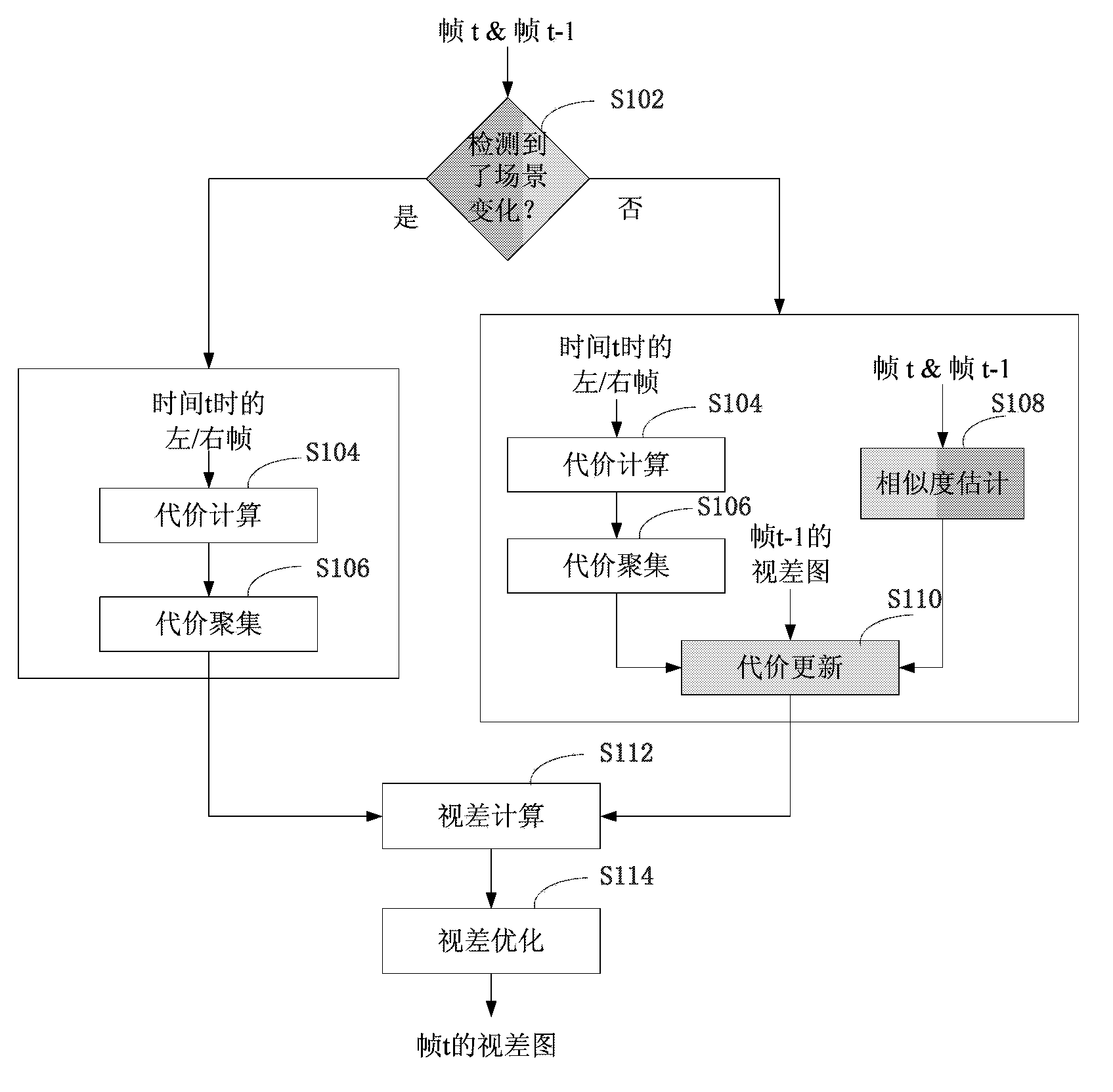
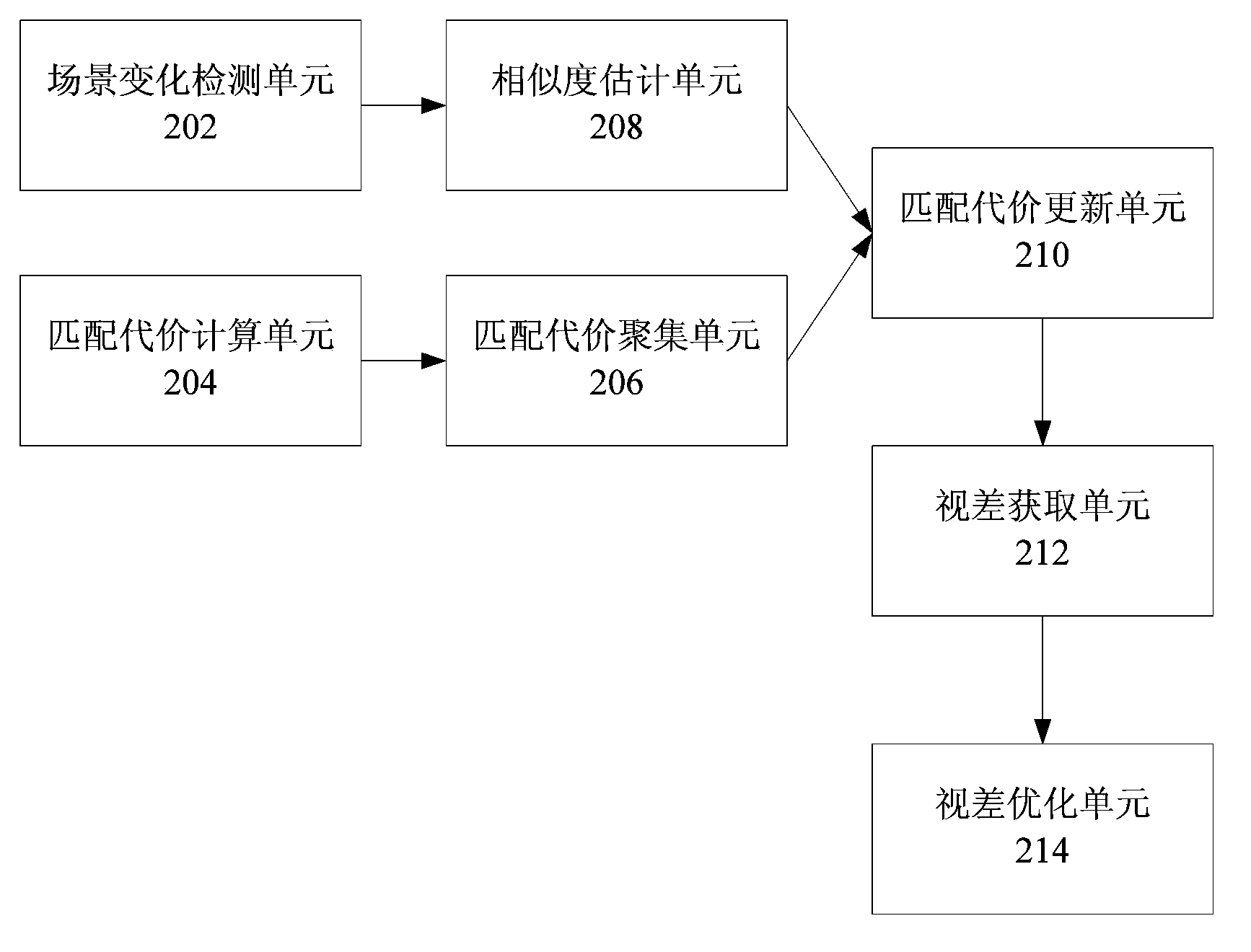
The invention discloses a stereo matching method and a device thereof. The stereo matching methods comprises the steps of detecting whether scene change exists or not between a current frame and a previous frame, updating a matching cost aggregate value of each pixel in the disparity space image of the current frame by using the similarity between the current frame and the disparity map of the previous frame when the scene change does not exist between the current frame and the previous frame, and obtaining the disparity map of the current frame by using the disparity space image of the current frame after updating. By using the stereo matching method and the device, the obtained jitter in the disparity map can be eliminated in the condition that the time consistency is not considered.
Need to check novelty before this filing date? Find Prior Art

Description

technical field

[0001] The present invention relates to the field of image processing, in particular to a stereo matching method and device. Background technique

[0002] Stereo matching is to take two or more images of a certain scene, estimate the three-dimensional (3D) model of the scene by accurately finding the matching pixels between the images, and convert the two-dimensional (2D) positions of the matching pixels between these images For 3D depth processing. In simple imaging configurations (e.g., two eyes or two cameras looking straight ahead), the disparity between the two eyes or two cameras is related to the distance between the two eyes or two cameras and the observed object. Inversely proportional to the distance of , that is, the stereoscopic depth of the observed object in the captured image. Therefore, disparity maps are often used to describe the stereoscopic depth of pixels in captured images.

[0003] In traditional stereo matching methods, usually one ...

Examples

Embodiment Construction

[0013] Features and exemplary embodiments of various aspects of the invention will be described in detail below. The following description covers numerous specific details in order to provide a thorough understanding of the present invention. It will be apparent, however, to one skilled in the art that the present invention may be practiced without some of these specific details. The following description of the embodiments is only to provide a clearer understanding of the present invention by showing examples of the present invention. The present invention is by no means limited to any specific configuration and algorithm presented below, but covers any modification, replacement and improvement of related elements, components and algorithms without departing from the spirit of the present invention.

[0014] Traditional stereo matching methods generally include the following steps: a matching cost calculation step, a matching cost aggregation step, a disparity acquisition st...