
Method for improving convergence speed of combined precise point positioning of GPS (Global Position System) and GLONASS
A precise single-point positioning and convergence speed technology, applied in satellite radio beacon positioning systems, measuring devices, instruments, etc., can solve the problems of imprecise theory, absorption of GLONASS code frequency deviation, and non-providing
- Summary
- Abstract
- Description
- Claims
- Application Information
AI Technical Summary
Problems solved by technology
Method used
Image

Examples
Embodiment Construction
[0055] The technical solutions of the present invention will be further described in detail below in conjunction with the accompanying drawings, but the protection scope of the present invention is not limited to the embodiments.
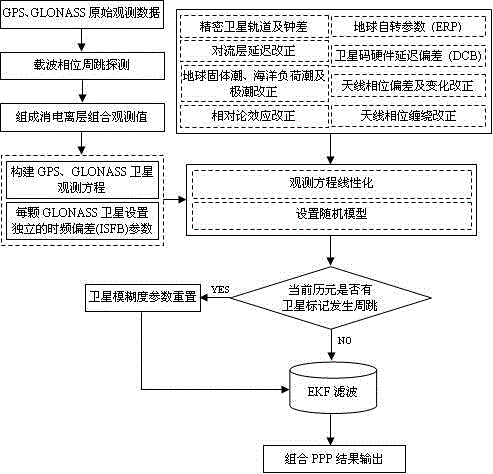
[0056] like figure 1 As shown, a method for improving the convergence speed of GPS / GLONASS combined precise point positioning provided by the present invention, the specific steps are as follows:
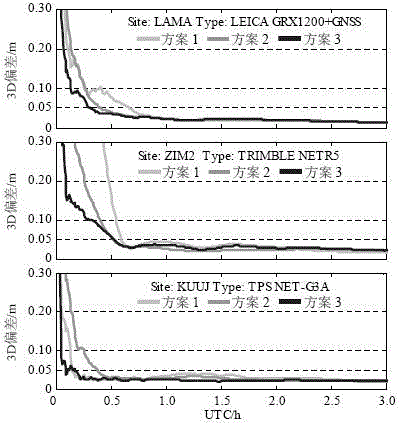
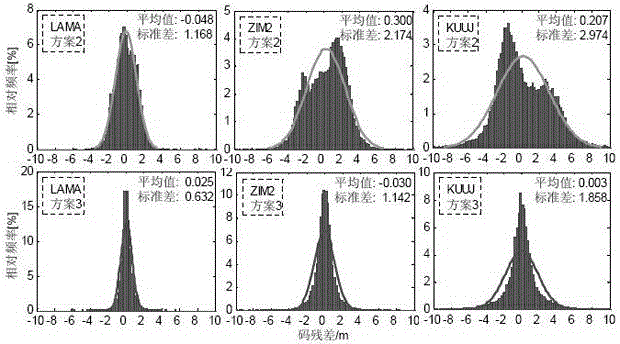
[0057] Step 1: obtain GPS, GLONASS observation data; In order to check the validity of the method provided by the present invention, adopt from the IGS reference station network of European region and Canada NRCan network to provide 12 station data to carry out experiment; All data are by GPS / GLONASS double The receiver collection of the system involves a total of 9 different receiver types from 6 GNSS equipment vendors. The specific information is shown in Table 1. The data collection time is from 91 to 180 Day of Year (DOY) in 2013, the sampling rate i...
PUM
 Login to View More
 Abstract
Description
Claims
Application Information
 Login to View More