Supercharge Your Innovation With Domain-Expert AI Agents!

Catalyst for CO selective hydrogenation and its preparation and application

A catalyst and selective technology, applied in chemical instruments and methods, preparation of hydroxyl compounds, preparation of organic compounds, etc., can solve the problems of less research on nanomaterials, and achieve good dispersion, easy recycling, uniform shape and size Effect

Active Publication Date: 2017-02-01
SHANGHAI ADVANCED RES INST CHINESE ACADEMY OF SCI
View PDF8 Cites 0 Cited by
  • Summary
  • Abstract
  • Description
  • Claims
  • Application Information

AI Technical Summary

Problems solved by technology

There are also related research reports on bimetallic materials composed of noble metals and non-noble metals, such as Pt-Ni, Ag-Ni, Pd-Cu, etc., but there are less researches on nanomaterials with low content of noble metals and non-noble metals and two non-noble metals.

Method used

the structure of the environmentally friendly knitted fabric provided by the present invention; figure 2 Flow chart of the yarn wrapping machine for environmentally friendly knitted fabrics and storage devices; image 3 Is the parameter map of the yarn covering machine
View more

Image

Smart Image Click on the blue labels to locate them in the text.
Viewing Examples
Smart Image
  • Catalyst for CO selective hydrogenation and its preparation and application
  • Catalyst for CO selective hydrogenation and its preparation and application
  • Catalyst for CO selective hydrogenation and its preparation and application

Examples

Experimental program
Comparison scheme
Effect test

Embodiment 1

[0042] Weigh 0.75g cobalt acetate (Co(Ac) 2 ·4H 2 O) was dissolved in 70 mL of 1,2-propanediol to form solution a.

[0043] Weigh 20 mg of palladium nitrate (Pd(NO 3 ) 2 ·H 2 O) was dissolved in 20 ml of 1,2-propanediol to form solution b.

[0044] Take 0.5ml of solution b and add it to solution a, stir and dissolve at room temperature to obtain a uniform solution A.

[0045] Then 1.05 g of stearic acid was weighed, added to solution A, stirred at 40° C. for 30 min, and mixed evenly to obtain solution B.

[0046] The obtained solution B was added to a 100 ml polytetrafluoroethylene hydrothermal kettle, and hydrothermally reacted for 5 hours under airtight conditions at a temperature of 190°C. Then, turn off the heating, take out after the reaction temperature is cooled to room temperature, and it can be observed that the upper layer is a golden yellow colloidal solution, and there is a certain amount of black solid product on the inner wall of the reactor, scrape out the...

Embodiment 2

[0050] Weigh 0.75g cobalt acetate (Co(Ac) 2 ·4H 2 O) was dissolved in 70 mL of propylene glycol to form solution a.

[0051] Weigh 200 mg of palladium nitrate (Pd(NO 3 ) 2 ·H 2 O) was dissolved in 20 ml of propylene glycol to form solution b.

[0052] Take 0.5 ml of solution b and add it to solution a, and stir and dissolve to obtain a uniform solution A at normal temperature.

[0053] Then 1.05 g of stearic acid was weighed, added to solution A, stirred at 40° C. for 30 min, and mixed evenly to obtain solution B.

[0054] The obtained solution B was added to a 100 ml polytetrafluoroethylene hydrothermal kettle, and hydrothermally reacted for 5 hours under airtight conditions at a temperature of 190°C. Then, turn off the heating, take out after the reaction temperature is cooled to room temperature, and it can be observed that the upper layer is a golden yellow colloidal solution, and there is a certain amount of black solid product on the inner wall of the reactor, scra...

Embodiment 3

[0057] Weigh 0.75g cobalt acetate (Co(Ac) 2 ·4H 2 O) was dissolved in 70 mL of propylene glycol to form solution a.

[0058] Weigh 200mg copper acetate (Cu(Ac) 2 ·H 2 O) was dissolved in 20 ml of propylene glycol to form solution b.

[0059] Take 2.5ml of solution b and add it to solution a, under normal temperature, stir and dissolve to obtain a uniform solution A.

[0060] Then 1.05 g of stearic acid and 1.05 g of hexadecylamine were weighed, added to solution A, stirred at 40° C. for 30 min, and mixed evenly to obtain solution B.

[0061] The obtained solution B was added to a 100 ml polytetrafluoroethylene hydrothermal kettle, and hydrothermally reacted for 5 hours under airtight conditions at a temperature of 190°C. Then, turn off the heating, take out after the reaction temperature is cooled to room temperature, and it can be observed that the upper layer is a golden yellow colloidal solution, and there is a certain amount of black solid product on the inner wall of...

the structure of the environmentally friendly knitted fabric provided by the present invention; figure 2 Flow chart of the yarn wrapping machine for environmentally friendly knitted fabrics and storage devices; image 3 Is the parameter map of the yarn covering machine
Login to View More

PUM

PropertyMeasurementUnit
lengthaaaaaaaaaa
diameteraaaaaaaaaa
diameteraaaaaaaaaa
Login to View More

Abstract

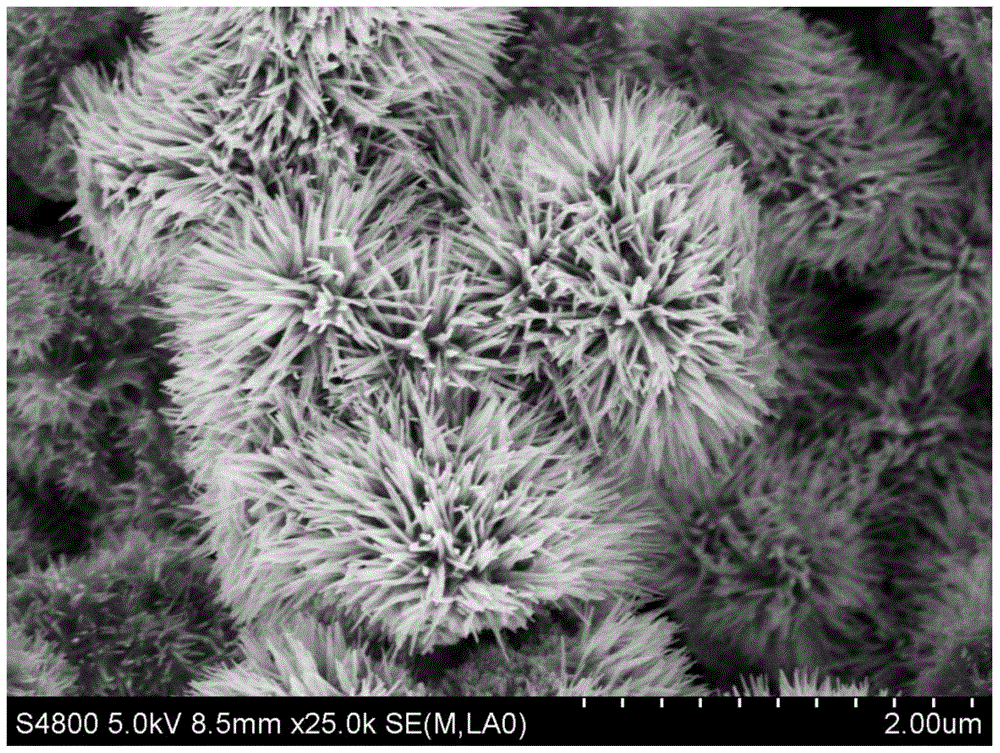
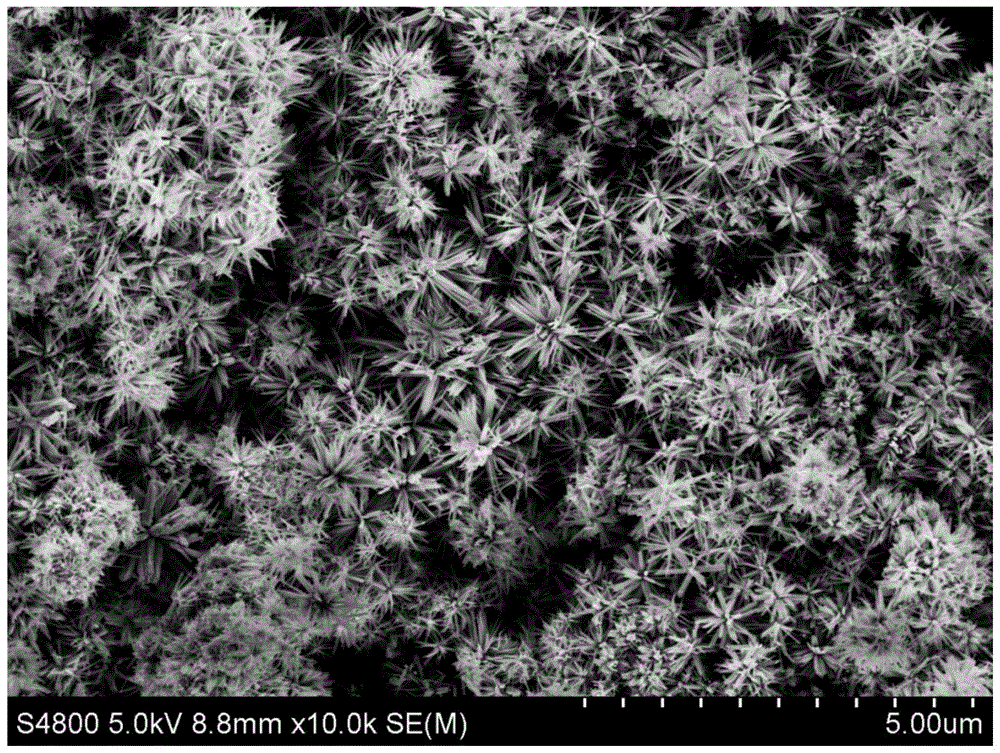
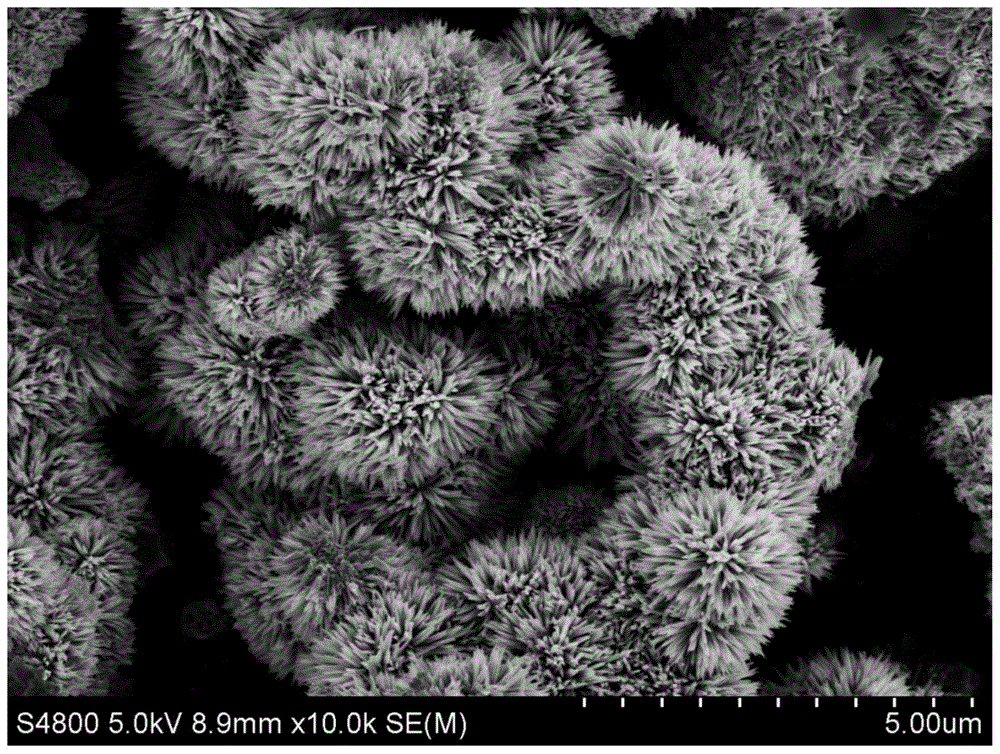
The invention discloses a catalyst for CO selective hydrogenation and a preparation method and application of the catalyst. The catalyst is prepared through steps of dissolving a compound containing metal M into a solvent, adding a surfactant, and carrying out water thermal treatment under an enclosed condition so as to obtain the catalyst. Specifically, the preparation method of the catalyst comprises the following steps: (1) dissolving the compound containing the meta M into the solvent so as to form a solution A; (2) adding the surfactant into the solution A so as to form a solution B; (3) enclosing the solution B, and carrying out hydrothermal reaction; and (4) washing, separating and drying a precipitation product obtained after hydrothermal reaction in the step (3) so as to obtain the catalyst. The catalyst has a one-dimensional dendritic structure, is good in dispersion, stable in structure, and uniform in morphology and size, exposes the high-activity crystal surface, has the characteristics of relatively high reaction activity and selectivity to CO selectivity hydrogenation, chain growth capacity and the like, and meanwhile has a good industrial application prospect.

Description

technical field [0001] The present invention relates to a catalyst and its preparation method and application, in particular to a catalyst for CO selective hydrogenation and its preparation method and application. Background technique [0002] Due to its unique volume effect, surface effect and quantum size effect, nanomaterials have different electrical, optical, mechanical, and magnetic properties than bulk materials. The applications of these aspects are closely related to the size and shape of nanomaterials. In recent years, with the development of nanotechnology, nanomaterials with controllable morphology have attracted more and more attention of researchers in various disciplines because of their unique physical and chemical properties. The so-called morphology includes two aspects: size and shape. It is well known that when the size of a material is small to a certain extent, some of its physical parameters will change; while nanomaterials with uniform shape can oft...

Claims

the structure of the environmentally friendly knitted fabric provided by the present invention; figure 2 Flow chart of the yarn wrapping machine for environmentally friendly knitted fabrics and storage devices; image 3 Is the parameter map of the yarn covering machine
Login to View More

Application Information

Patent Timeline
no application Login to View More
Patent Type & Authority Patents(China)
IPC IPC(8): B01J23/89B01J23/75C10G2/00C07C31/02C07C29/157C07C29/156
Inventor 孙予罕祝艳巴荣彬
Owner SHANGHAI ADVANCED RES INST CHINESE ACADEMY OF SCI
Features
  • R&D
  • Intellectual Property
  • Life Sciences
  • Materials
  • Tech Scout
Why Patsnap Eureka
  • Unparalleled Data Quality
  • Higher Quality Content
  • 60% Fewer Hallucinations
Social media
Patsnap Eureka Blog
Learn More