
Filter membrane clamping and collecting method for falling dust of museum of ancient ruined site
A collection method and museum technology, applied in the field of environmental monitoring of museum cultural relics preservation, can solve problems such as pollution, loss, and large volume of dust suppression disks, and achieve the effects of improving accuracy and standardization, eliminating secondary pollution, and reducing errors
- Summary
- Abstract
- Description
- Claims
- Application Information
AI Technical Summary
Problems solved by technology
Method used
Image

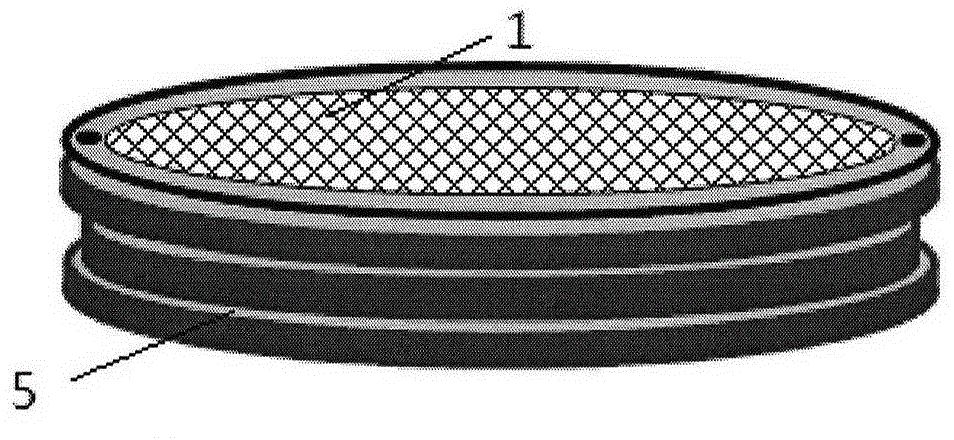
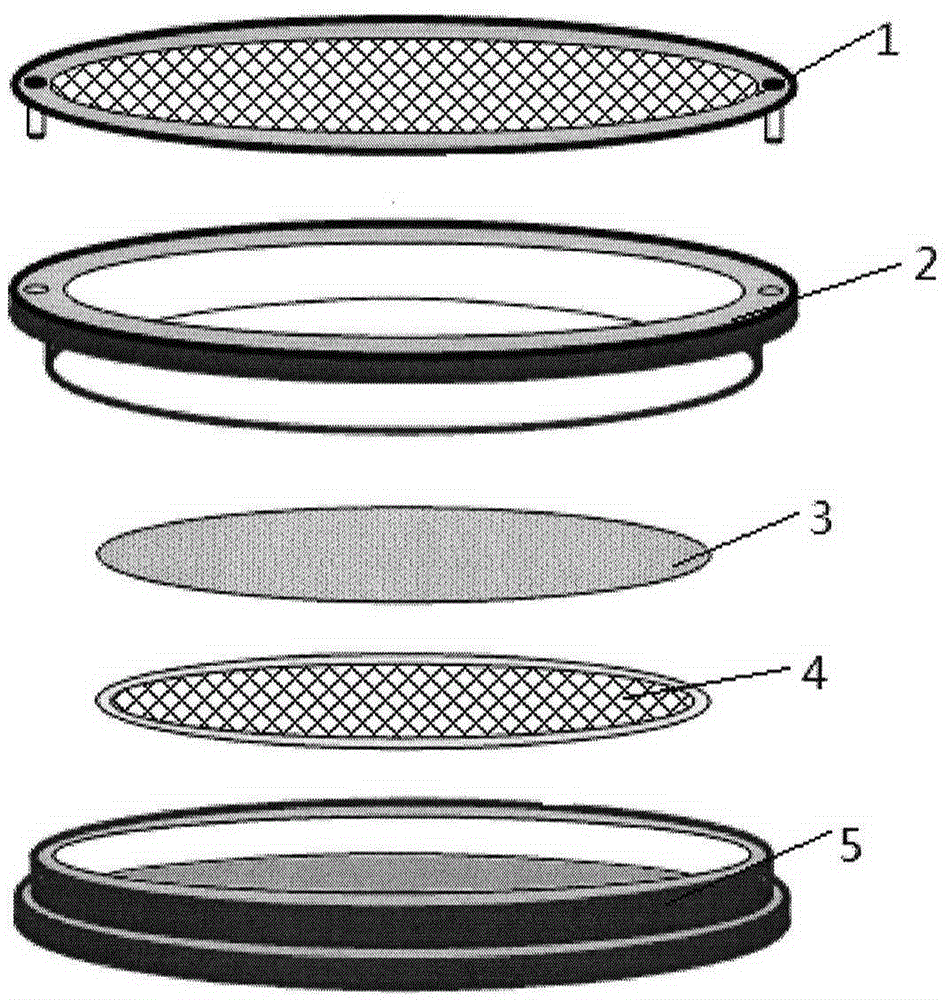
Examples
Embodiment 1
[0023] Analysis results of quartz membrane
[0024] Fallout Mass Settlement Flux
[0025] Sedimentation flux analysis of samples A microelectronic analytical balance (Sartorius Microbalance, ME5-F, Germany) with a sensitivity of 1 ug was used to weigh the quartz filter before and after sampling. The two sampling points for dustfall particulate matter samples are located in Pit No. 1 (indoor) and outdoor of Terracotta Warriors and Horses Museum of Qin Shihuang. The formula for calculating the mass settling flux of dust fall is as follows:
[0026] Component mass sedimentation flux = component mass concentration / (detection membrane area x exposure time) (1)
[0027] Calculated according to the above formula, the average indoor and outdoor sedimentation flux of dust during the sampling period is 8.7±3.3g m -2 ·yr -1 , 26.7±13.4g m -2 ·yr -1 . The outdoor and indoor mass concentration ranges are 2.6-16.2g·m-2·yr, respectively -1 and 5.3-48.8 m -2 ·yr -1 .
[0028] Che...
Embodiment 2
[0042] Analysis results of polycarbonate film
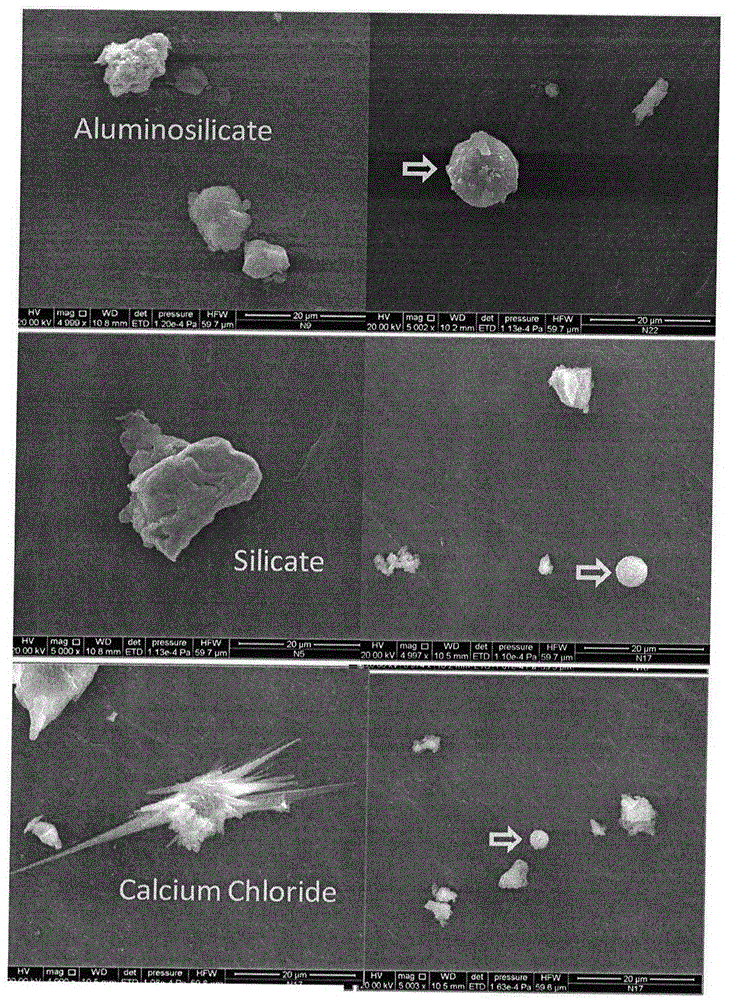
[0043] The microscopic appearance of the dust image 3 shown
[0044] Cut the middle position of the polycarbonate filter membrane with dust particles to about 10×10mm 2A small square piece of the sample was attached to the sample stage with carbon double-sided conductive tape, after being sprayed with gold by a JEOL JFC-1600 ion sputtering instrument, it was placed in an X-ray energy spectrometer (NORAN SYSTEM SIX, Thermo Electron Corporation, USA) Scanning Electron Microscope (SEM-EDX) (JSM-6460 LV, Japan Electron Optics Laboratory Co.Ltd., JP) carries out scanning electron microscopy and energy spectrum analysis, grasps the morphology of dust particles through electron microscope images, and combines EDX understands the chemical composition of dustfall particles and finds that indoor and outdoor dustfall particles are mainly composed of mineral particles, coal burning fly ash, soot aggregates and biomass particles.
[0045]...
PUM
 Login to View More
 Abstract
Description
Claims
Application Information
 Login to View More