
Protective device for avoiding optical lens surface scratch
A technology for optical mirrors and protection devices, applied in optics, optical components, installation, etc., can solve problems such as scratches, achieve good positioning, save space, and have a simple structure
Patent Information
- Authority / Receiving Office
- CN · China
- Current Assignee / Owner
- Publication Date
- 2015-12-23
- Estimated Expiration
- Not applicable · inactive patent
Smart Images
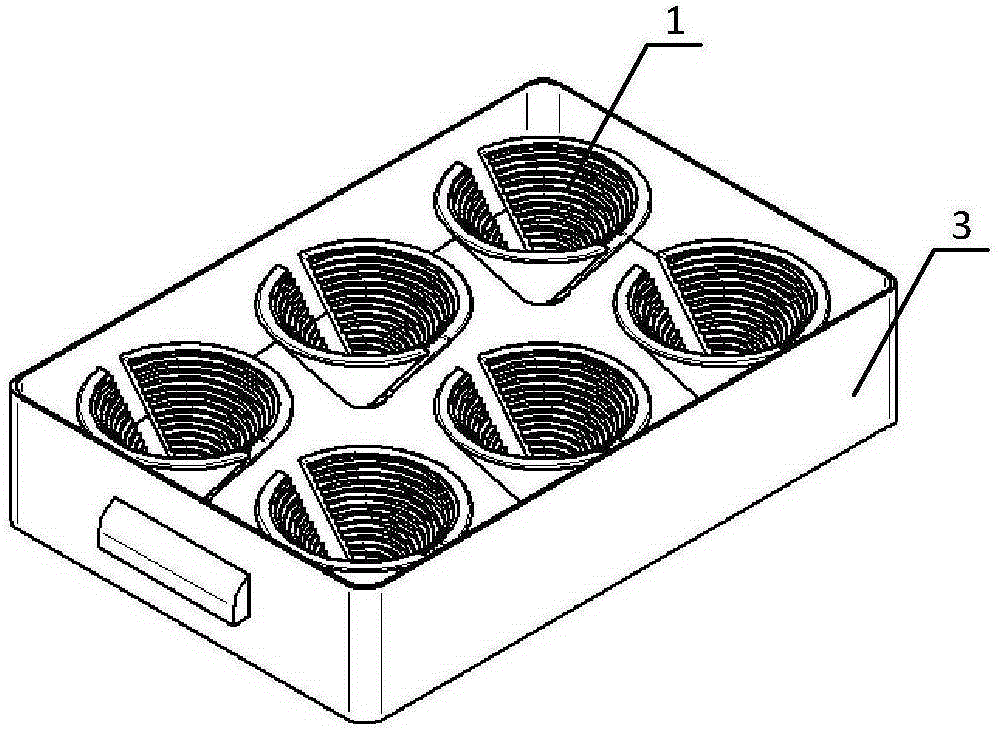
Figure 1 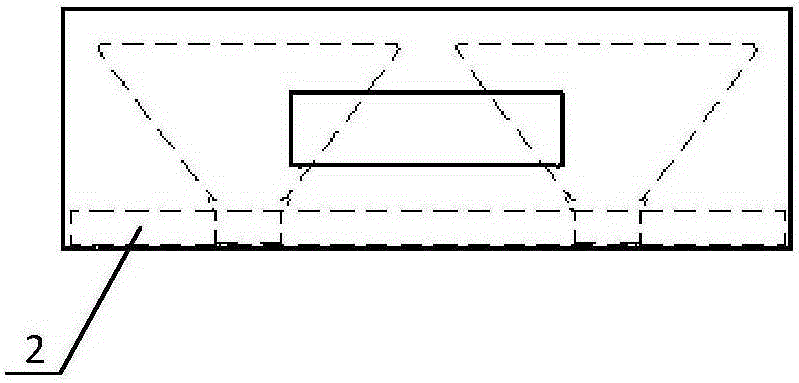
Figure 2 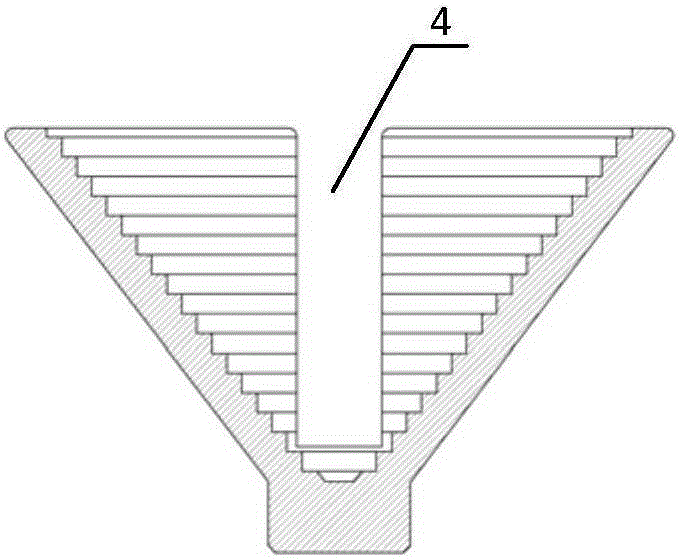
Figure 3
Abstract
Description
technical field
[0001] The invention relates to a protection device for preventing optical mirror surface from being scratched during the assembly and adjustment of an optical system. Background technique
[0002] With the wide application of space vehicles, photoelectric detection and military guidance, scientific experiments and other fields, the demand for high-precision optical lenses for various purposes is also increasing. Due to the high precision requirements of this type of optical system, the design requirements of optical mechanical parts are high, the manufacturing cycle is long, and the cost is expensive. This inevitably requires striving for zero error rate and zero scratches on the optical mirror during the assembly and adjustment process. In the traditional assembly and adjustment process: a single lens that is not in the frame or a single lens group that is in the frame is placed flat in a flat-bottomed storage box. Since the flat-bottomed storage box does ...
Examples
Embodiment Construction
[0023] like Figures 1 to 5 As shown, the protective device for preventing scratches on the optical mirror surface of the present invention mainly includes a box body, a mirror holder and a mirror holder seat. The mirror holder is assembled on the mirror holder seat, and the mirror holder holder is placed in the box body, and the box body is provided with a dustproof cover.
[0024] The inner wall of the mirror holder is designed with an annular stepped surface distributed in a step shape, and the inner diameter of the annular stepped surface is larger than the inner diameter of the non-working surface of the optical lens to be placed on it. like Image 6 As shown, the non-working surface of the optical lens mentioned here is the inward annular zone (usually unilateral 1mm) of the optical lens, and the inner side of the annular zone is the light-passing aperture. If it is an optical lens equipped with a frame, the frame will also have a wall thickness equivalent to the size ...