
Chromium (III) complex as well as preparation method and application thereof
A complex and chromium salt technology, applied in the field of metal complexes, can solve problems such as chromosome damage, low intestinal absorption rate, DNA mutation, etc., and achieve moderate stability and good water solubility
- Summary
- Abstract
- Description
- Claims
- Application Information
AI Technical Summary
Problems solved by technology
Method used
Image

Examples
Embodiment 1
[0020] Embodiment 1: Preparation and structural characterization of chromium (III) complexes
[0021] Weigh 2.67g (10.0mmol) CrCl 3 ·6H 2 O and 1.52g (10.0mmol) 3-methyl-salicylic acid (3-CH 3 -SA), placed in a 100mL round-bottomed flask, dissolved in 50mL of methanol, then added 0.30g of arsenic-free Zn particles, heated to reflux for 1 hour, then slowly added 0.5mL of triethylenetetramine (Trientine), until the color of the solution changed from The green color gradually changed to red, and the reaction was continued for 1 hour, cooled, filtered with suction, and the filtrate was naturally volatilized at room temperature, and red crystals were obtained after three days, with a yield of 60%.
[0022] Elemental analysis results, from the molecular formula CrC 14 h 26 N 4 o 4 Cl Theoretical (%): C, 41.79; H, 6.47; N, 13.93; Experimental (%): C, 41.55; H, 6.69; N, 13.88.
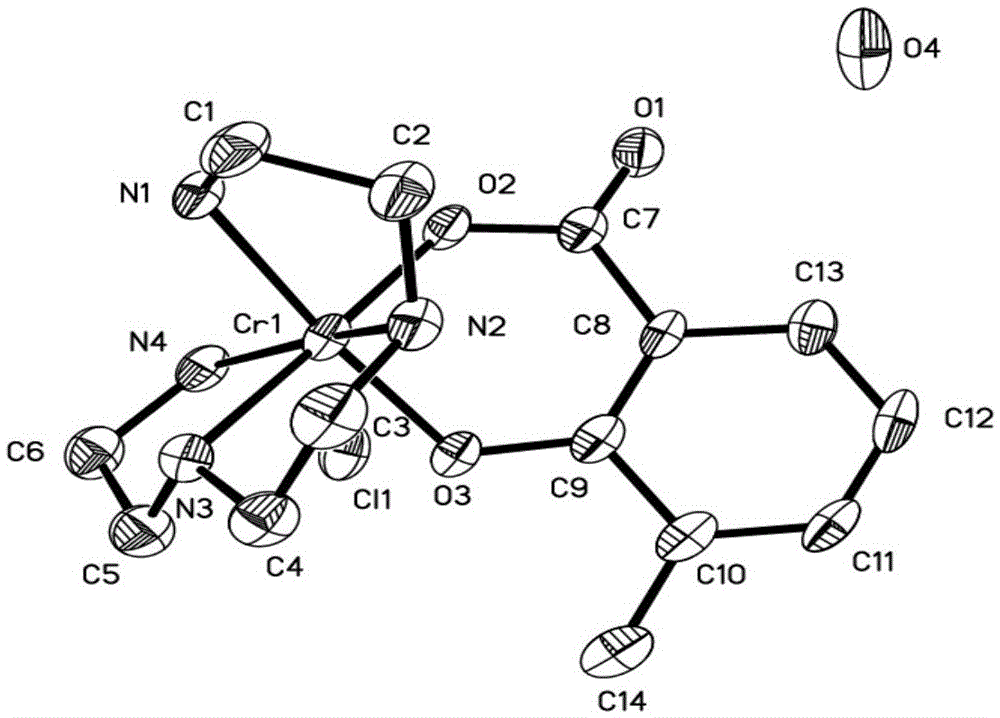
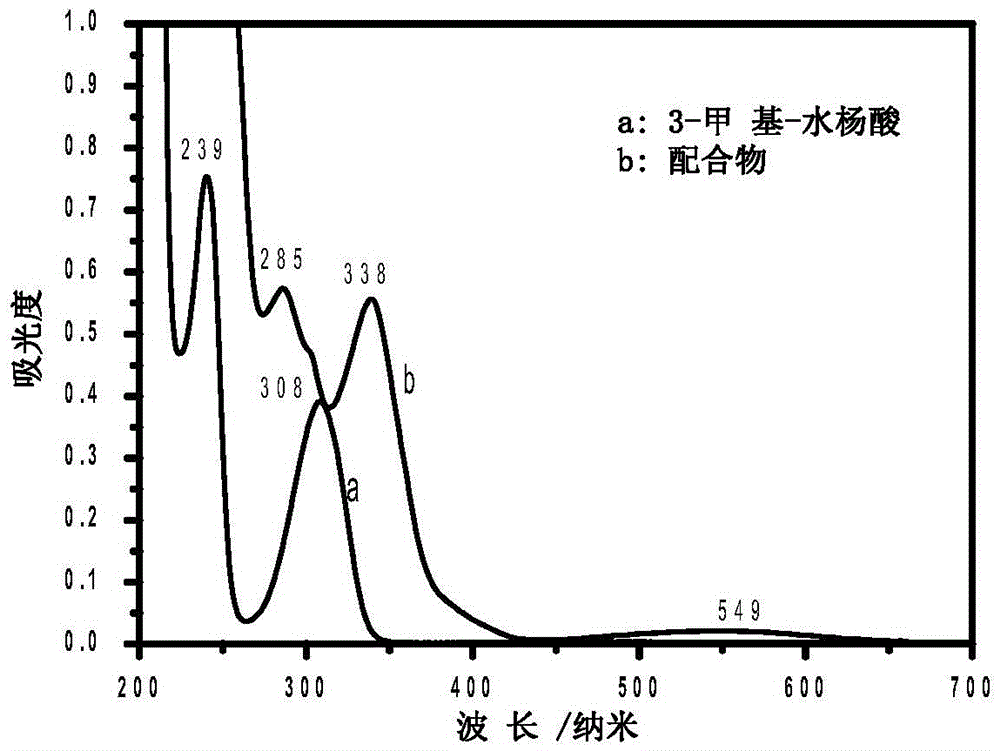
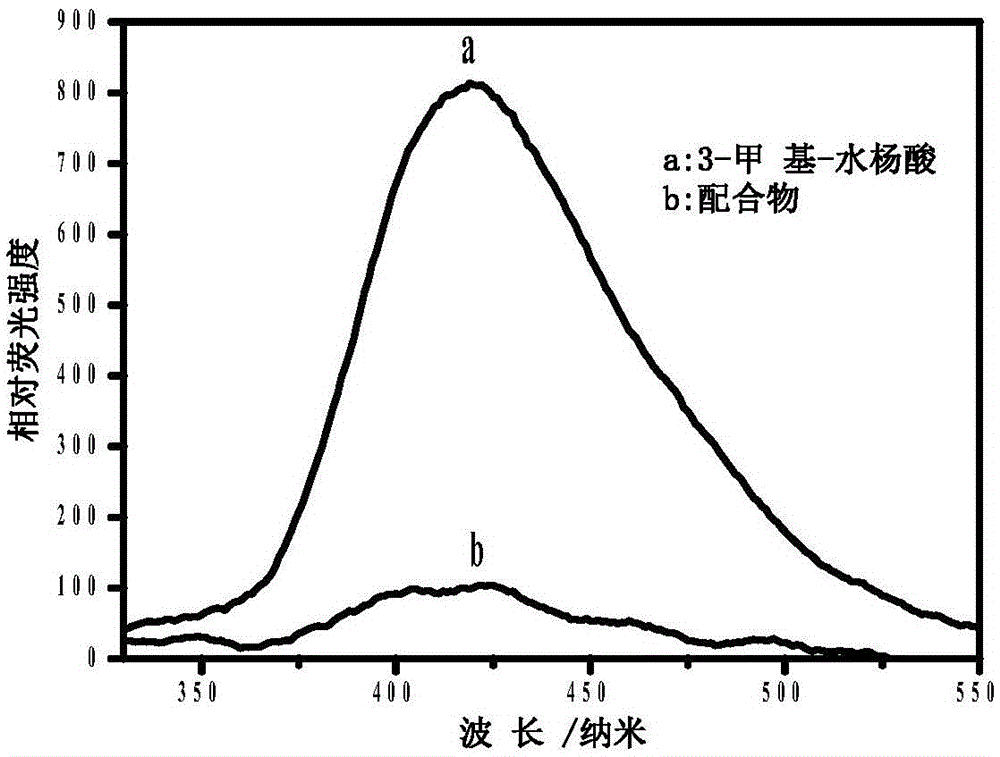
[0023] Crystal structure determination results (see attached figure 1 ): The molecular formula of t...
Embodiment 2
[0028] Embodiment 2: the preparation of chromium (III) complex
[0029] Weigh 2.67g (10.0mmol) CrCl 3 ·6H 2 O and 1.52g (10.0mmol) 3-methyl-salicylic acid were placed in a 100mL round-bottomed flask, 50mL of ethanol was added, and 1.0g of arsenic-free zinc particles were added, stirred and heated under reflux for 2 hours, and 1mL of triethylene tetra Amine, the color of the solution slowly changed from green to red, continued stirring and heating under reflux for about 2 hours, cooled, and naturally volatilized at room temperature. After 3 days, red crystals were obtained with a yield of 75%.
Embodiment 3
[0030] Embodiment 3: the application of hypoglycemic and weight loss activity of chromium (III) complex
[0031] The hypoglycemic and weight-reducing activity of the chromium (III) complex was verified by feeding mice. The mice used in the experiment were provided by the Experimental Animal Center of Shanxi Academy of Traditional Chinese Medicine. We selected 48 Kunming mice, half male and half male, body weight range 12-15g; room temperature 15-25°C, relative humidity 30%-40%, natural light, free to eat and drink. Common feed was provided by Beijing Suolaibao Technology Co., Ltd. High-fat feed formula: 66.5% of common food, 20% of sucrose, 10% of lard, 2.5% of cholesterol and 1% of sodium cholate. The mice were randomly divided into 4 groups according to body weight, including 12 in the normal group, 12 in the model group, 12 in the positive control group, and 12 in the drug treatment group. From the beginning of the experiment, the mice in the normal group were given norm...
PUM
 Login to View More
 Abstract
Description
Claims
Application Information
 Login to View More