
Space Pyramid Object Recognition Method Based on Kernel Function Matching
A space pyramid, object recognition technology, applied in character and pattern recognition, instruments, calculations, etc., can solve problems such as increasing the difficulty of object recognition, achieve good recognition results, improve representativeness, and improve accuracy.
Patent Information
- Authority / Receiving Office
- CN · China
- Patent Type
- Patents(China)
- Current Assignee / Owner
- Publication Date
- 2018-11-16
Smart Images
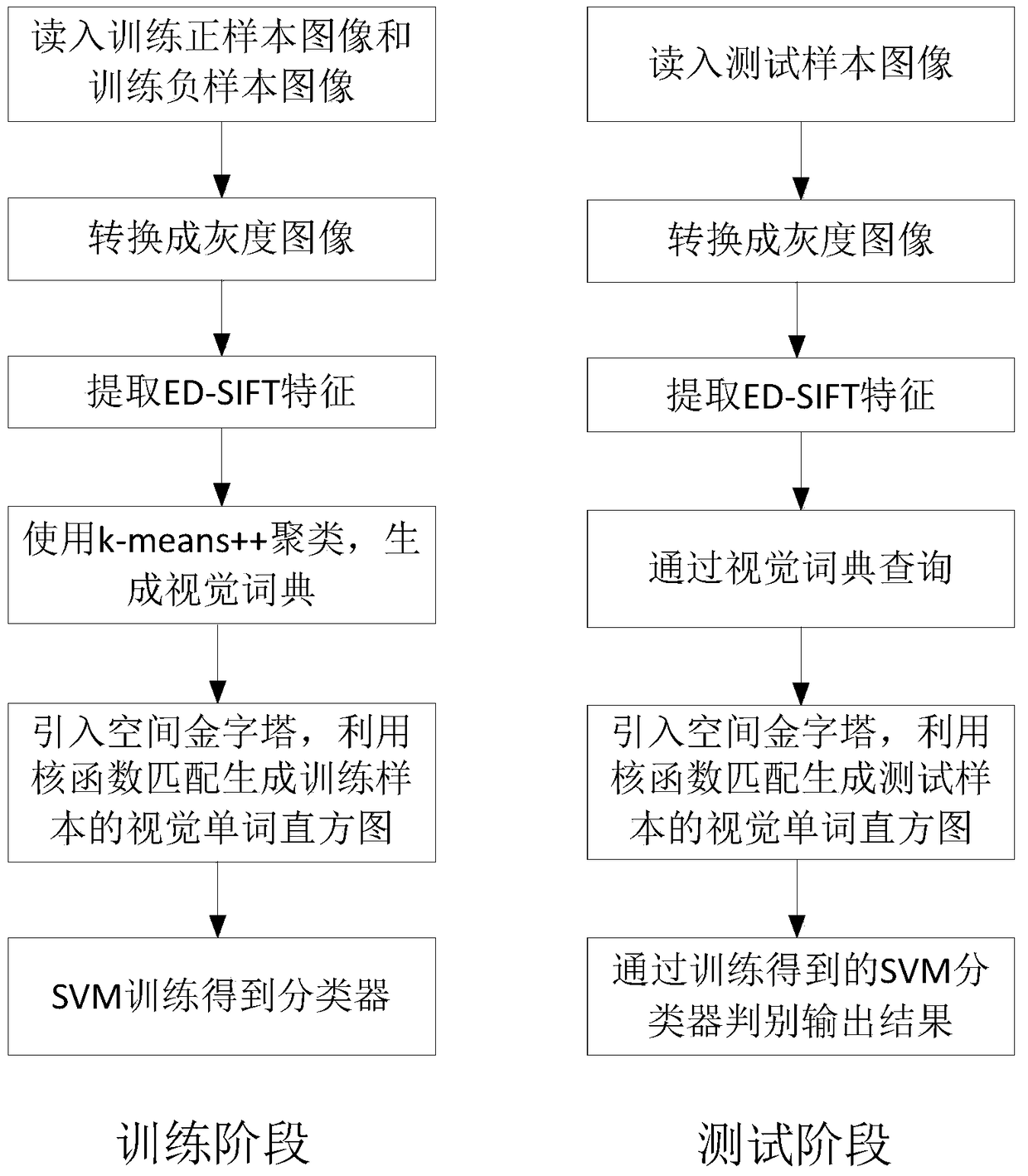
Figure 1 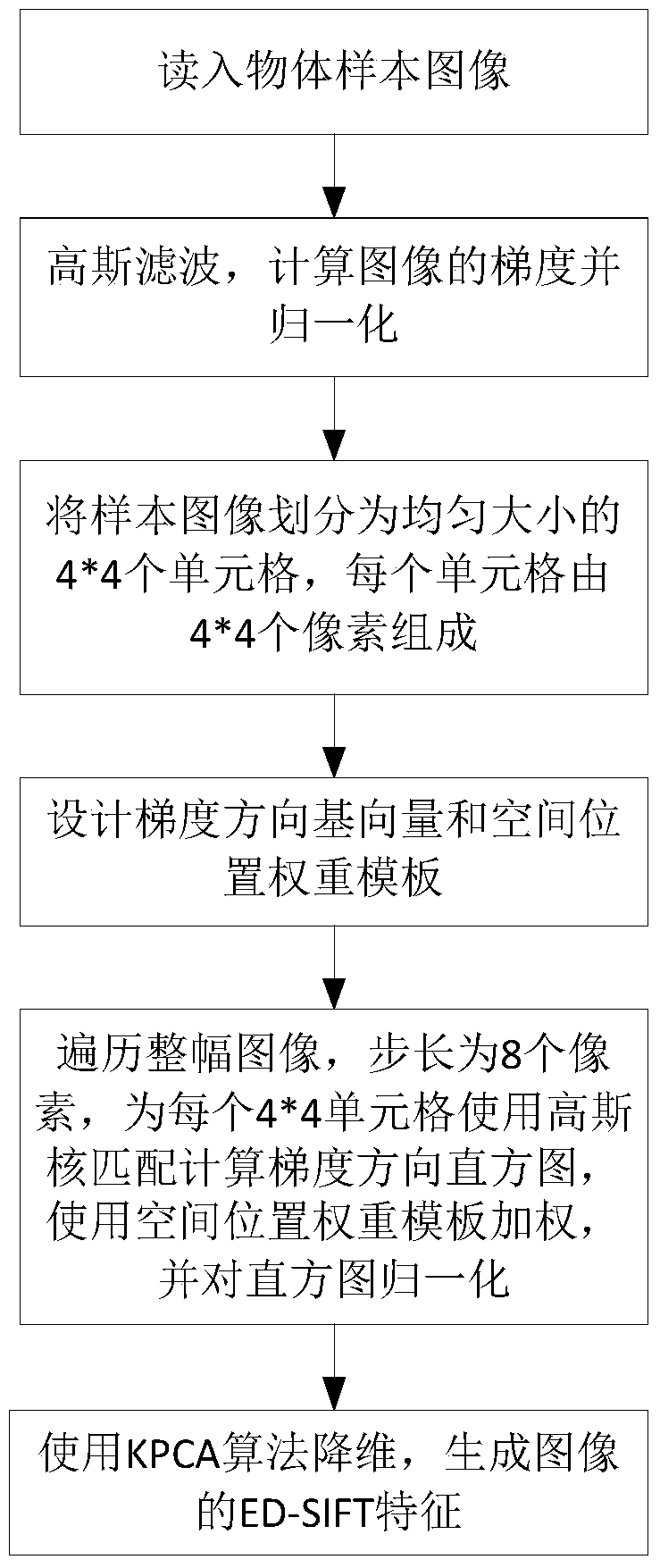
Figure 2 
Figure 3
Abstract
Description
Technical field:
[0001] The invention relates to the field of machine vision, in particular to a space pyramid object recognition method based on kernel function matching. Background technique:
[0002] With the rapid development of computer and multimedia technology, the scale of digital images and videos has expanded rapidly. Although massive image data facilitates people's life, it also brings great troubles to people's life. How to quickly and accurately find images of objects of interest to us from massive image data is becoming more and more difficult. Therefore, how to fully and accurately understand images, how to organize image data in an orderly, efficient and reasonable manner, and retrieve the required images has gradually become one of the hotspots in computer vision research.
[0003] In recent years, the object recognition algorithm with Bag of Words (BoW) as the key technology has made the most outstanding progress. In recent decades, experts and scholars ...
Examples
Embodiment Construction
[0026] In order to better illustrate the purpose, concrete steps and characteristics of the present invention, the present invention will be described in further detail below in conjunction with the accompanying drawings:
[0027] refer to figure 1 , a kind of space pyramid object recognition method based on kernel function matching that the present invention proposes, mainly comprises the following steps:
[0028] Step 1. Collect sample images of objects to be identified, and divide the collected sample image data into training samples and test samples;
[0029] Step 2: Convert the images of the training samples and test samples into grayscale images, and convert the data type of the grayscale images into double-precision floating point types; then scale the size of the image so that its height and width are in [50,200 ]between;
[0030] Step 3, extracting ED-SIFT (Efficient Dense Scale-invariant Feature Transform) descriptors of training samples and test samples;
[0031]...