

Novel 7alpha-hydroxysteroid dehydrogenase gene S1-a-2
A technology of hydroxysteroid and dehydrogenase, applied in genetic engineering, plant genetic improvement, enzymes, etc., can solve the problem that the activity and stability of hydroxysteroid dehydrogenase cannot meet industrial production at the same time, and achieve large industrial application value, such as active effect
- Summary
- Abstract
- Description
- Claims
- Application Information
AI Technical Summary
Problems solved by technology
Method used
Image

Examples
Embodiment 1
[0044] Example 1. Isolation of new 7α-HSDH gene
[0045] 1. Gene discovery
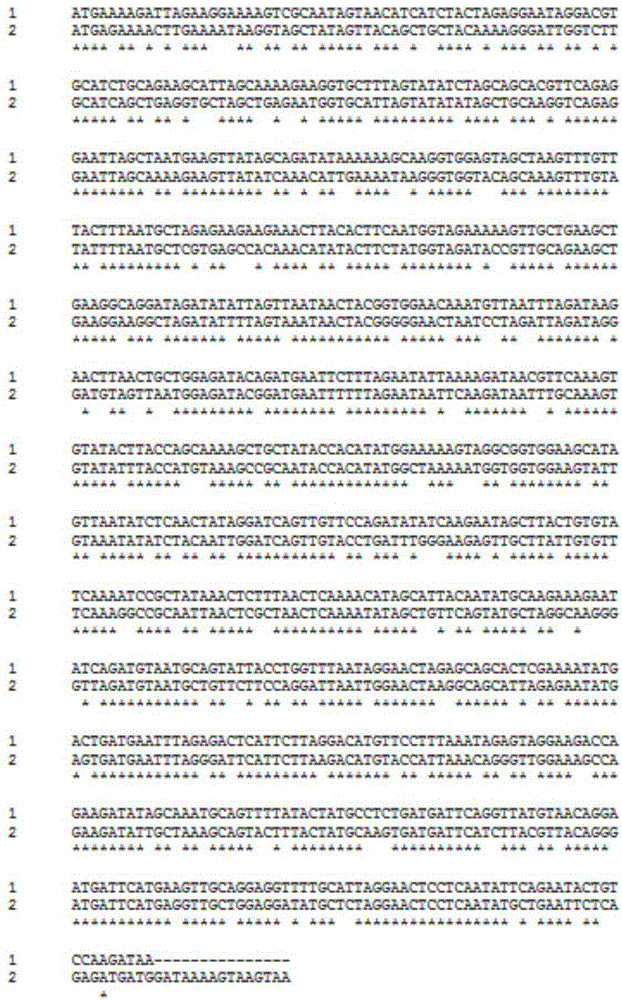
[0046]Using a sterilized medicine spoon, a fecal sample of a healthy black bear in the Sichuan Black Bear Conservation and Incubation Base was collected, stored on dry ice and transported back to the laboratory. The total DNA of the black bear feces was extracted using the Qiagen Fecal DNA Genome Extraction Kit, and submitted to Shanghai Meiji Biomedical Technology Co., Ltd. for metagenomic sequencing. A new 7α-HSDH gene was found by comparing the existing Clostridium sardinia 7α-hydroxysteroid dehydrogenase (7α-HSDH) coding gene sequence (Genebank No. AET80685) with the metagenomic sequencing data. It was named 7α-HSDHS1-a-2, and its nucleotide sequence is shown in SEQ ID NO.2. Sequence alignment results showed that the identity of this new 7α-HSDH gene with the existing Clostridium sardinia 7α-HSDH gene sequence was 71.98% ( figure 1 ).
[0047] 2. Isolation of Genes
[0048] (1) Primer design:...
Embodiment 27
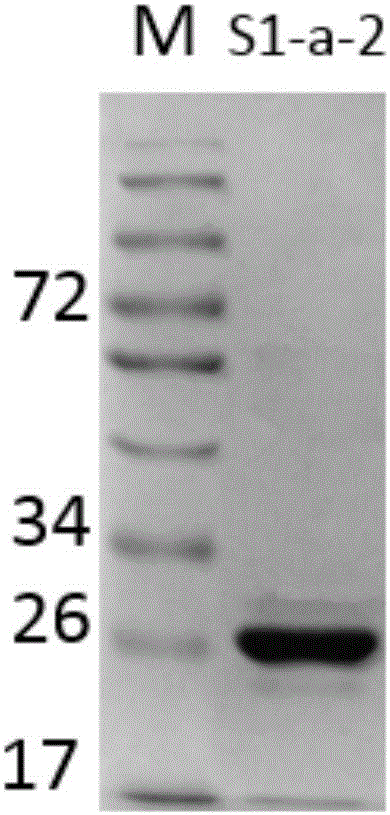
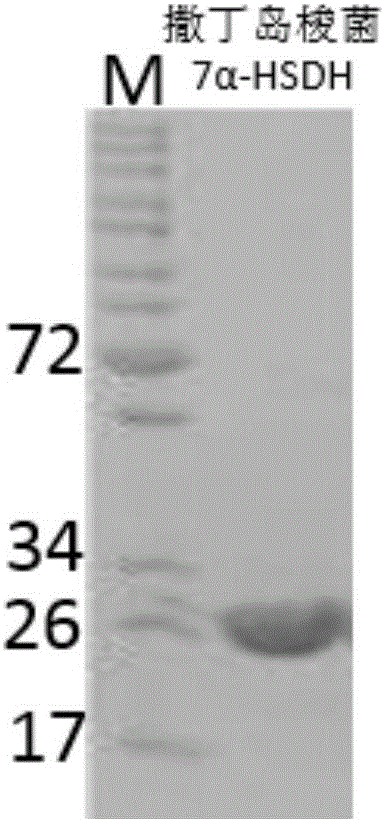
[0066] Example 2.7 Expression of α-HSDHS1-a-2 gene
[0067] 1. Vector construction:
[0068] Using the one-step PCR directional cloning kit purchased by Zuoan Protein Technology Co., Ltd., the full-length sequence of the 7α-HSDHS1-a-2 gene was ligated to the vector pGEX-6p-1 according to the operation steps in the kit instruction manual.
[0069] 2. Transformation of E.coli DH5α competent cells
[0070] 1) Competent cells E.coli DH5α were placed on ice to thaw.
[0071] 2) Add the connection system obtained in step 1 into the melted E.coli DH5α competent, and keep it on ice for 30 minutes.
[0072] 3) Heat treatment at 42°C for 90s.
[0073] 4) Stand on ice for 2 minutes.
[0074] 5) Add 600 μL of LB medium, the temperature of the shaker is 37° C., the shaking speed of the shaker is 150 rpm, and the time is 45 minutes.
[0075] 6) Aspirate 200 μL of bacterial solution and apply it on ampicillin (Amp + ) on resistant LB plate medium.
[0076] 7) Cultivate overnight at 37...
Embodiment 37
[0101] Example 3.7 Functional identification of α-HSDHS1-a-2 gene
PUM
 Login to View More
 Abstract
Description
Claims
Application Information
 Login to View More