
β-k 2 so 4 Structured orthophosphate scintillator material and its preparation method and application
A-K2SO4, scintillator material technology, applied in luminescent materials, analytical materials, fluorescence/phosphorescence, etc., can solve the problems of low luminous efficiency, low cost, short afterglow, etc., achieve short luminous life, improve absorption effect, structure and Stable performance
Patent Information
- Authority / Receiving Office
- CN · China
- Patent Type
- Patents(China)
- Current Assignee / Owner
- Publication Date
- 2020-09-15
- Estimated Expiration
- Not applicable · inactive patent
Smart Images
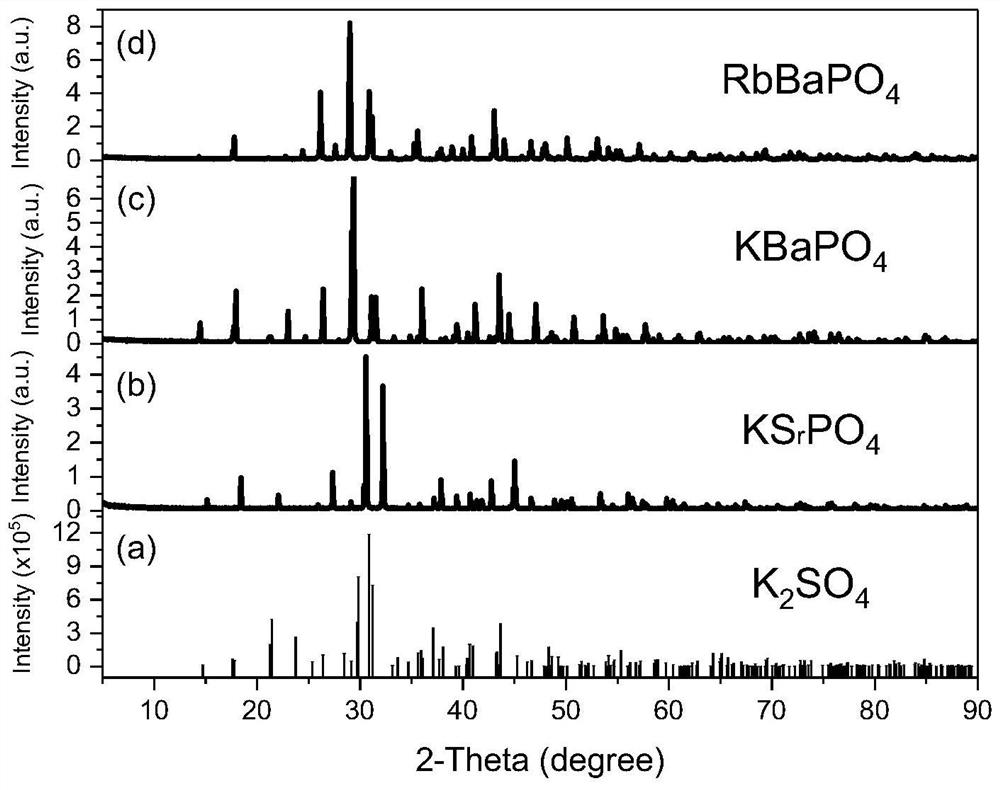
Figure 1 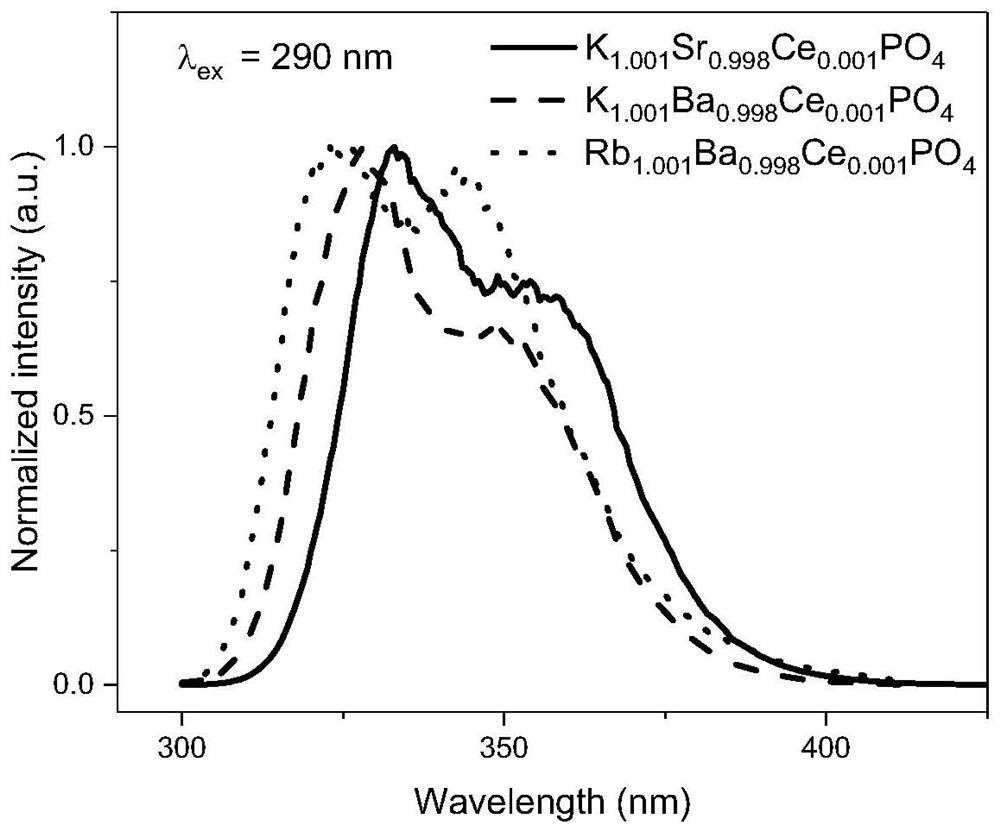
Figure 2 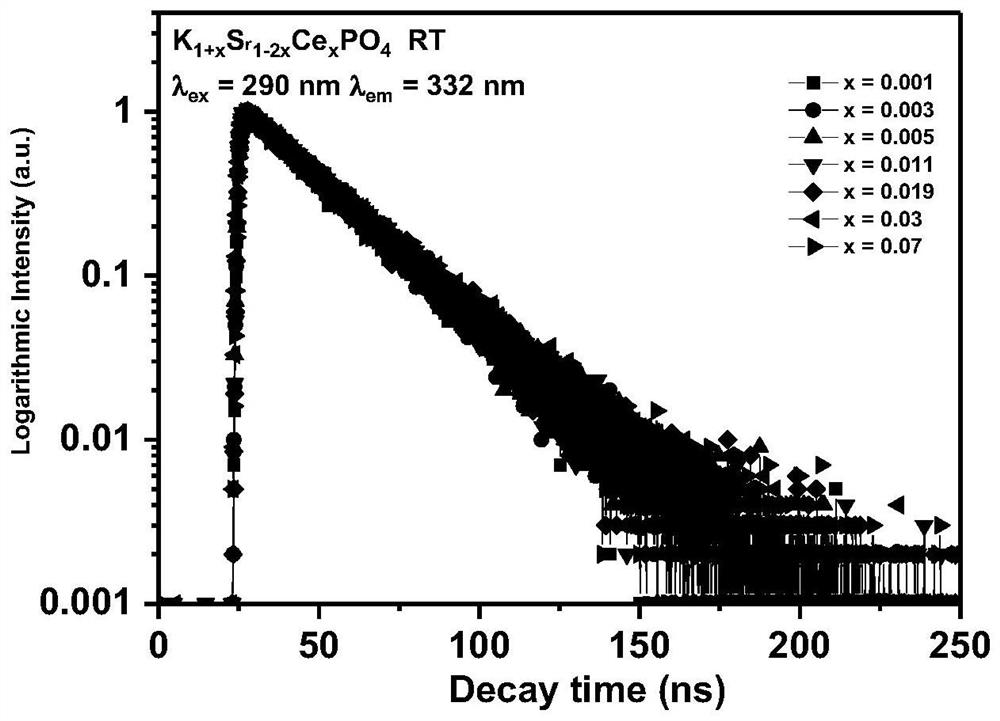
Figure 3
Abstract
Description
technical field
[0001] The invention belongs to the field of scintillator luminescent materials. More specifically, it relates to a class with β-K 2 SO 4 The orthophosphate matrix of the structure is composed of high atomic number elements (Sr and Ba, etc.) and doped with rare earth ions (Ce 3+ ) of scintillator materials and their potential applications in industrial exploration, high energy physics and nuclear medical imaging. Background technique
[0002] Scintillator materials have been widely used in industrial exploration (oil well nuclear detection and non-destructive testing of important components such as rockets and aircraft), high-energy physics, nuclear medical imaging (X-ray computer tomography) and security inspection (container rapid inspection system) and other fields . Scintillators can absorb high-energy photon / particle energy through electrons in solids to become excited state electrons, and the unstable excited state electrons release energy and retur...
Examples
Embodiment 1
[0043] Weigh potassium dihydrogen phosphate (KH 2 PO 4 ) 0.6905 g, strontium carbonate (SrCO 3 ) 0.7367 g, potassium carbonate (K 2 CO 3 ) 0.003 g and ceria (CeO 2 ) 0.0009 g in an agate mortar and grind for 20 minutes to mix evenly, then put it into a corundum crucible, put the corundum crucible into a large corundum crucible with a carbon block, and roast the reaction at a high temperature in a CO reducing atmosphere. The specific heating procedure is as follows : Take 5 hours to raise the temperature from room temperature to 1300°C, and keep it warm for 3 hours; wait for the sample to cool naturally to room temperature to obtain the final product, and its chemical composition expression is K 1.001 Sr 0.998 Ce 0.001 PO 4 .
Embodiment 2
[0045] Weigh potassium dihydrogen phosphate (KH 2 PO 4 ) 0.6905 g, barium carbonate (BaCO 3 ) 0.9847 g, potassium carbonate (K 2 CO 3 ) 0.003 g and ceria (CeO 2 ) 0.0009 g in an agate mortar and grind for 20 minutes to mix evenly, then put it into a corundum crucible, put the corundum crucible into a large corundum crucible with a carbon block, and roast the reaction at a high temperature in a CO reducing atmosphere. The specific heating procedure is as follows : Take 5 hours to raise the temperature from room temperature to 1300°C, and keep it warm for 3 hours; wait for the sample to cool naturally to room temperature to obtain the final product, and its chemical composition expression is K 1.001 Ba 0.998 Ce 0.001 PO 4 .
Embodiment 3
[0047] Weigh diammonium hydrogen phosphate ((NH 3 ) 2 HPO 4 ) 0.5582 g, barium carbonate (BaCO 3 ) 0.7878 g, rubidium carbonate (Rb 2 CO 3 ) 0.4904 g and ceria (CeO 2 ) 0.007 g in an agate mortar and ground for 20 min to mix evenly, then put it into a corundum crucible, put the corundum crucible into a large corundum crucible with a carbon block, and roast it at a high temperature in a CO reducing atmosphere. The specific heating procedure is as follows : It takes 4 hours to raise the temperature from room temperature to 1000°C, and keep it warm for 6 hours; after the sample is naturally cooled to room temperature, the final product is obtained, and its chemical composition expression is Rb 1.001 Ba 0.998 Ce 0.001 PO 4 .