
Solid catalyst component containing o-phenylenediamine compound, catalyst and application thereof
A solid catalyst, o-phenylenediamine technology, applied in the field of combined solid catalyst group, can solve problems such as unfavorable development of PP, high price, reproductive health and environmental hazards
- Summary
- Abstract
- Description
- Claims
- Application Information
AI Technical Summary
Problems solved by technology
Method used
Image

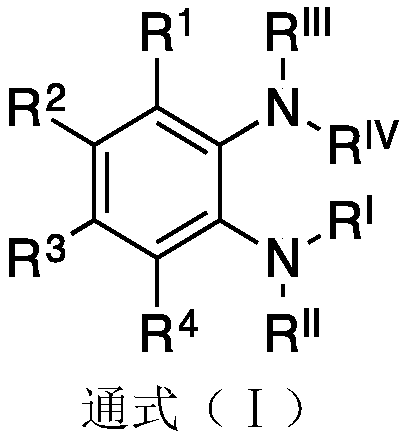
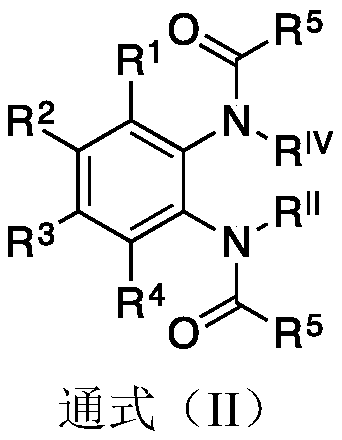
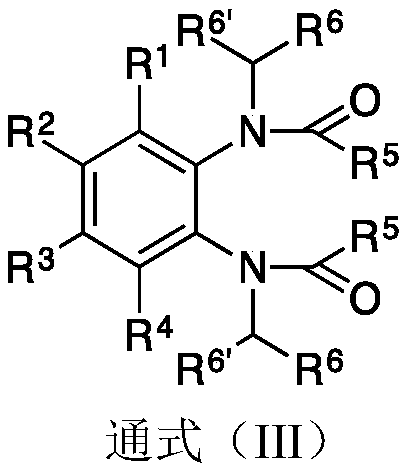
Examples
preparation example Construction
[0136] Preparation of solid catalyst components
[0137] The operations of preparing catalysts in the examples were all carried out under the protection of high-purity nitrogen. Specific examples are as follows.
Embodiment 1
[0139] In a 500ml stirred 5-neck flask fully replaced by nitrogen, add 10g of diethoxymagnesium and 80mL of toluene to prepare a suspension, and then add 20mL of titanium tetrachloride dropwise at -10°C. After the dropwise addition, the system After slowly raising the temperature to 10°C, add 60mL of titanium tetrachloride dropwise, then slowly raise the temperature to 90°C, add 3g of 1,2-di-n-hexanamide-phenylenediamine, then continue to raise the temperature to 120°C and keep the temperature for 2 hours, then press the liquid Filter it clean, remove the liquid, and wash the obtained solid three times with 120 mL of titanium tetrachloride at 125°C. The obtained solid was washed twice with 150 mL of hexane at 60°C and twice at room temperature, the liquid was filtered off and dried to obtain a solid powder which was the solid catalyst component. The titanium content, internal electron donor content and polymerization data of the solid catalyst components are shown in Table 4. ...
Embodiment 2-28
[0141] The preparation method of the solid catalyst component is the same as in Example 1, except that 1,2-di-n-hexanamide-phenylenediamine is replaced by the compounds in Table 1-Table 3 in sequence.
PUM
 Login to View More
 Abstract
Description
Claims
Application Information
 Login to View More